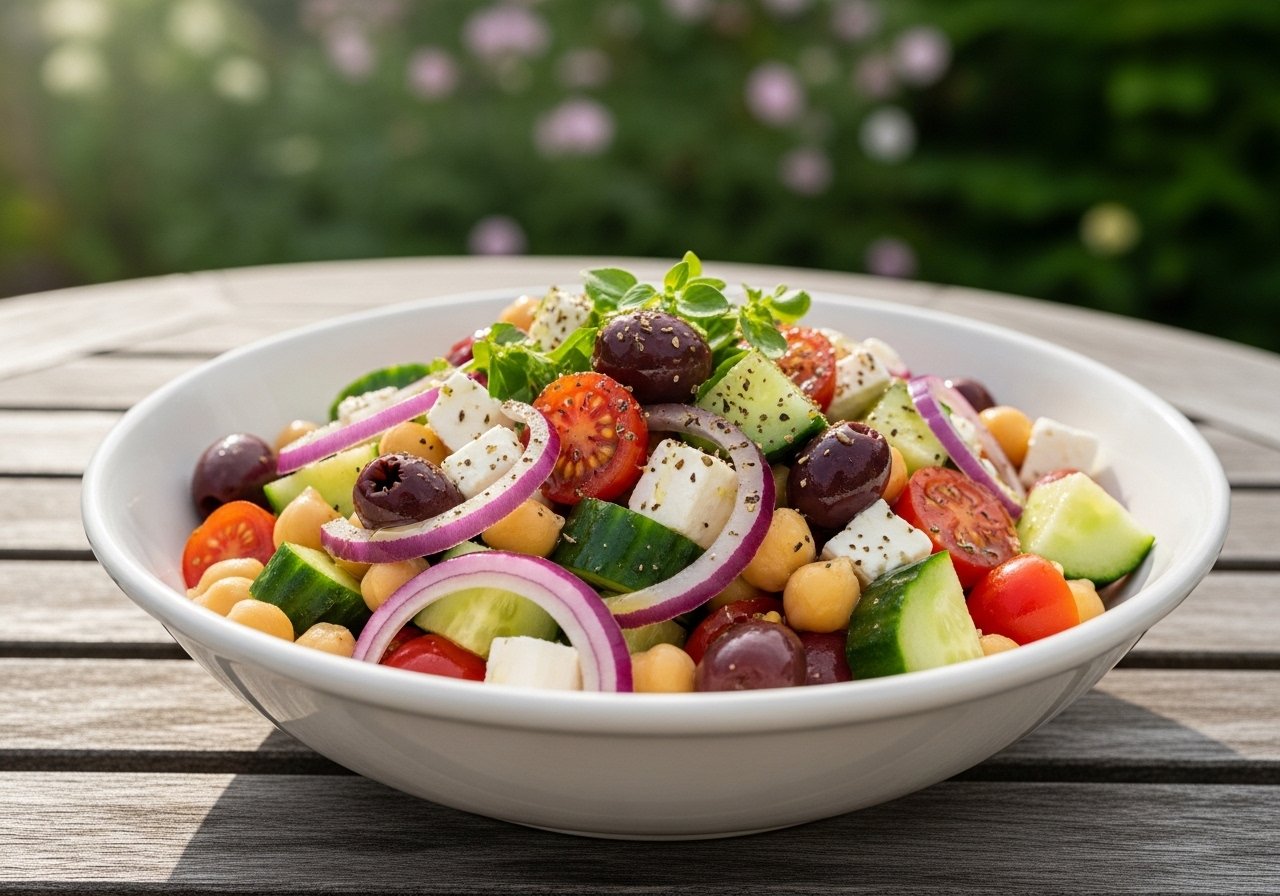
The 10-Minute No-Cook Mediterranean Chickpea Salad (The Science of Instant Nutrition)
By Chef Hamid | Homely Recipe
The Science of Home Cooking
⏰ Time Poverty and the 10-Minute Nutrition Solution
Let me describe a scenario that affects millions of Americans every single day.
It is 12:37 PM on a Tuesday. You have been in back-to-back virtual meetings since 8:30 AM. Your lunch break is theoretically thirty minutes, but realistically it is the twelves minutes between your current call ending and the next one starting. You are genuinely hungry—not stress-hungry, but physiologically depleted from five hours of cognitive work without fuel.
Your options: (1) Skip lunch entirely and power through on coffee and willpower until you crash at 3 PM. (2) Order delivery that will cost $18 after fees and arrive in 35-45 minutes—too late. (3) Microwave a frozen meal loaded with sodium and preservatives that will leave you hungrier an hour later. (4) Drive to a fast-food restaurant, wait in line, consume 1,200 calories of refined carbohydrates and trans fats, and return to work feeling sluggish and regretful.
There is a fifth option that almost no one considers because they believes it is impossible: prepare a nutritionally complete, genuinely satisfying, restaurant-quality meals in under ten minutes using ingredients that require zero cooking.
This is not a protein bar. This is not a sad desk salad of iceberg lettuce and ranch dressing. This is a Mediterranean chickpea salad that delivers 18 grams of complete plant-based protein, 12 grams of dietary fiber, healthy monounsaturated fats, and a full spectrum of micronutrients—all assembled in less time than it takes to scroll through a food delivery app.
The American relationship with time and food has become pathological. We have time poverty—the sensation that we never have enough hours in the day—and the food industry exploits this by selling us ultra-processed convenience at the expense of our metabolic health. But time poverty is not solved by eating worse food. It is solved by understanding food science well enough to prepare better food faster.
This recipe is not a compromise. It is an optimization. And once you understand the science behind why it works—why chickpeas satisfy, why emulsified dressings taste better, why certain storage methods prevent sogginess—you will never again feel trapped between hunger and convenience.
🥫 The Science of Satiety: Why Chickpeas Are Metabolic Gold
If I could choose only one plant-based food to recommend for long-term satiety, metabolic health, and versatility, it would be chickpeas (garbanzo beans) without hesitation. Let me explain why through the lens of nutritional biochemistry.
The Fiber-Protein Synergy
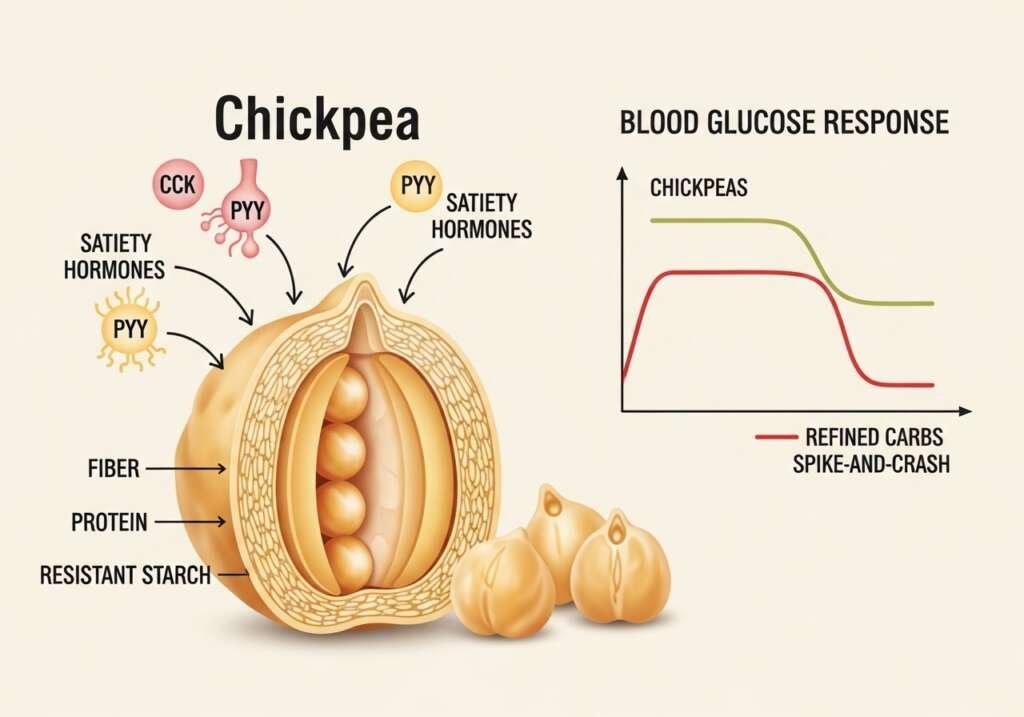
Satiety—the feeling of fullness and satisfaction after eating—is governed by multiple physiological signals: stomach distension (physical volume), hormone release (particularly cholecystokinin and peptide YY), blood glucose stabilization, and nutrient density perception.
Chickpeas deliver on every single satiety mechanism simultaneously.
Protein Content: One cup of cooked chickpeas (164g) contains approximately 14.5 grams of protein. While this is not a complete protein on its own (chickpeas are lower in the amino acid methionine), when combined with the sesame-based tahini often used in Mediterranean cuisine or paired with whole grains, the amino acid profile becomes complete and bioavailable.
Protein is the most satiating macronutrient. It requires more energy to digest than carbohydrates or fat (a phenomenon called the thermic effect of food), stimulates the release of satiety hormones more effectively, and helps maintain lean muscle mass during caloric deficit.
Fiber Content: The same cup of chickpeas delivers 12.5 grams of dietary fiber—nearly half the recommended daily intake for adults. This fiber is a mixture of soluble fiber (which dissolves in water to form a gel-like substance that slows digestion) and insoluble fiber (which adds bulk to stool and promotes healthy gut motility).
The soluble fiber in chickpeas, particularly galacto-oligosaccharides, acts as a prebiotic—feeding beneficial gut bacteria that produce short-chain fatty acids (SCFAs) like butyrate, which have been shown to improve insulin sensitivity, reduce inflammation, and enhance satiety signaling.
The Glycemic Index Advantage
Chickpeas have a glycemic index (GI) of approximately 28—classified as low. For comparison:
White bread: GI 75 (high)
Brown rice: GI 68 (medium)
Quinoa: GI 53 (low-medium)
Chickpeas: GI 28 (low)
What this means for your blood sugar:
Low-GI foods cause a gradual, sustained rise in blood glucose rather than a sharp spike. This prevents the insulin surge and subsequent crash that leads to mid-afternoon energy collapse and cravings. The fiber-protein combination in chickpeas slows gastric emptying (how quickly food leaves your stomach), further moderating the glucose response.
The result: When you eat a chickpea-based meal at noon, you remain genuinely satisfied—not just “not hungry,” but actively full—until 4 or 5 PM. This is a 4+ hour satiety window, which is nearly double what you get from a typical sandwich made with refined bread.
Resistant Starch: The Fourth Macronutrient
Chickpeas also contain resistant starch—a type of carbohydrate that resists digestion in the small intestine and instead ferments in the colon, where it acts more like fiber than traditional starch. Resistant starch has been shown to:
Improve insulin sensitivity
Increase fat oxidation (fat burning)
Reduce postprandial (after-meal) glucose spikes
Enhance the production of satiety hormones
Interestingly, cooling cooked chickpeas increases their resistant starch content through a process called retrogradation, where starch molecules re-crystallize into a form that is harder for digestive enzymes to break down. This is why chickpea salad made with chilled canned chickpeas may actually have superior metabolic benefits compared to hot chickpea dishes.
🥗 The Anatomy of a Perfect Dressing: Emulsification Science
The dressing is not a garnish. The dressing is the flavor delivery system that transforms a collection of ingredients into a cohesive, crave-worthy dish. And the difference between a mediocre dressing and a restaurant-quality one comes down to one word: emulsification.
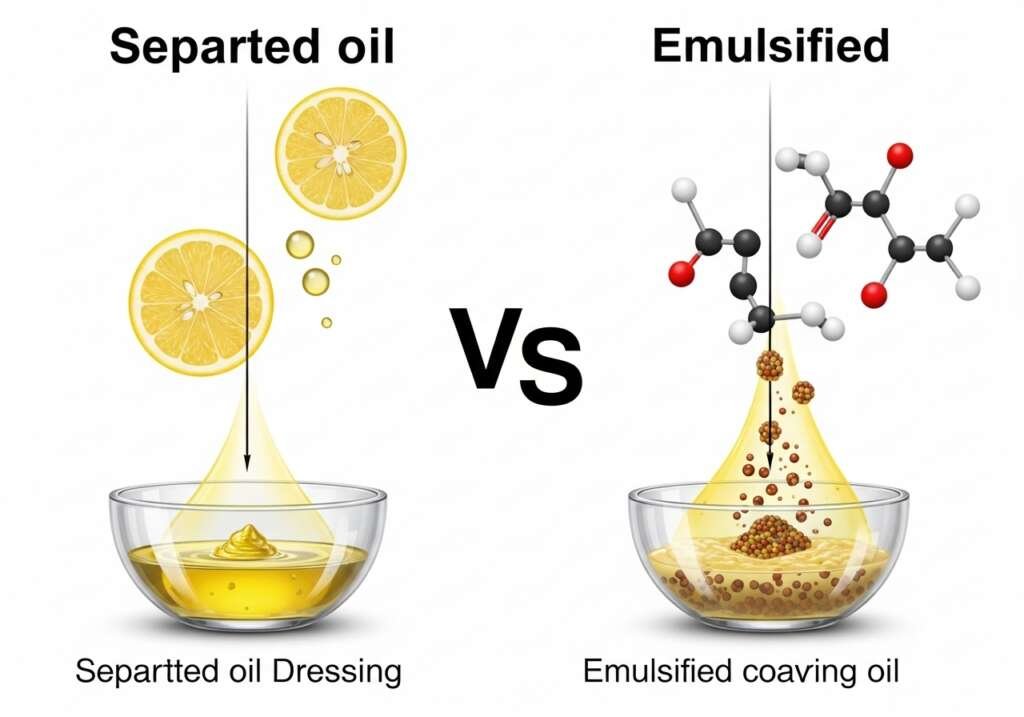
Oil and Acid: The Immiscible Problem
Extra virgin olive oil and lemon juice (or vinegar) are immiscible liquids—they do not naturally mix. Oil molecules are nonpolar (they have no electrical charge), while water-based liquids like lemon juice are polar (they have positive and negative regions). Like repels like, and opposites attract—but polar and nonpolar molecules want nothing to do with each other.
If you simply pour olive oil and lemon juice into a bowl and whisk them together, you will create a temporary suspension of tiny oil droplets in the acidic liquid. But within seconds, those droplets will coalesce (merge back together) and separate into distinct layers: oil floating on top, acid on the bottom.
This separation is a problem because it means your salad gets unevenly dressed. Some bites are oily, some are acidic, none are balanced.
The Emulsifier: Dijon Mustard’s Molecular Bridge
An emulsifier is a molecule that has both hydrophilic (water-loving) and lipophilic (fat-loving) regions. These molecules can arrange themselves at the interface between oil and water, with their fat-loving ends embedded in oil droplets and their water-loving ends extending into the aqueous phase.
Dijon mustard contains mucilage—a complex carbohydrate extracted from mustard seeds that acts as a powerful natural emulsifier. It also contains proteins and phospholipids that contribute to emulsion stability.
When you add just ½ teaspoon of Dijon mustard to your dressing and whisk vigorously, here is what happens at the molecular level:
- Mechanical shear from whisking breaks the oil into millions of tiny droplets (typically 2-10 micrometers in diameter)
- Mucilage molecules from the mustard immediately coat the surface of each oil droplet
- These coated droplets remain suspended in the lemon juice because the mucilage prevents them from coalescing back together
- The result is a stable, creamy emulsion that coats vegetables evenly and delivers balanced flavor in every bite
The emulsion remains stable for several hours (sometimes days if refrigerated), meaning you can make the dressing in advance and it will still work beautifully when you pour it over your salad.
Pro Tip: If you do not have Dijon mustard, you can substitute with a tiny amount (⅛ teaspoon) of honey or a pinch of garlic paste—both contain natural emulsifiers. However, Dijon is superior because it adds a subtle pungency that complements Mediterranean flavors perfectly.
🍅 Micronutrient Deep-Dive: Why Every Ingredient Earns Its Place
This is not a “throw random vegetables in a bowl” salad. Every ingredient has been selected for specific nutritional and flavor contributions. Let me break down the science.
Tomatoes: Lycopene and Umami
Cherry tomatoes contribute approximately 2,573 mcg of lycopene per cup. Lycopene is a carotenoid antioxidant that gives tomatoes their red color and has been extensively studied for its potential protective effects against prostate cancer, cardiovascular disease, and UV-induced skin damage.
Interestingly, lycopene bioavailability increases when tomatoes are consumed with fat (like the olive oil in our dressing) because lycopene is fat-soluble. This is a perfect example of nutrient synergy—the principle that certain nutrients are better absorbed when eaten together.
Tomatoes also provide glutamic acid, a naturally occurring amino acid that stimulates umami receptors on your tongue, creating a savory depth of flavor that makes the salad more satisfying.
Cucumbers: Hydration and Antioxidant Diversity
Cucumbers are approximately 95% water, making them an excellent hydration source—particularly important during hot summer months when dehydration can be mistaken for hunger.
But cucumbers are not just water. The peel (which you should absolutely not remove) contains beta-carotene, flavonoids (particularly quercetin, apigenin, and luteolin), and triterpenes called cucurbitacins, which have demonstrated anti-inflammatory and potential anti-cancer properties in preliminary research.
The crunch of cucumber also provides textural contrast, which enhances the eating experience and increases satiety through the phenomenon of sensory-specific satiety—you stay interested in eating the salad because the texture varies with each bite.
Olives and Feta: The Healthy Fat Duo
Kalamata olives provide monounsaturated fatty acids (MUFAs), particularly oleic acid (the same heart-healthy fat abundant in olive oil). MUFAs have been consistently associated with improved cardiovascular outcomes, better insulin sensitivity, and reduced inflammation markers.
Olives also contribute polyphenols—plant compounds with antioxidant and anti-inflammatory properties. The curing process (brining) does add sodium, but in the context of a whole-food meal with abundant potassium from vegetables, this sodium is not problematic for most healthy adults.
Feta cheese (made from sheep’s or goat’s milk in traditional Mediterranean production) adds conjugated linoleic acid (CLA)—a fatty acid associated with improved body composition—and provides approximately 4 grams of protein per ounce along with calcium and vitamin B12.
The saltiness of feta also serves a crucial flavor function: it amplifies the other flavors in the salad through taste enhancement, making the tomatoes taste more tomatoey, the cucumbers more refreshing, and the herbs more aromatic.
Fresh Herbs: Volatile Oils and Digestive Benefits
Fresh parsley and fresh mint (or basil) are not garnishes—they are functional ingredients.
Parsley contains apigenin and luteolin (flavonoids with antioxidant properties) and is surprisingly high in vitamin K (one cup provides over 1,000% of the daily value, important for blood clotting and bone health).
Mint contains menthol and other volatile oils that have been shown to relax the smooth muscles of the digestive tract, potentially reducing bloating and improving digestion—making this salad particularly comfortable to eat during a busy workday.
🧊 Meal Prep Physics: The Osmosis Problem and How to Solve It
Here is where most people fail with make-ahead salads: they assemble everything, dress it, store it in the fridge, and return 24 hours later to find a soggy, watery mess sitting in a pool of expelled liquid.
This is not bad luck. This is osmosis.
Understanding Osmotic Water Movement
Osmosis is the movement of water across a semi-permeable membrane (like a vegetable cell wall) from an area of low solute concentration to an area of high solute concentration.
When you salt cucumbers or tomatoes, you create a high-salt environment on the surface of the vegetables. The concentration of dissolved substances (solutes) is now higher outside the cells than inside them. To equalize this concentration gradient, water moves out of the vegetable cells and into the surrounding environment.
This is why salted cucumbers “weep”—you are literally pulling water out of their cellular structure through osmotic pressure.
Why this matters for meal prep:
If you salt your salad and let it sit for hours, osmosis will draw water out of the vegetables, diluting your dressing, making the chickpeas mushy, and creating an unappetizing puddle at the bottom of your container.
The Solution: Strategic Assembly
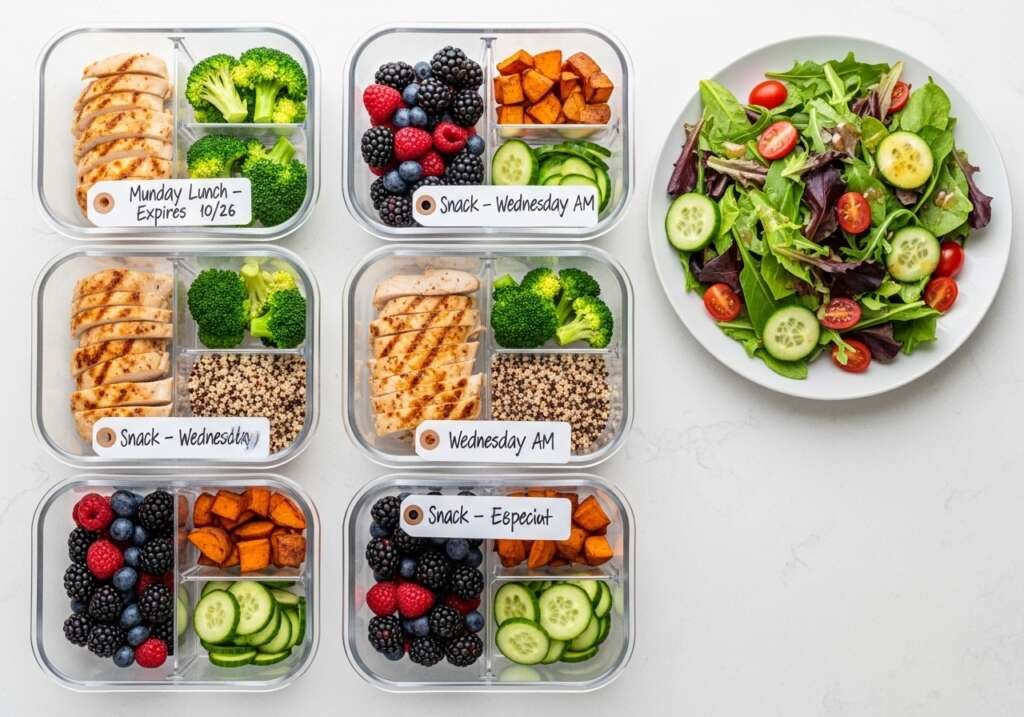
The key to a perfectly fresh-tasting meal-prepped Mediterranean chickpea salad is storing components separately and assembling just before eating:
What you can prep 3-4 days in advance:
Drained, rinsed chickpeas stored in airtight container
Chopped cucumbers stored in airtight container (unsalted)
Halved cherry tomatoes stored separately (unsalted)
Diced red onion stored separately
Crumbled feta stored separately
Dressing stored in small jar or container
What you assemble immediately before eating:
Combine all components in bowl
Add dressing and toss
Season with salt and pepper
Eat within 30 minutes for optimal texture
If you absolutely must assemble in advance (for example, packing lunch the night before), add salt only to the chickpeas and keep the cucumbers and tomatoes unsalted until serving. The chickpeas have lower water content and are more resistant to sogginess.
Alternative method for office workers: Pack all components in a compartmentalized container (like a bento box), keep dressing in a separate small container, and combine at your desk when ready to eat. This takes literally 15 seconds and preserves perfect texture.
📋 The Recipe: Mediterranean Chickpea Salad (10-Minute Assembly)
Ingredients (Serves 4)
Salad Base:
| Ingredient | US Customary | Metric | Notes |
|---|---|---|---|
| Canned chickpeas, drained & rinsed | 2 cans (15 oz each) | 820g / 3 cups | Goya or Kroger brand recommended |
| Cherry tomatoes, halved | 2 cups | 300g | Sweet 100s or Campari varieties best |
| English cucumber, diced | 1 large | 400g / 2 cups | Seedless variety preferred |
| Red onion, finely diced | ½ medium | 80g / ½ cup | Soak in cold water 5 min to reduce bite |
| Kalamata olives, pitted & halved | ¾ cup | 120g | Whole Foods or Trader Joe’s |
| Feta cheese, crumbled | 6 oz | 170g | Greek or Bulgarian sheep’s milk feta |
| Fresh parsley, chopped | ½ cup | 30g | Flat-leaf (Italian) parsley |
| Fresh mint or basil, chopped | ¼ cup | 15g | Mint for refreshing, basil for sweet notes |
Lemon-Dijon Dressing:
| Ingredient | US Customary | Metric | Functional Role |
|---|---|---|---|
| Extra virgin olive oil | ⅓ cup | 80ml | Monounsaturated fats, flavor carrier |
| Fresh lemon juice | 3 tbsp | 45ml | Acidity, brightness, vitamin C |
| Dijon mustard | ½ tsp | 2.5g | Emulsifier, subtle heat |
| Garlic, minced | 2 cloves | 8g | Allicin, aromatic depth |
| Dried oregano | 1 tsp | 2g | Mediterranean authenticity |
| Kosher salt | ¾ tsp | 4g | Flavor enhancement |
| Black pepper, cracked | ½ tsp | 1g | Piperine heat |
| Honey (optional) | ½ tsp | 2.5g | Balances acidity |
👨🍳 Step-by-Step Assembly (10 Minutes)
Step 1 — Prepare the Chickpeas (2 minutes)
Open both cans of chickpeas. Pour into a fine-mesh strainer and rinse thoroughly under cold running water for 30 seconds. This removes the thick, starchy liquid (aquafaba) and excess sodium from the canning process.
Shake the strainer vigorously to remove as much water as possible. Transfer chickpeas to a large mixing bowl.
Scientific Note: Rinsing reduces sodium content by approximately 35-40% according to USDA testing, bringing a typical can from ~400mg sodium per serving down to ~240mg.
Step 2 — Make the Dressing (3 minutes)
In a small bowl or jar with lid, combine:
- Extra virgin olive oil
- Fresh lemon juice
- Dijon mustard
- Minced garlic
- Dried oregano
- Salt
- Pepper
- Honey (if using)
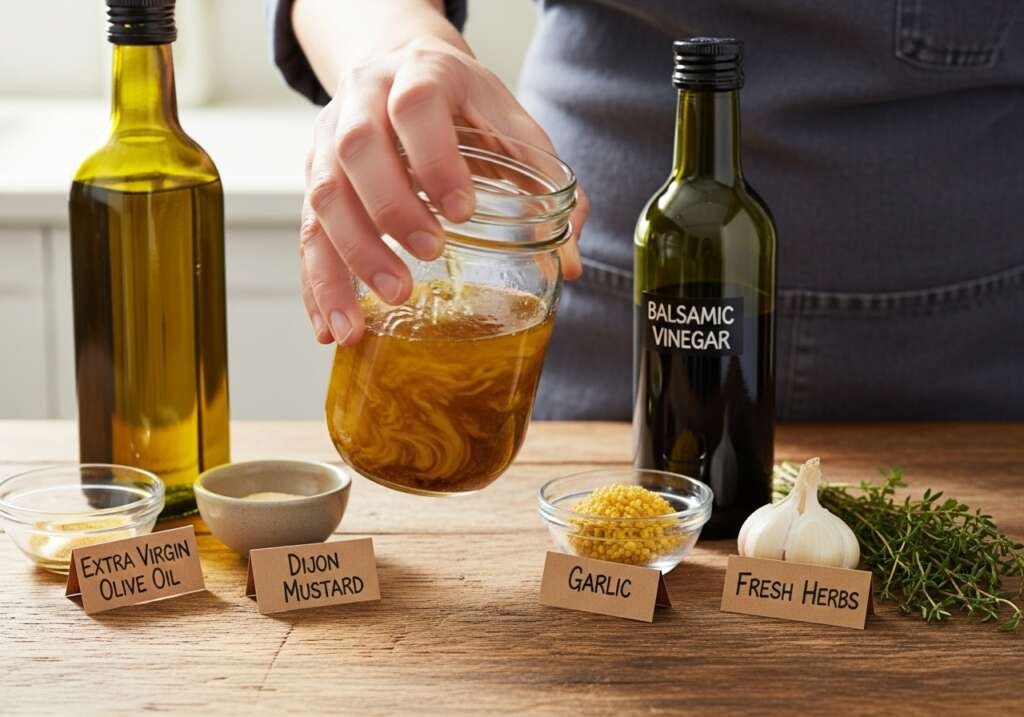
If using a jar, seal the lid and shake vigorously for 30 seconds until the dressing emulsifies and turns creamy. If using a bowl, whisk continuously for 45-60 seconds until you achieve the same emulsified consistency.
The dressing should look glossy and slightly thickened, not separated into distinct oil and water layers.
Scientific Note: The mechanical shear from shaking or whisking breaks the oil into droplets small enough (typically 2-10 micrometers) to remain suspended in the lemon juice, stabilized by the mucilage in the Dijon mustards.
Step 3 — Prep the Vegetables (3 minutes)
While the flavors in the dressing meld:
- Cucumbers: Cut English cucumber in half lengthwise, then slice into half-moons about ¼ inch thick
- Tomatoes: Halve cherry tomatoes (if they are very small, leave whole)
- Red onion: Dice finely. For a milder flavor, place diced onion in a small bowl of ice water for 5 minutes, then drain—this removes some of the sharp sulfur compounds
- Olives: If whole, pit and halve. If pre-pitted, halve them
- Feta: Crumble into bite-sized pieces (if not pre-crumbled)
- Herbs: Chop parsley and mint/basil roughly—you want visible pieces, not a fine mince
Step 4 — Assemble and Dress (2 minutes)
Add all prepared vegetables, olives, feta, and herbs to the bowl with the chickpeas.
Give the dressing one final shake or whisk to re-emulsify (some separation may have occurred while you prepped vegetables).
Pour the dressing over the salad. Using two large spoons or salad tongs, toss gently but thoroughly for 30-45 seconds, making sure every chickpea and vegetable piece is coated with dressing.
Taste and adjust seasoning—you may want more salt, more lemon juice, or more black pepper depending on your preference and the saltiness of your feta.
Step 5 — Serve Immediately or Store Strategically
For immediate consumption: Divide into serving bowls and enjoy.
For meal prep: See the Meal Prep Physics section above. Store components separately or assemble with strategic salting only on chickpeas.
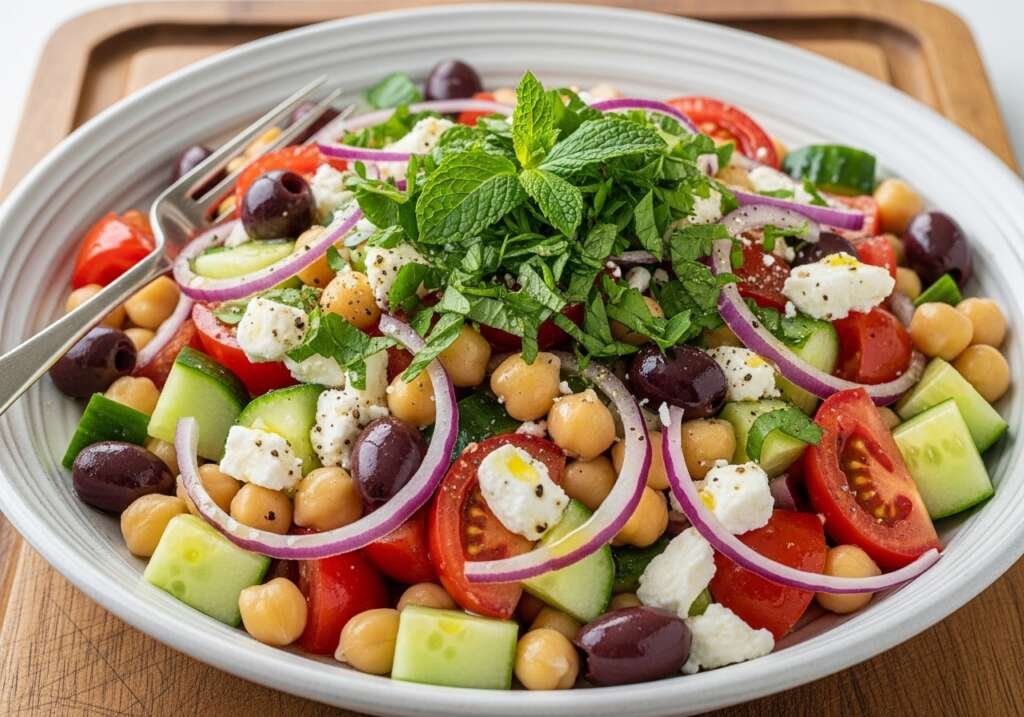
🔄 Variations: Customize Your Bowl
High-Protein Boost (+12g protein)
Add 4 oz grilled chicken breast, sliced thin, or ½ cup cooked quinoa for additional complete protein and increased satiety.
Vegan Adaptation
Omit feta cheese. Add 2 tbsp tahini to the dressing for creaminess and additional healthy fats. Increase olives to 1 cup for more savory richness.
Low-FODMAP Modification
Replace chickpeas with firm tofu cubes (same protein, lower fermentable carbs). Use scallion greens instead of red onion. Omit garlic; increase dried oregano to 2 tsp.
Grain Bowl Transformation
Serve chickpea salad over 1 cup cooked farro, freekeh, or brown rice for a more substantial meal (adds ~200 calories and 5g protein per serving).
Mediterranean-Mexican Fusion
Replace feta with cotija cheese, add 1 diced avocado, substitute lime juice for lemon, and add 1 tsp ground cumin to dressing.
📊 Homemade vs. Store-Bought Deli Salad Comparison
| Parameter | Homemade (This Recipe) | Typical Store-Bought Deli Chickpea Salad |
|---|---|---|
| Sodium per serving | 380mg | 720-950mg |
| Preservatives | None | Potassium sorbate, calcium disodium EDTA, citric acid (as preservative) |
| Added sugars | 0.5g (from optional honey) | 4-8g (from sweetened dressings) |
| Protein per serving | 18g | 8-12g |
| Fiber per serving | 12g | 6-8g |
| Quality of fats | Extra virgin olive oil (MUFA) | Often soybean or canola oil (refined) |
| Fresh herb content | ¾ cup total | Typically dried herbs or “natural flavors” |
| Cost per serving | $2.80 | $4.50-6.00 |
| Prep time | 10 minutes | 0 minutes (but transportation/shopping time) |
| Control over ingredients | Complete | None |
| Shelf life | 3-4 days (components separated) | 5-7 days (chemical preservatives) |
Scientific Insight: Store-bought deli salads are formulated for shelf stability and cost optimization, not nutritional quality. They typically use lower-cost oils, add sugar to compensate for lower-quality ingredients, and include preservatives to extend shelf life. The sodium content is often doubled to enhance flavor in the absence of fresh herbs and quality fats.
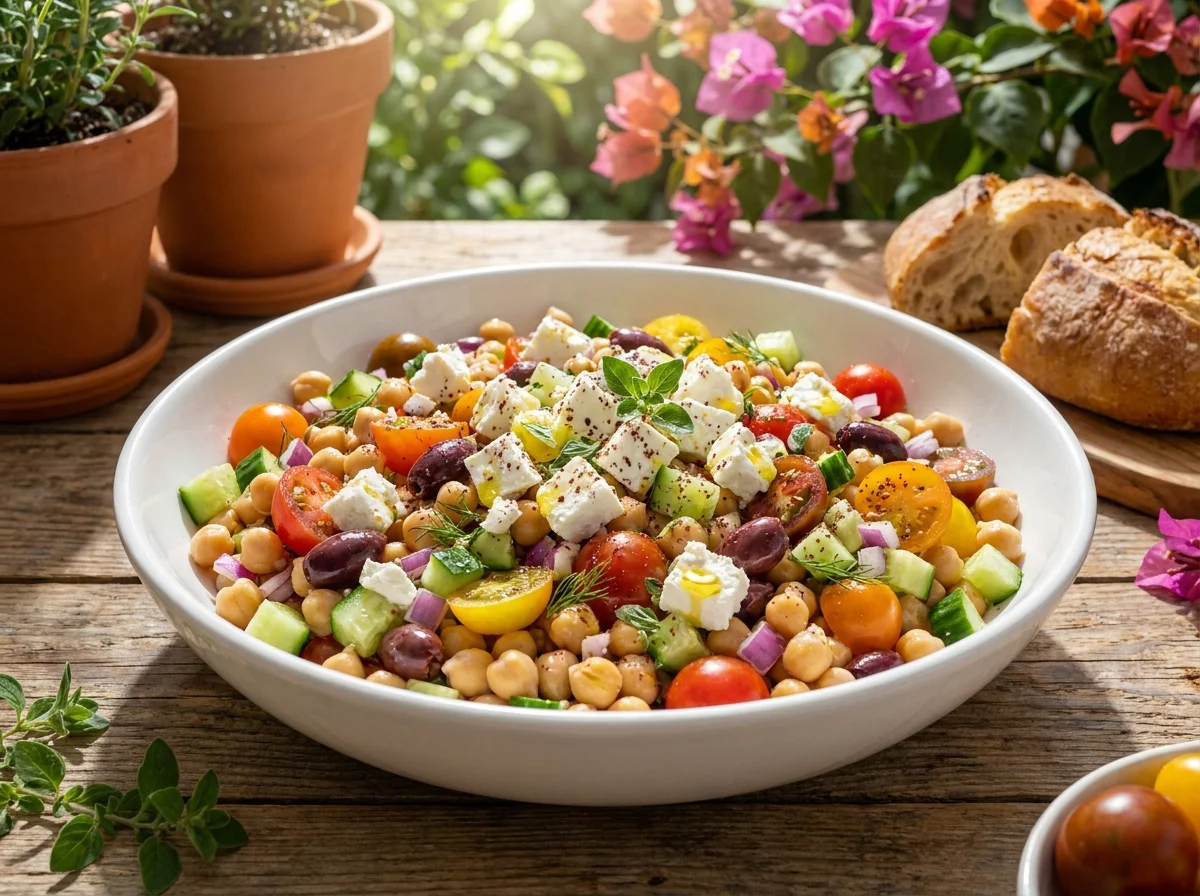

10-Minute No-Cook Mediterranean Chickpea Salad
Ingredients
Equipment
Method
- Open both cans of chickpeas. Pour into fine-mesh strainer and rinse thoroughly under cold running water for 30 seconds to remove aquafaba (thick canning liquid) and excess sodium.
- Shake strainer vigorously to remove as much water as possible. Transfer chickpeas to large mixing bowl.
- In small bowl or mason jar with lid, combine extra virgin olive oil, fresh lemon juice, Dijon mustard, minced garlic, dried oregano, kosher salt, black pepper, and honey (if using).
- If using jar: seal lid and shake vigorously for 30 seconds until dressing emulsifies and turns glossy and creamy.
- If using bowl: whisk continuously for 45-60 seconds until emulsified. Dressing should be thickened and uniform, not separated.
- Cut English cucumber in half lengthwise, then slice into ¼-inch half-moons.
- Halve cherry tomatoes (leave whole if very small).
- Finely dice red onion. For milder flavor: place diced onion in small bowl of ice water for 5 minutes, then drain thoroughly. This removes sharp sulfur compounds.
- If olives are whole, pit and halve. If pre-pitted, halve them.
- Crumble feta into bite-sized pieces if not pre-crumbled.
- Roughly chop parsley and mint (or basil). You want visible pieces, not fine mince.
- Add all prepared vegetables (cucumber, tomatoes, red onion), olives, feta, and fresh herbs to bowl with chickpeas.
- Give dressing one final shake or whisk to re-emulsify if any separation occurred.
- Pour dressing over salad ingredients.
- Using two large spoons or salad tongs, toss gently but thoroughly for 30-45 seconds, ensuring every chickpea and vegetable is coated with dressing.
- Taste and adjust seasoning. Add more salt, lemon juice, or black pepper as desired based on saltiness of feta and personal preference.
- For immediate serving: divide into bowls and enjoy.
- For meal prep: store components separately in airtight containers in refrigerator for up to 4 days. Assemble fresh when ready to eat. See notes below for detailed meal prep strategy.
Notes
- Drained chickpeas in airtight container
- Chopped cucumber in airtight container (unsalted)
- Halved tomatoes in separate container (unsalted)
- Diced red onion in separate container
- Crumbled feta in separate container
- Dressing in small jar or container
To reduce from 780mg to ~310mg sodium per serving: use low-sodium chickpeas, reduce feta to 3 oz, reduce olives to ⅓ cup, reduce added salt to ¼ tsp. Vegan Adaptation:
Omit feta. Add 2 tbsp tahini to dressing for creaminess. Increase olives to 1 cup for savory richness. Complete Protein for Vegans:
Chickpeas alone are limiting in methionine. For complete protein: serve with 1-2 slices whole grain bread or add ½ cup cooked quinoa to salad. Keto Modification:
Reduce chickpeas to 1 can total. Replace removed chickpeas with 4 oz grilled chicken or 3 oz mozzarella per serving. Increases fat and protein while reducing net carbs to ~12g per serving. Storage:
- Fully assembled salad: 2 days refrigerated
- Separated components: 4 days refrigerated
- Dressing alone: 7 days refrigerated (shake to re-emulsify before use)
- Add 4 oz grilled chicken for +12g protein
- Serve over 1 cup cooked farro, freekeh, or brown rice for grain bowl
- Substitute bell peppers for cucumbers, sun-dried tomatoes for cherry tomatoes, scallions for red onion
💬 Chef Hamid’s Insight
There is a profound satisfaction that comes from eating food you prepared yourself—even if that preparation took only ten minutes. Behavioral psychology research shows that we value and enjoy food more when we have invested even minimal effort in its creation. This is called the IKEA effect in consumer psychology.
But beyond psychology, there is simple metabolic truth: when you control every ingredient that goes into your body, you control your health trajectory. This salad is not “clean eating” in the moralistic sense. It is precision eating—knowing exactly what you are consuming, why each ingredient matters, and how your body will respond.
The Mediterranean diet is not a diet at all. It is a template for combining whole foods in ways that satisfy hunger, support metabolic health, and deliver genuine pleasure. Chickpeas, vegetables, healthy fats, herbs—these are not restrictions. These are abundance.
The best meal is not the one that takes the longest to make. It is the one that nourishes you while fitting seamlessly into your actual life.
— Chef Hamid | Homely Recipe
🥗 Nutrition Information (Per Serving — 4 Servings Total)
| Nutrient | Amount | % Daily Value |
|---|---|---|
| Calories | 425 kcal | — |
| Protein | 18g | 36% |
| Total Fat | 24g | 31% |
| Saturated Fat | 7g | 35% |
| Monounsaturated Fat | 14g | — |
| Carbohydrates | 38g | 13% |
| Dietary Fiber | 12g | 48% |
| Net Carbs | 26g | — |
| Sugars | 8g | — |
| Sodium | 780mg | 34% |
| Potassium | 620mg | 18% |
| Calcium | 260mg | 26% |
| Iron | 4.8mg | 27% |
| Vitamin C | 32mg | 53% |
| Vitamin K | 285mcg | 356% |
Macronutrient Ratio: 17% Protein / 51% Fat / 36% Carbs (with 48% of daily fiber)
Glycemic Load: Estimated 8 (Low) — suitable for blood sugar management
❓ FAQ (USA Audience-Specific)
Can I use canned chickpeas, or do I need to cook dried ones?
Canned chickpeas are absolutely perfect for this recipe and are actually my preferred choice for three reasons: (1) convenience—they are pre-cooked and ready in seconds, (2) increased resistant starch due to the cooling process during canning, and (3) consistent texture. If you do want to cook dried chickpeas, use a 1:3 ratio (1 cup dried chickpeas + 3 cups water), cook until tender (45-60 minutes stovetop or 35 minutes in Instant Pot), cool completely, then use in the recipe. Canned saves you 60 minutes.
How long does this salad stay fresh in the office fridge?
If stored properly with components separated, up to 4 days. If you must store it fully assembled, the dressed salad will remain acceptable for 2 days, though the cucumbers and tomatoes will release some moisture through osmosis. For optimal office meal prep: pack components in a compartmentalized container Sunday evening, store in the office fridge Monday morning, and assemble fresh each day at your desk. The dressing stays emulsified for 5-7 days when stored in a sealed container.
I am on a low-sodium diet. How can I reduce the salt content?
The primary sodium sources are feta cheese (320mg per oz) and olives (240mg per ¼ cup). To reduce: (1) Cut feta to 3 oz instead of 6 oz (saves ~480mg sodium), (2) reduce olives to ⅓ cup (saves ~80mg), (3) use low-sodium or no-salt-added canned chickpeas (saves ~200mg), and (4) reduce added salt in dressing to ¼ tsp (saves ~290mg). These modifications bring total sodium per serving from 780mg down to approximately 310mg while maintaining flavor through increased fresh herbs and lemon juice.
Can I make this salad ahead for a potluck or BBQ?
Yes, but with strategic timing. Prepare all components the day before and store separately in the refrigerator. Make the dressing and store in a jar. Assemble 30-60 minutes before serving (not earlier), toss with dressing, and keep chilled until serving time. If you must assemble further in advance, add cucumbers and tomatoes only 30 minutes before serving to minimize moisture release.
Is this salad keto-friendly?
At 26g net carbs per serving, this salad exceeds typical ketogenic thresholds (usually <20-25g net carbs per day). To make it more keto-compatible: (1) reduce chickpeas to 1 can total instead of 2 (saves 16g carbs per serving), (2) replace the reduced chickpeas with 4 oz grilled chicken or 3 oz mozzarella per serving for additional protein and fat, and (3) increase olives and feta for higher fat content. Modified version: ~12g net carbs per serving.
What if I do not like one of the vegetables—can I substitute?
Absolutely. The beauty of this template is flexibility:
- Instead of cucumbers: diced bell peppers (any color) or blanched green beans
- Instead of cherry tomatoes: sun-dried tomatoes (soaked in warm water for 10 min) or roasted red peppers
- Instead of red onion: thinly sliced scallions or shallots
- Instead of feta: goat cheese, fresh mozzarella pearls, or for vegan: nutritional yeast + extra tahini in dressing
The core formula is: chickpeas + crunchy vegetable + juicy element + allium (onion family) + salty/tangy component + herb + emulsified dressing. As long as you hit those categories, you will succeed.
Does this salad provide complete protein for vegetarians?
Chickpeas are limiting in methionine (a sulfur-containing essential amino acid), making them an incomplete protein on their own. However, feta cheese provides methionine, so when combined, this salad does deliver all nine essential amino acids in adequate amounts. For vegans omitting feta, pair the salad with 1-2 slices of whole grain bread or serve over quinoa to achieve complete protein complementation.
🔗 More From Homely Recipe
These articles pair perfectly with what you just learned:
🥫 [15-Minute Crispy Air Fryer Chickpeas] — Transform leftover chickpeas into a crunchy snack using the science of moisture evaporation and Maillard browning.
🧀 [Viral High-Protein Cottage Cheese Flatbread] — Use this flatbread as a Mediterranean-style wrap for your chickpea salad—double the protein, zero refined grains.
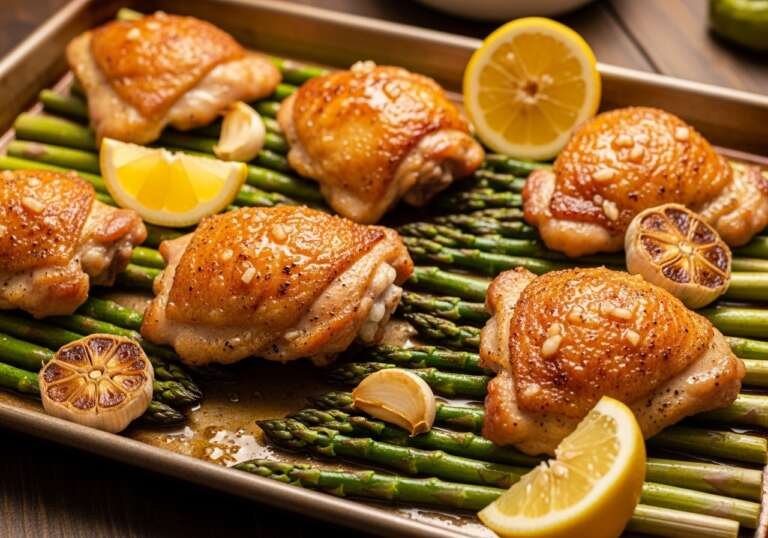
🍗 [The 30-Minute Dinner Science: One-Pan Garlic Butter Chicken & Asparagus] — Add grilled chicken from this recipe to your chickpea salad for the ultimate high-protein power bowl.
🥦 [Air Fryer Roasted Broccoli] — Master another no-cook-prep vegetable that pairs beautifully with Mediterranean flavors.