
Ingredients
Equipment
Method
High-Shear Blending Phase
- Add 1 cup (226g) full-fat cottage cheese to high-powered blender (Vitamix, Ninja, or NutriBullet capable of ≥20,000 RPM).
- Blend on HIGH speed for 60 to 90 seconds without stopping. Do not under-blend. You must observe complete curd destabilization.
- Phase progression check: At 0-15 sec, curds break into large fragments. At 15-45 sec, fragments reduce to fine particles and mixture begins to thicken. At 45-90 sec, particles fully hydrate, emulsion forms, texture becomes smooth and viscous like thick Greek yogurt.
- Stop when mixture is completely smooth with zero visible curds. Texture should coat blender sides and move sluggishly when tilted.
Dry-Phase Incorporation
- Transfer blended cottage cheese to large mixing bowl.
- Add ½ cup (56g) almond flour, 1 scoop (30g) protein powder (if using), 3 tbsp (36g) sweetener, 1 tsp (5ml) vanilla extract, and ¼ tsp (1.5g) salt.
- Using silicone spatula, fold (do not stir) dry ingredients into cottage cheese base using J-motion: cut down through center, sweep along bottom, fold up side. Repeat for 60–90 seconds until fully incorporated.
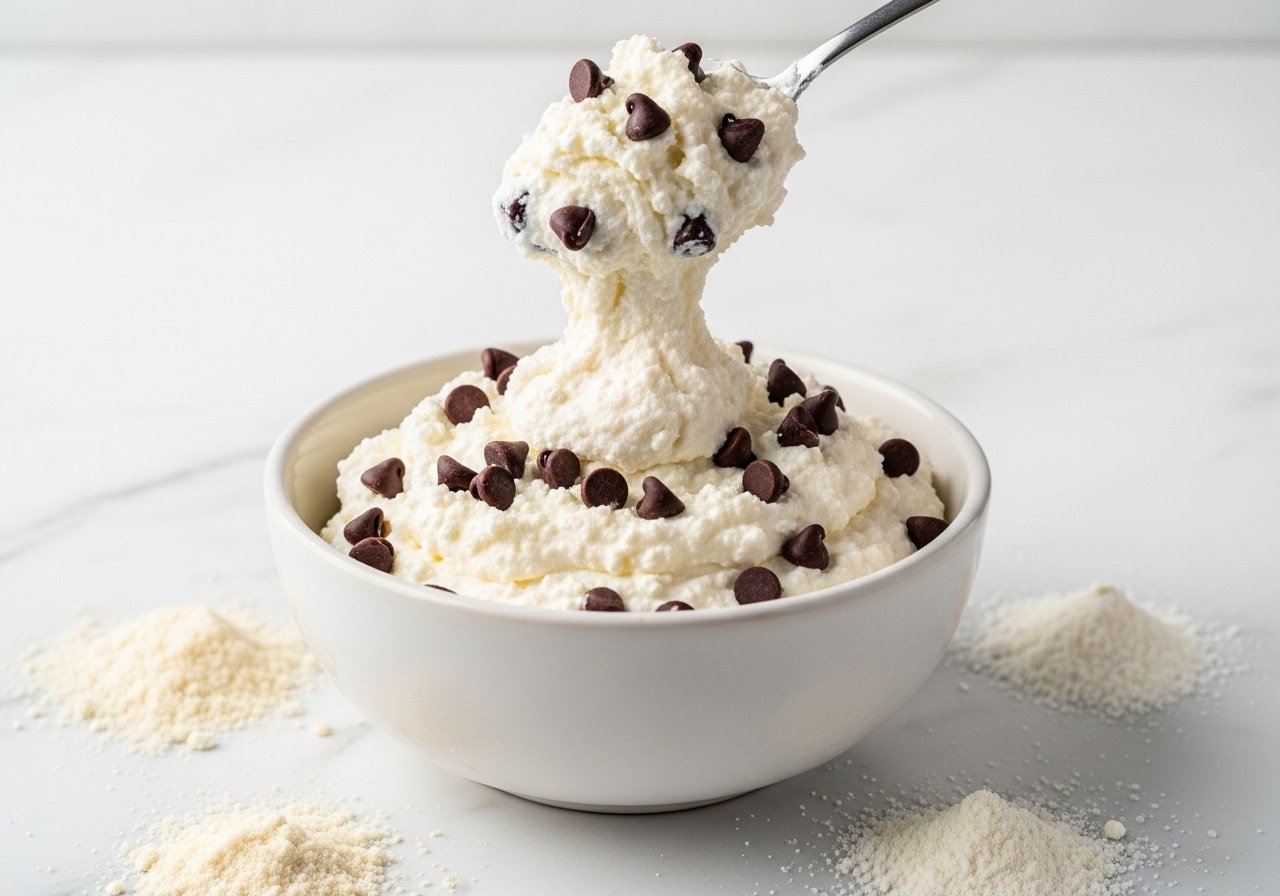
- Mixture should transform from pourable to scoopable, resembling thick hummus or frosting.
Protein Hydration Phase (Critical)
- Cover bowl tightly with plastic wrap. Refrigerate for minimum 30 minutes, ideally 2 hours.
- During this phase: casein and almond proteins complete moisture absorption, viscosity increases, flavors meld, temperature drops (cold increases viscosity).
Chocolate Chip Integration
- Remove bowl from refrigerator. Texture will have transformed from thick batter into firm, scoopable cookie dough.
- Fold in ¼ cup (40g) dark chocolate chips using same J-folding technique.
- Dough is ready to eat immediately. Scoop and enjoy with a spoon, or portion into small balls for truffle-style presentation.
Storage
- Store in airtight container in refrigerator for up to 5 days. Texture may firm slightly over time — this is normal protein hydration continuation.
- For frozen truffle balls: Scoop dough into 1-inch balls, freeze on parchment-lined tray for 15 minutes, then transfer to freezer bag. Stores up to 2 months. Eat frozen or thaw 10 minutes before serving.
Notes
Critical: High-Shear Blending is Non-Negotiable
This is not optional. Low-speed blending or hand-mixing will not destabilize casein micelles sufficiently. You need ≥20,000 RPM to generate the shear stress required for smooth protein emulsion. Incomplete blending = grainy texture that will not improve. Cottage Cheese Selection
Use full-fat (4%) cottage cheese with ≥12g protein per serving. Recommended brands: Good Culture, Daisy, Organic Valley. Do NOT use low-fat or fat-free versions — insufficient protein concentration results in thin, pourable texture. Protein Powder is Optional But Recommended
Adds 6g protein per serving and acts as a drying agent to improve texture. Use unflavored or vanilla whey/casein protein powder. Plant-based proteins (pea, rice) work but may add slight grittiness. Sweetener Adjustments
Recipe uses allulose or monk fruit for zero glycemic impact. If using regular sugar: reduce to 2 tbsp (traditional cookie dough sweetness level). If using stevia: reduce to ½ tsp (stevia is extremely potent and can be bitter if overdosed). Texture Troubleshooting
This recipe contains ZERO raw flour (no E. coli or Salmonella risk) and uses only pasteurized dairy. Microbiologically safer than traditional edible cookie dough. Safe for pregnant women, children, and immunocompromised individuals. Flavor Masking
If cottage cheese flavor is too prominent (tastes "dairy-forward"), increase vanilla extract to 2 tsp and add ⅛ tsp almond extract. The almond extract is surprisingly effective at masking casein notes. Storage Best Practices
Store in airtight glass container (plastic can absorb odors). Keeps 5 days refrigerated. Fermentation continues slowly, developing slight pleasant tang over time (this is normal and safe). Do not store at room temperature >2 hours due to dairy content.
This is not optional. Low-speed blending or hand-mixing will not destabilize casein micelles sufficiently. You need ≥20,000 RPM to generate the shear stress required for smooth protein emulsion. Incomplete blending = grainy texture that will not improve. Cottage Cheese Selection
Use full-fat (4%) cottage cheese with ≥12g protein per serving. Recommended brands: Good Culture, Daisy, Organic Valley. Do NOT use low-fat or fat-free versions — insufficient protein concentration results in thin, pourable texture. Protein Powder is Optional But Recommended
Adds 6g protein per serving and acts as a drying agent to improve texture. Use unflavored or vanilla whey/casein protein powder. Plant-based proteins (pea, rice) work but may add slight grittiness. Sweetener Adjustments
Recipe uses allulose or monk fruit for zero glycemic impact. If using regular sugar: reduce to 2 tbsp (traditional cookie dough sweetness level). If using stevia: reduce to ½ tsp (stevia is extremely potent and can be bitter if overdosed). Texture Troubleshooting
- Too thin: Add 2 tbsp almond flour or 1 scoop protein powder, re-chill 15 min.
- Too thick: Add 1 tbsp unsweetened almond milk, fold thoroughly.
- Grainy: Blend cottage cheese longer (full 90 seconds at high speed).
- Watery separation: Use higher-fat cottage cheese next time; current batch can be saved by adding 1 tbsp protein powder.
This recipe contains ZERO raw flour (no E. coli or Salmonella risk) and uses only pasteurized dairy. Microbiologically safer than traditional edible cookie dough. Safe for pregnant women, children, and immunocompromised individuals. Flavor Masking
If cottage cheese flavor is too prominent (tastes "dairy-forward"), increase vanilla extract to 2 tsp and add ⅛ tsp almond extract. The almond extract is surprisingly effective at masking casein notes. Storage Best Practices
Store in airtight glass container (plastic can absorb odors). Keeps 5 days refrigerated. Fermentation continues slowly, developing slight pleasant tang over time (this is normal and safe). Do not store at room temperature >2 hours due to dairy content.