
Ingredients
Equipment
Method
👨🍳 The Method — Seven Minutes, Done Right
Build the Glaze First
Combine the white miso, mirin, soy sauce, honey, sesame oil, grated ginger, and garlic in a small bowl. Whisk until completely smooth with no lumps of miso remaining. The sesame oil is doing two jobs here — it adds a nutty aromatic layer to the flavor and it creates a thin fat coating between the sugar compounds and the air fryer's direct heat, slowing caramelization enough to give you that glossy crust without crossing into burned territory.Taste the glaze before it goes anywhere near the fish. It should be savory-forward with a gentle sweetness and a slight warmth from the ginger. If it tastes flat, add a small extra pinch of salt. If it tastes too sweet, add a few extra drops of soy sauce.Prep the Salmon
Pat both fillets completely dry with paper towels — top, bottom, and sides. Surface moisture is the enemy of crust formation for the same reason it ruins chicken wings. A wet surface steams before it can brown, and a steamed miso glaze never develops the lacquered texture you are looking for.Place the fillets skin-side down on a small plate. Using a pastry brush or the back of a spoon, apply half the glaze to the flesh side only. Use a generous, even coat — you want full coverage but not a thick pooling layer. Let this first coat sit for 5 minutes at room temperature. During this time the glaze begins to dry slightly and bond to the surface of the fish, creating a more stable base for the second application later.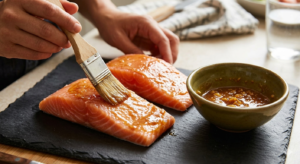
Preheat — This Matters More Than Most People Think
Set your air fryer to 380°F / 193°C — not 400°F. Preheat with the empty basket for 3 full minutes. The 20-degree difference between 380 and 400 sounds small but it is the difference between controlled caramelization and a burn on a sugar-heavy glaze. The preheated basket also ensures the skin side gets immediate direct heat contact, which crisps the skin without needing to flip the fish.The Two-Stage Cook
Place the salmon fillets skin-side down in the preheated basket. They should not touch each other — leave at least half an inch of space between fillets so hot air can circulate freely around every surface.Cook at 380°F / 193°C for 4 minutes. Do not open the basket during this time. The skin is crisping directly against the hot metal and interrupting that process will slow the crust formation you need.At the 4-minute mark, open the basket and brush the remaining glaze over the flesh side. Apply it quickly and close the basket immediately. Return to 380°F / 193°C for 3 more minutes.This second glaze application goes onto a surface that is already partially cooked and warm. It sets almost immediately on contact with the heat — creating that restaurant-style lacquered finish in the final three minutes without having enough time to burn.Total cook time: exactly 7 minutes.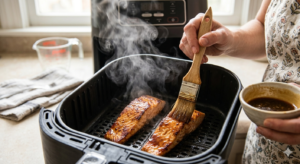
How to Know It Is Done
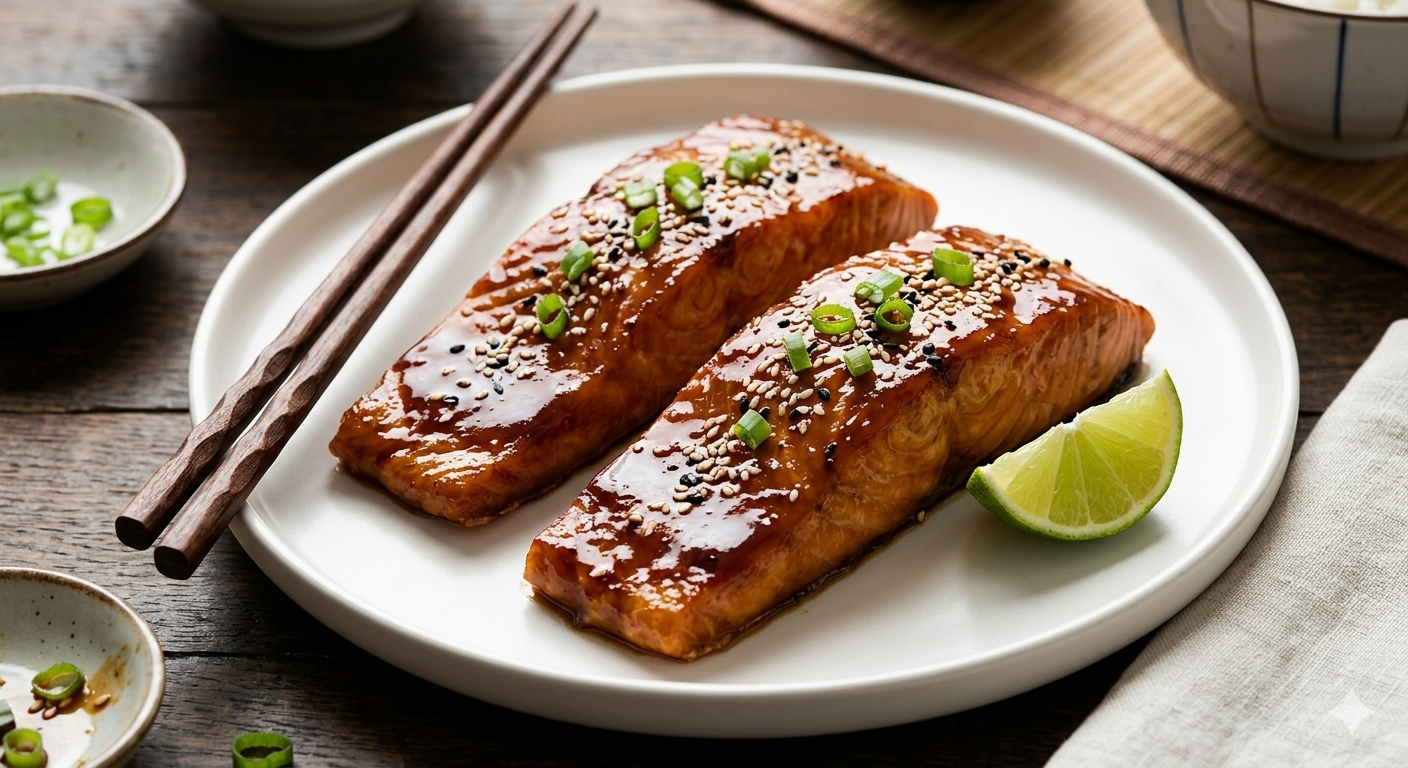
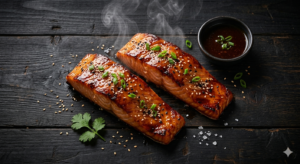
The salmon is ready when the glaze is deep caramel in color with slight darkening at the very edges — this is correct and intentional. The flesh should be opaque about three-quarters of the way through the fillet with a slightly translucent center. This is the medium doneness that keeps salmon moist and silky rather than dry and chalky.If you prefer fully cooked salmon with no translucent center at all, add 90 seconds to the final stage. The glaze will be slightly more charred at the edges but still within the acceptable range.Remove carefully with a thin spatula. The glaze will be genuinely hot and sticky at this point — handle the fillets gently and plate skin-side down.Scatter toasted sesame seeds over the glaze while it is still hot so they adhere to the surface. Add thinly sliced scallions and a wedge of lime alongside.
- Final beauty shot
Notes
Use white miso only. Apply glaze in two stages to prevent burning. Do not exceed 380°F. Pat salmon completely dry before glazing.