
Ingredients
Equipment
Method
Step 1: Autolyse (The Foundation)
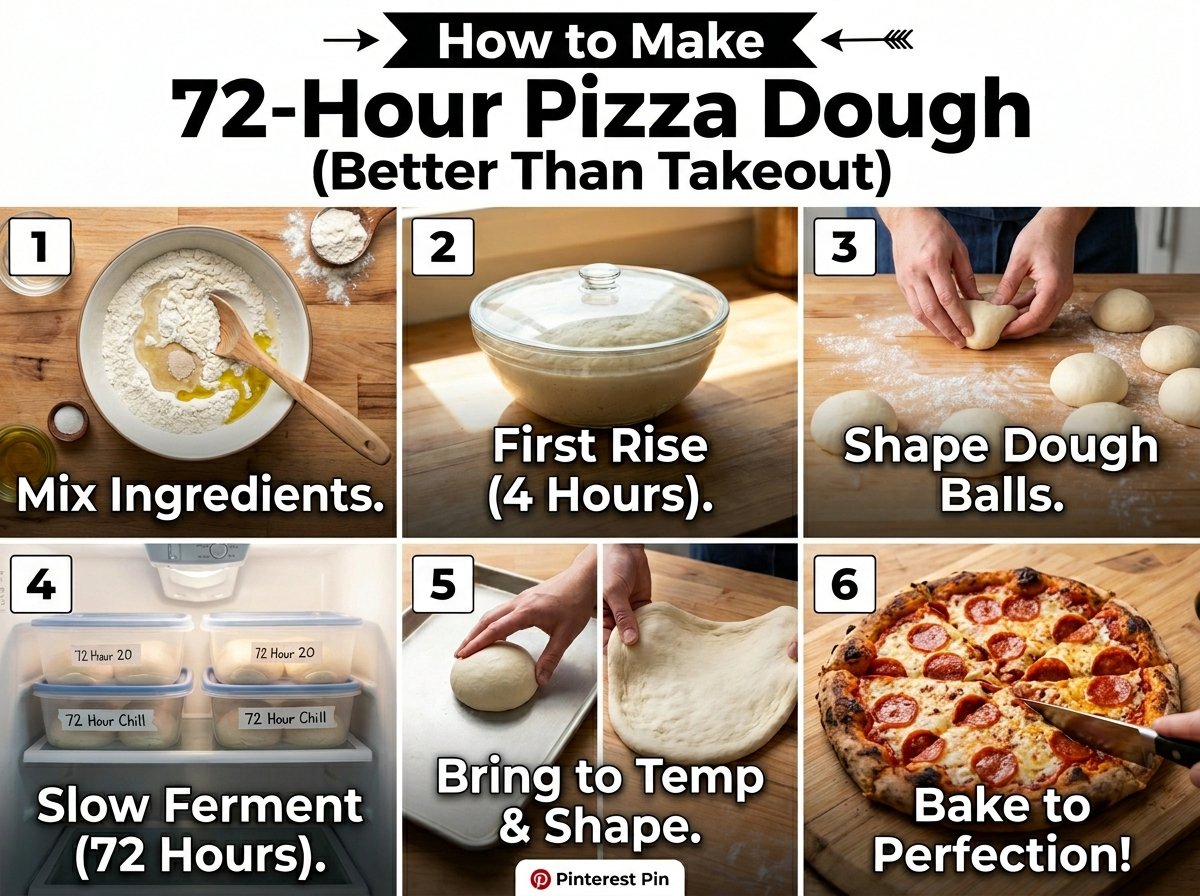
- In a large mixing bowl, combine bread flour and lukewarm water. Mix with your hands or a wooden spoon just until no dry flour remains. The dough will look shaggy and rough with no smooth texture. Cover the bowl with plastic wrap or a damp kitchen towel and let it rest at room temperature for 30 minutes. This autolyse period allows flour to fully hydrate and begins gluten formation without any kneading, which results in better texture and easier handling.
Step 2: Incorporate Salt and Yeast
- After the 30-minute rest, sprinkle fine sea salt and instant yeast evenly over the surface of the dough. Add olive oil if using. Wet your hands with water to prevent sticking, then squeeze and fold the dough repeatedly, incorporating the salt and yeast thoroughly. Continue this squeezing and folding motion for 3 to 5 minutes. The dough will transform from rough to sticky and noticeably more elastic.
Step 3: Bulk Fermentation with Stretch-and-Folds
- Cover the bowl tightly with plastic wrap or a damp towel. Let the dough rise at room temperature (70-75°F / 21-24°C) for 2 hours. After the first hour, perform one set of stretch-and-folds to build gluten strength: wet your hands, grab one side of the dough, stretch it upward as far as it will go without tearing, and fold it over the center of the dough mass. Rotate the bowl 90 degrees and repeat this stretch-and-fold motion four times total. Cover and let rest for the remaining hour.
Step 4: Divide and Shape into Tight Balls
- Lightly flour your work surface. Turn the dough out gently and use a bench scraper or knife to divide it into 4 equal pieces (approximately 210g each for consistent sizing). Shape each piece into a tight, smooth ball by cupping your hand over the dough and making small circular motions against the counter. The friction creates surface tension and the bottom should seal as you work. Place each shaped ball in a lightly oiled individual container or on a parchment-lined tray with at least 3 inches of space between them.
Step 5: Cold Fermentation (The Flavor Development)
- Cover the dough balls tightly with plastic wrap or fitted lids to prevent drying. Refrigerate for 72 hours (3 full days). During this extended cold fermentation, the small amount of yeast ferments very slowly while enzymes in the flour break down starches into simple sugars, creating exceptional flavor complexity and improved digestibility. You can use the dough after 24 hours minimum, but 72 hours produces optimal results.
Step 6: Bring to Room Temperature
- Two hours before you plan to bake pizza, remove the dough balls from the refrigerator and let them sit at room temperature, still covered. This brings the dough to a workable consistency and ensures even baking and proper oven spring.
Step 7: Preheat Oven to Maximum Temperature
- Place a pizza stone or baking steel on the middle oven rack. Preheat your oven to its maximum temperature (500-550°F / 260-288°C) for at least 45 minutes. The stone or steel must be thoroughly heated to create the intense bottom heat that produces a crispy, charred crust.
Step 8: Stretch and Shape
- Generously flour a clean work surface. Place one room-temperature dough ball on the flour and gently press from the center outward with your fingertips, leaving a ½-inch border around the edge for the crust. Pick up the dough and drape it over your knuckles, rotating and gently stretching it by gravity until it reaches 10 to 12 inches in diameter. Do not use a rolling pin, which destroys the air bubbles you spent 72 hours developing.
Step 9: Top and Bake
- Transfer stretched dough to a well-floured pizza peel or a piece of parchment paper for easy transfer. Add your toppings quickly (sauce, cheese, toppings) and immediately slide the pizza onto the preheated stone or steel. Bake for 8 to 12 minutes until the crust is golden with charred spots (leopard spotting) and the cheese is bubbling. For maximum char, switch to broil for the final 1 to 2 minutes, watching closely to prevent burning.
Notes
Hydration and Texture:
This dough is 65% hydration, which creates a balance between workability and open crumb structure. Higher hydration creates a more open, airy crust but is stickier to handle. Minimal Yeast is Intentional:
The tiny amount of yeast (0.2% of flour weight) is deliberate. It slows fermentation, allowing time for flavor development without over-proofing. Flour Type Matters:
Bread flour with 12-14% protein is essential for proper gluten development and chew. All-purpose flour will work but produces a softer, less chewy crust. Storage:
Dough balls can be frozen after the cold fermentation. Wrap each ball tightly in plastic wrap and foil, freeze for up to 3 months. Thaw in refrigerator overnight before using. Timing Flexibility:
If you need dough sooner, use ½ teaspoon instant yeast and ferment at room temperature for 6 hours, then refrigerate for 24 hours minimum. Water Temperature:
95-100°F is warm to the touch but not hot. Too hot (above 120°F) kills yeast. Too cold slows activation.
This dough is 65% hydration, which creates a balance between workability and open crumb structure. Higher hydration creates a more open, airy crust but is stickier to handle. Minimal Yeast is Intentional:
The tiny amount of yeast (0.2% of flour weight) is deliberate. It slows fermentation, allowing time for flavor development without over-proofing. Flour Type Matters:
Bread flour with 12-14% protein is essential for proper gluten development and chew. All-purpose flour will work but produces a softer, less chewy crust. Storage:
Dough balls can be frozen after the cold fermentation. Wrap each ball tightly in plastic wrap and foil, freeze for up to 3 months. Thaw in refrigerator overnight before using. Timing Flexibility:
If you need dough sooner, use ½ teaspoon instant yeast and ferment at room temperature for 6 hours, then refrigerate for 24 hours minimum. Water Temperature:
95-100°F is warm to the touch but not hot. Too hot (above 120°F) kills yeast. Too cold slows activation.