Go Back
Chef Hamid

The Ultimate Pan-Seared Cast Iron Ribeye β€” 5 Steakhouse Secrets Revealed

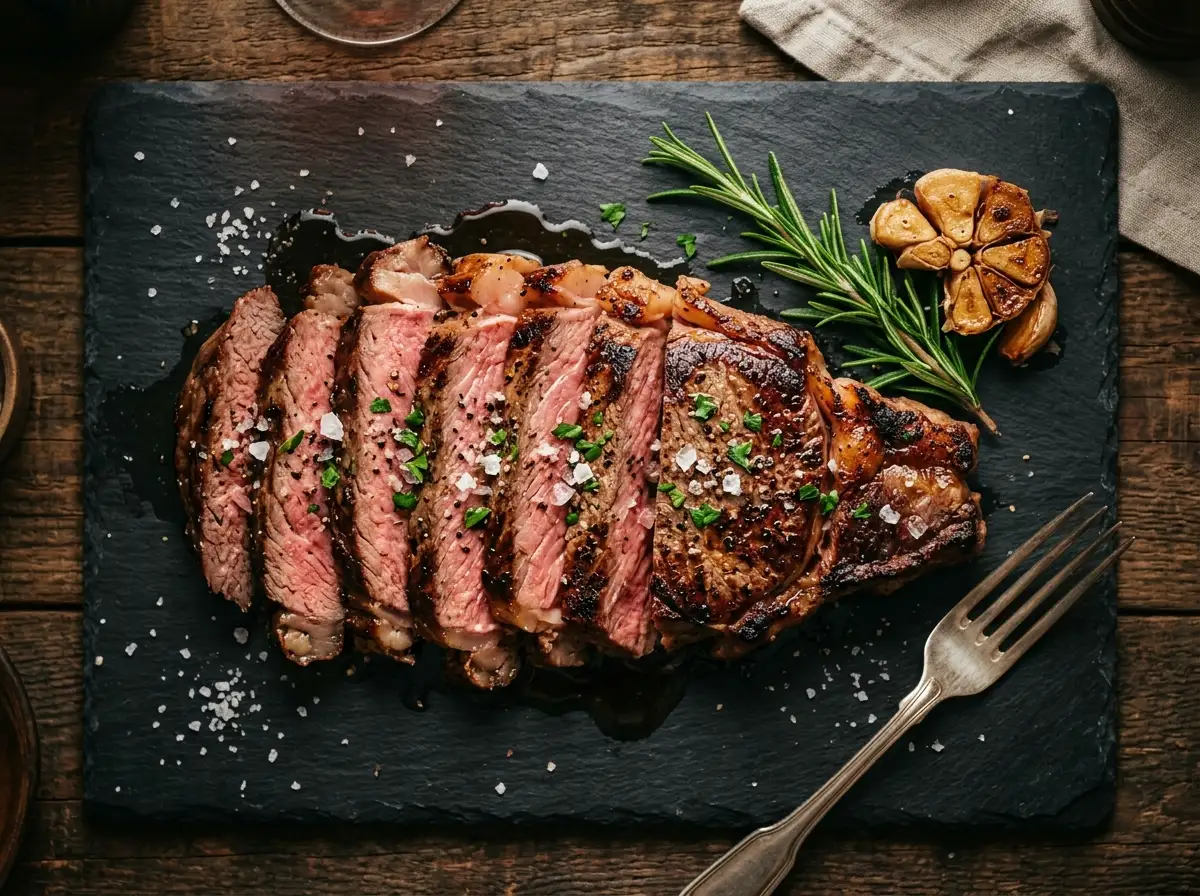
This is not just another steak recipe. This is the complete steakhouse system β€” five professional secrets that most home cooks never get told, translated into a step-by-step method you can execute in your own kitchen tonight using nothing but a cast iron skillet, a good ribeye, and the knowledge you are about to have. A deeply caramelized mahogany crust, wall-to-wall rosy pink interior, and butter-basted surface infused with roasted garlic and fresh rosemary. Follow every step exactly and you will produce a ribeye that genuinely rivals anything you have paid $60 for at a restaurant.
Prep Time 50 minutes
Cook Time 10 minutes
8 minutes
Total Time 1 hour 8 minutes
Servings: 2
Course: beef, Main Course
Cuisine: American
Calories: 1360

Ingredients
  

πŸ₯© For the Steak

  • 1 whole Bone-in or Boneless Ribeye Steak 1.5 inches thick approximately 16 oz / 1 lb, USDA Choice or Prime
  • 1 teaspoon Kosher Salt For dry-brining β€” Diamond Crystal or Morton brand
  • Β½ teaspoon Freshly Cracked Black Pepper Coarsely cracked not fine ground
  • 1 tablespoon Avocado Oil Or refined grapeseed oil β€” high smoke point essential

🧈 For the Butter Baste (Arrosé)

  • 3 tablespoons Unsalted Butter High-quality European-style preferred (Kerrygold etc.)
  • 3 cloves Fresh Garlic Smashed with flat of knife β€” NOT minced
  • 2 sprigs Fresh Rosemary Fresh only β€” do not substitute dried

πŸ§‚ For Finishing & Plating:

  • Β½ teaspoon Flaky Sea Salt Maldon brand strongly recommended
  • 1 teaspoon Reserved Strained Basting Butter Strained through fine mesh after basting
  • To taste β€” Additional Cracked Black Pepper For finishing at plate

Equipment

  • 1 Cast Iron Skillet
  • 1 Instant-read thermometer
  • 1 Large Stainless Steel Spoon
  • 1 Wire Rack + Sheet Pan
  • 1 Tongs
  • 1 Oven Mitts
  • 1 Cutting board
  • 1 Fine Mesh Strainer

Method
 

STEP 1 β€” The Dry-Brine Ritual

  1. (45 Minutes to Overnight Before Cooking)
  2. Pat the ribeye completely dry on all surfaces using paper towels
  3. Season all surfaces β€” both flat faces AND all edges β€” with kosher salt
  4. Use the full 1 teaspoon of kosher salt distributed evenly across all surfaces
  5. Place steak on wire rack set over a sheet pan
  6. Leave uncovered at room temperature for a minimum of 45 minutes
  7. ⭐ Best Result: Refrigerate uncovered on wire rack overnight for maximum crust potential

STEP 2 β€” Thermal Equilibrium

  1. (30 to 45 Minutes Before Cooking)
  2. If refrigerated overnight, remove steak from fridge 30 to 45 minutes before cooking
  3. Allow steak to begin approaching room temperature on the counter
  4. Immediately before cooking, pat all surfaces bone-dry with fresh paper towels
  5. This second pat-dry is non-negotiable β€” removes any moisture drawn back to the surface

STEP 3 β€” Cast Iron Preheat

  1. (5 to 6 Minutes Before the Steak Goes In)
  2. Place 12-inch cast iron skillet on burner over medium-high heat
  3. Preheat for a minimum of 5 to 6 minutes β€” do not rush this step
  4. Test for readiness: Flick 2 to 3 drops of water onto the surface
  5. ❌ Water sizzles slowly = not ready yet
  6. βœ… Water skitters in tight beads and vanishes instantly = ready
  7. In the final 1 minute of preheating, add 1 tablespoon avocado oil
  8. Swirl to coat the surface β€” oil should shimmer and just begin to smoke lightly

STEP 4 β€” The Sear

  1. (Approximately 6 to 8 Minutes Total)
  2. Carefully lay the ribeye away from you into the preheated oiled skillet
  3. You should hear an aggressive, loud sizzle-roar β€” this is correct
  4. β›” Do NOT touch, move, press, or adjust the steak at all
  5. Sear first side for 2.5 to 3.5 minutes
  6. Steak will release naturally from the pan when crust is properly formed
  7. If it resists when you try to flip β€” wait 30 more seconds
  8. Flip once using tongs
  9. Sear second side for 2 to 3 minutes
  10. Using tongs, hold steak on its edges to sear all sides β€” 30 to 45 seconds per edge
  11. Sear the fat cap edge until it renders and crisps β€” approximately 45 seconds

STEP 5 β€” The Butter-Basting Symphony (ArrosΓ©)

  1. (1.5 to 2 Minutes)
  2. Reduce burner heat to medium
  3. Add to the pan:
  4. 3 tablespoons unsalted butter
  5. 3 smashed garlic cloves
  6. 2 fresh rosemary sprigs
  7. Wait for butter to melt and begin to foam actively
  8. Using an oven mitt, tilt the pan slightly away from you so butter pools at the far edge
  9. Using a large spoon, continuously baste the top surface of the steak with foaming butter
  10. Do not stop β€” keep spooning constantly for 1.5 to 2 full minutes
  11. Butter should be foamy and nut-brown β€” fragrant and rich
  12. ⚠️ If butter turns dark or smells bitter β€” remove pan from heat immediately

STEP 6 β€” Temperature Check

  1. Insert instant-read thermometer horizontally into the side of the steak
  2. Push probe to the exact center of the steak
  3. Use the doneness temperature guide below to determine your pull point
  4. Remove steak from heat when it reads your target pull temperature
  5. Carryover cooking during the rest will raise internal temp by approximately 5Β°F

STEP 7 β€” The Sacred Rest

  1. (7 to 10 Minutes β€” Do Not Skip)
  2. Transfer steak immediately to a cutting board (not a plate)
  3. Tent loosely with aluminum foil β€” loose tent only, do not seal tightly
  4. Rest for 7 to 10 minutes without cutting or disturbing
  5. While steak rests, strain basting butter through fine mesh strainer into a small bowl
  6. Discard garlic solids and rosemary β€” reserve the strained butter for finishing

STEP 8 β€” Plate and Serve

  1. After full rest period, slice steak against the grain
  2. Arrange slices on a warmed plate or serving board
  3. Drizzle 1 teaspoon of reserved strained basting butter over sliced steak
  4. Finish with flaky sea salt and additional cracked black pepper
  5. Serve immediately β€” do not let it sit after plating

Notes

Note # Detail
Note 1 Overnight dry-brine in the refrigerator uncovered on a wire rack produces the most dramatic crust results of anything you can do in this recipe β€” do not skip it if you have the time
Note 2 If using a boneless ribeye instead of bone-in, reduce searing time by approximately 30 seconds per side as heat distributes slightly faster without the bone
Note 3 Significant smoke during the searing stage is completely normal and means you have the heat exactly right β€” turn on your range hood and open a window before you begin cooking
Note 4 The strained basting butter can be stored in an airtight container in the refrigerator for up to 5 days β€” it is extraordinary used for cooking eggs, roasting vegetables, or spreading on fresh bread
Note 5 For ribeyes thicker than 1.75 inches such as a tomahawk or cowboy cut, sear on the stovetop first to build the crust then transfer the entire cast iron skillet into a 400Β°F preheated oven to finish to your target temperature
Note 6 Never use a non-stick pan for this recipe β€” non-stick coatings begin breaking down at temperatures above 450Β°F to 500Β°F and the Maillard browning reaction requires surface temperatures well above that threshold
Note 7 If the steak resists when you attempt to flip it, do not force it β€” simply wait an additional 30 seconds and try again, the steak will release naturally and cleanly when the crust is fully formed
Note 8 Fresh rosemary is mandatory for the basting stage β€” dried rosemary turns bitter in hot butter, leaves unpleasant gritty debris on the steak surface, and does not infuse the butter with the same aromatic quality
Note 9 The cutting board for resting must be a board not a plate β€” a plate traps steam underneath and around the steak which softens and destroys the crust you worked so hard to build
Note 10 If you are cooking two ribeyes at the same time, use a larger 15-inch cast iron skillet or cook them separately β€” overcrowding the pan drops the temperature dramatically and causes steaming instead of searing