The 7-Minute Air Fryer Salmon: How to Get a Perfect Miso-Glaze Crust Without Burning
By Chef Hamid | Homely Recipe
There is a very specific kind of frustration that comes with burning a miso glazes.
You spent the extra three minutes making it. You brushed it on carefully. You put the salmon in the air fryer feeling genuinely good about dinner.
And then somewhere between minute five and minute seven, that beautiful caramel-colored glaze crossed the line from deeply savory and slightly sticky to acrid, black, and bitter — taking what should have been a restaurant-quality piece of fish with it and Air Fryer Miso Salmon.
If this has happened to you, the problem was not your glaze. It was not your air fryer. It was not even your timing.
It was sugar — and nobody told you how to manage it.
I have tested air fryer salmon more times than I care to admit, adjusting glaze composition, application timing, temperature, and distance from the heating element to figure out exactly where the line is between a lacquered, glossy miso crust and a burned one.
The window between those two outcomes is narrower than most people expect — but once you understand why it exists, staying on the right side of it is completely straightforward.
Seven minutes. One pan. Zero burning. Here is how it actually works.
Jump to Recipe🔬 Why Air Fryer Miso Salmon Burns — The Sugar Problem Explained
Miso paste is not just salty and savory. It contains a significant amount of natural sugars — produced during the fermentation process when koji mold breaks down the starches in soybean and grain. These sugars are what give miso its subtle sweetness and its ability to caramelize so beautifully under heat.
The problem is that sugar caramelizes fast and burns faster.
Plain sugar begins to caramelize around 320°F / 160°C. It turns bitter and acrid somewhere above 375°F / 190°C. A typical air fryer running at 400°F / 204°C with a top-mounted heating element radiating directly downward creates a surface environment that can easily hit and exceed that burn threshold — especially on a thin glaze layer with nothing to slow the heat transfer.Miso Sugars+Direct High Heat→Caramelization→Carbonization (Burnt)
The solution is not to lower the temperature so much that the salmon steams instead of crisps. The solution is to control when the glaze meets the heat — and to build the glaze composition so that it caramelizes without crossing into burn territory in the time it takes the salmon to cook through.
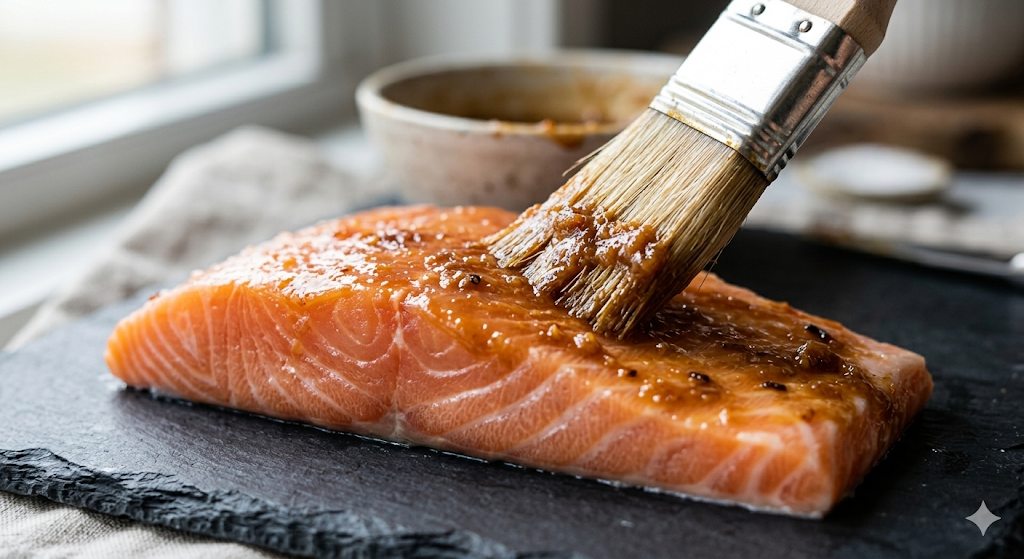
Three things protect the glaze from burning. A small amount of oil in the mixture slows heat transfer to the sugars. Mirin — a sweet Japanese rice wine — dilutes the sugar concentration while adding its own gentle sweetness. And applying the glaze in two stages rather than all at once means the first layer sets and dries slightly before the final layer goes on, creating a more stable crust that resists scorching.
In simple terms: spread the sugar out, add a fat buffer, and time the application. That is the whole system.
🛒 What to Buy — Getting the Ingredients Right
Miso is the centerpiece of this dish and the variety you choose changes the result significantly.
White miso (shiro miso) is the right choice here. It is milder, slightly sweeter, and lower in salt than red or dark miso — which means it caramelizes more gently and is far more forgiving in a high-heat environment. Red miso has deeper, more intense fermented flavors but its higher salt content and denser sugar compounds make it burn more easily in an air fryer. Stick with white for this recipe.
Where to buy it: Most large Whole Foods and Trader Joe’s locations carry white miso in the refrigerated section near tofu. H-Mart and 99 Ranch Market stock a wider variety if you have one nearby. Amazon carries Hikari and Maruman brands with reliable reviews for home cooking.
For the salmon itself, look for center-cut fillets that are roughly equal in thickness — about 1 inch / 2.5 cm at the thickest point. Uneven thickness means one end overcooks while the other is still underdone. Skin-on fillets work slightly better in the air fryer because the skin acts as a natural insulator on the bottom side, protecting the flesh from direct heat and keeping moisture locked in.
Wild-caught sockeye or coho salmon has a firmer texture and more intense flavor than farmed Atlantic salmon. It also has slightly less fat content, which means it can dry out faster — so the glaze’s moisture retention role becomes even more important. Either variety works; just adjust your cook time by one minute for thinner wild-caught fillets.
For mirin — Hon mirin is the real thing, made from fermented glutinous rice with around 14% alcohol. It is noticeably more complex and less sweet than the cheap “aji mirin” or “mirin-style condiment” bottles that dominate most grocery store shelves. Look for Takara or Morita brand Hon Mirin at Asian grocery stores. If all you can find is regular mirin, reduce the honey in the recipe by half to compensate for the extra sweetness.

The 7-Minute Air Fryer Salmon: How to Get a Perfect Miso-Glaze Crust Without Burning
Ingredients
Equipment
Method
👨🍳 The Method — Seven Minutes, Done Right
Build the Glaze First
Combine the white miso, mirin, soy sauce, honey, sesame oil, grated ginger, and garlic in a small bowl. Whisk until completely smooth with no lumps of miso remaining. The sesame oil is doing two jobs here — it adds a nutty aromatic layer to the flavor and it creates a thin fat coating between the sugar compounds and the air fryer's direct heat, slowing caramelization enough to give you that glossy crust without crossing into burned territory.Taste the glaze before it goes anywhere near the fish. It should be savory-forward with a gentle sweetness and a slight warmth from the ginger. If it tastes flat, add a small extra pinch of salt. If it tastes too sweet, add a few extra drops of soy sauce.Prep the Salmon
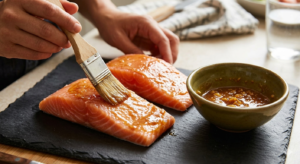
Pat both fillets completely dry with paper towels — top, bottom, and sides. Surface moisture is the enemy of crust formation for the same reason it ruins chicken wings. A wet surface steams before it can brown, and a steamed miso glaze never develops the lacquered texture you are looking for.Place the fillets skin-side down on a small plate. Using a pastry brush or the back of a spoon, apply half the glaze to the flesh side only. Use a generous, even coat — you want full coverage but not a thick pooling layer. Let this first coat sit for 5 minutes at room temperature. During this time the glaze begins to dry slightly and bond to the surface of the fish, creating a more stable base for the second application later.
Preheat — This Matters More Than Most People Think
Set your air fryer to 380°F / 193°C — not 400°F. Preheat with the empty basket for 3 full minutes. The 20-degree difference between 380 and 400 sounds small but it is the difference between controlled caramelization and a burn on a sugar-heavy glaze. The preheated basket also ensures the skin side gets immediate direct heat contact, which crisps the skin without needing to flip the fish.The Two-Stage Cook
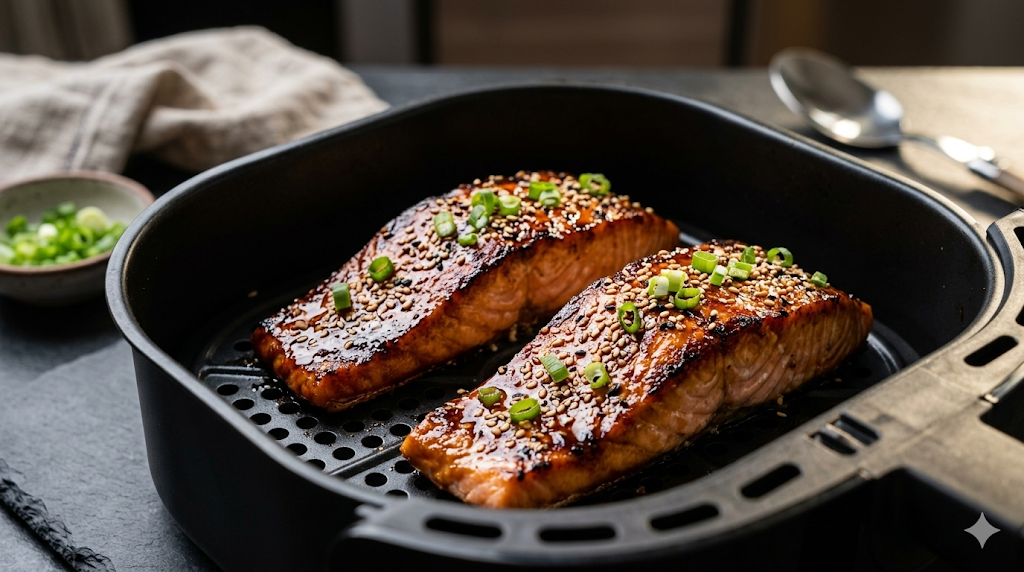
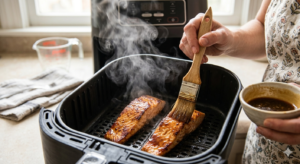
Place the salmon fillets skin-side down in the preheated basket. They should not touch each other — leave at least half an inch of space between fillets so hot air can circulate freely around every surface.Cook at 380°F / 193°C for 4 minutes. Do not open the basket during this time. The skin is crisping directly against the hot metal and interrupting that process will slow the crust formation you need.At the 4-minute mark, open the basket and brush the remaining glaze over the flesh side. Apply it quickly and close the basket immediately. Return to 380°F / 193°C for 3 more minutes.This second glaze application goes onto a surface that is already partially cooked and warm. It sets almost immediately on contact with the heat — creating that restaurant-style lacquered finish in the final three minutes without having enough time to burn.Total cook time: exactly 7 minutes.How to Know It Is Done
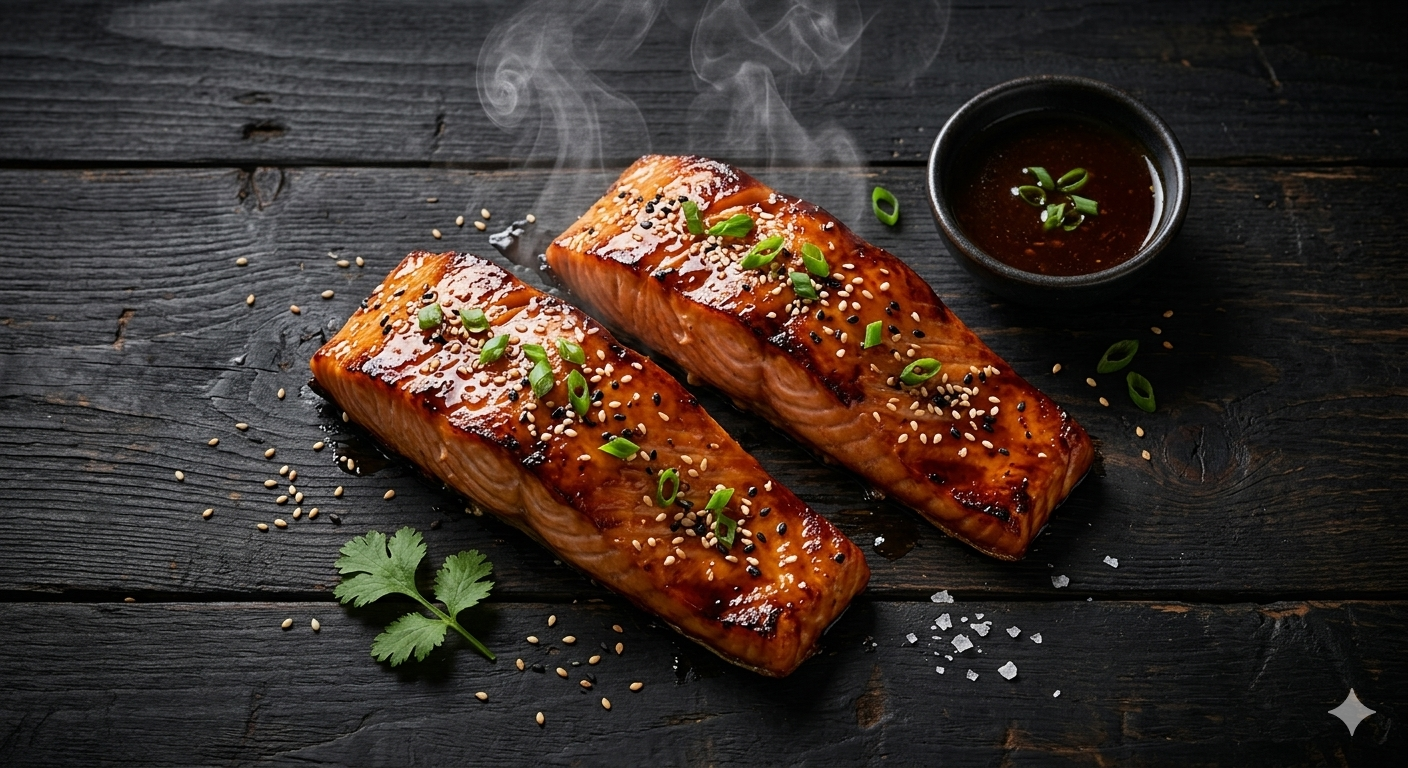
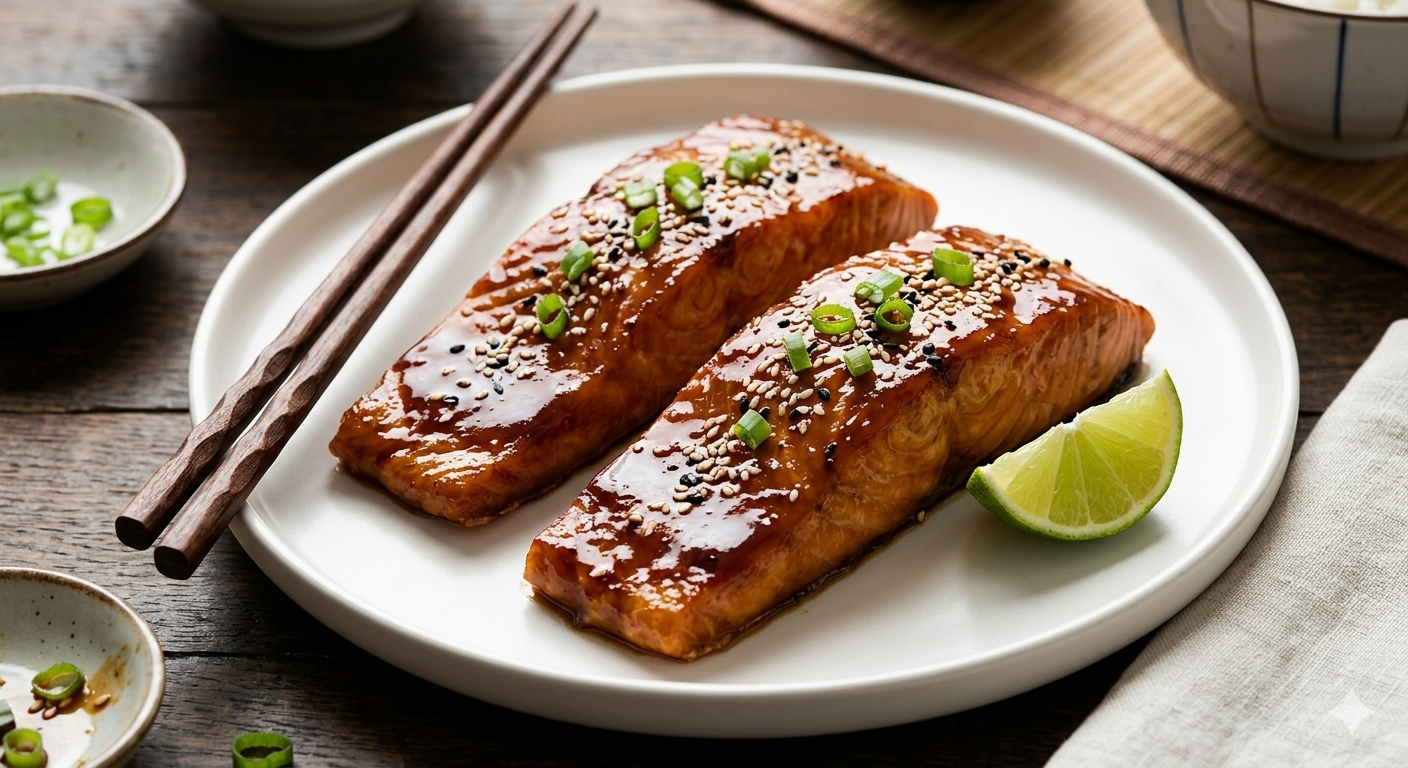
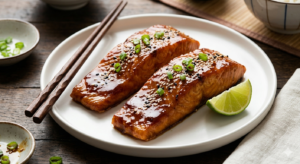
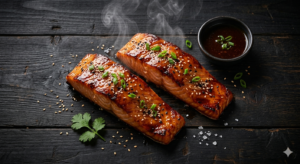
The salmon is ready when the glaze is deep caramel in color with slight darkening at the very edges — this is correct and intentional. The flesh should be opaque about three-quarters of the way through the fillet with a slightly translucent center. This is the medium doneness that keeps salmon moist and silky rather than dry and chalky.If you prefer fully cooked salmon with no translucent center at all, add 90 seconds to the final stage. The glaze will be slightly more charred at the edges but still within the acceptable range.Remove carefully with a thin spatula. The glaze will be genuinely hot and sticky at this point — handle the fillets gently and plate skin-side down.Scatter toasted sesame seeds over the glaze while it is still hot so they adhere to the surface. Add thinly sliced scallions and a wedge of lime alongside.- Final beauty shot
Notes
💡 Chef Hamid’s Insight — The Discipline of the Seven Minutes
Most people give salmon too long because they are afraid of undercooking it. And in giving it too long, they destroy exactly what makes salmon worth eating — that silky, almost buttery texture that comes from fat still present in the flesh. Overcooked salmon is not safe salmon. It is just dry salmon. The seven-minute window I have settled on after extensive testing is not a compromise — it is a precision.
The miso glaze reaches its peak at the same moment the fish reaches its ideal internal temperature. These two things arriving together is not luck. It is the result of understanding what each ingredient needs and building a method around those needs rather than around fear. Trust the timer. Trust the temperature. Trust the process. — Chef Hamid,HomelyRecipe
🌡️ Temperature Guide
| Stage | Temperature |
|---|---|
| USDA Safe Internal Temp — Salmon | 145°F / 63°C fully cooked |
| Chef Hamid preferred doneness | 125–130°F / 52–54°C (medium) |
| Air fryer cooking target | 380°F / 193°C |
| Miso sugar caramelization begins | 320°F / 160°C |
| Miso sugar burn threshold | 375°F+ / 190°C+ — stay below this |
| Danger zone — bacteria | 40–140°F / 4–60°C — never hold raw fish here |
Note on doneness: The USDA recommends 145°F / 63°C for fully cooked salmon. Cooking to medium (125–130°F) is a personal preference that many chefs and food lovers choose for texture — make this decision based on your own comfort level.
📦 Storage and Reheating
| Item | Fridge | Freezer | Best Reheat |
|---|---|---|---|
| Cooked Air Fryer Miso Salmon | 2–3 days | Not recommended | Air fryer 325°F / 163°C for 3 min |
| Raw marinated Air Fryer Miso Salmon | 1 day max | Not recommended | Cook fresh |
| Air Fryer Miso Salmon only | 5–7 days | Up to 1 month | Use straight from fridge |
Reheating Air Fryer Miso Salmon on in the microwave kills the crust and dries the flesh. Two to three minutes in the air fryer at a lower temperature brings it back reasonably well — though fresh is always better with fish.
❓ Questions People Actually Ask
Can I use red miso instead of white? You can — but reduce the quantity to 1 tbsp and add an extra teaspoon of mirin to dilute the sugar concentration. Red miso has a more intense flavor and burns more easily. The result will be bolder but less forgiving at high heat then you eat Air Fryer Miso Salmon.health benefits of salmon.
What if my salmon fillets are thicker than 1 inch / 2.5 cm? Add 2 minutes to the first cooking stage — cook 6 minutes before the second glaze application, then 3 more minutes. Check internal temperature with an instant-read thermometer rather than relying purely on timing.
Can I make this without mirin? Yes. Substitute with 1 tbsp dry sherry or sake plus ½ tsp extra honey. The flavor will be slightly different but the glaze will behave similarly under heat.
My glaze is still burning at 380°F. What now? Lower to 370°F / 188°C and extend cook time by 90 seconds. Also check that your air fryer’s top heating element is not unusually close to the basket — some compact models run hotter than their temperature settings suggest.
Can I use this glaze on chicken or tofu? Absolutely. The same two-stage application method works for both. Chicken thighs need 18–20 minutes at 380°F / 193°C with the second glaze at the halfway mark. Firm tofu needs 12–14 minutes with the same timing.
🔗 Keep Exploring on The Flavor Bazaar
- 🍗 Crispy Air Fryer Chicken Wings — The overnight dry brine method that changes everything
- [Air Fryer Hard Boiled Eggs] (The No-Water Convection Method)
- [The 7-Minute Air Fryer Salmon] How to Get a Perfect Miso-Glaze Crust Without Burning