Roasted Tomato Burrata Toast: 7 Tips for Perfect Results
by Chef Hamid | Homely Recipe
Why This Roasted Tomato Burrata Toast Changes Everything {#intro}
Some recipes change the way you think about food. This Roasted Tomato Burrata Toast is one of them. It looks like something you would pay $22 for at a trendy brunch café. But here is the secret — it takes about 35 minutes to make at home, and the results are genuinely stunning.
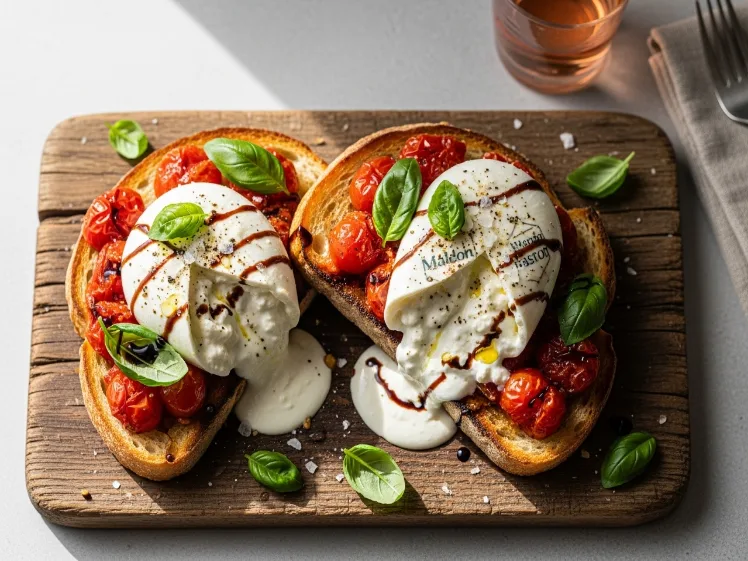
We are talking jammy, caramelized cherry tomatoes piled onto golden garlic-rubbed sourdough, topped with a cloud of torn, room-temperature burrata that meltss slightly on contact. A drizzle of balsamic glaze. A scatter of fresh basil. Flaky Maldon salt. Maybe a little hot honey if you are feeling adventurous.
This is the kind of dish that makes your kitchen smell like a Roman trattoria on a Sunday morning. It works beautifully as an easy brunch toast idea, a dinner party starter, or an honest, deeply satisfying lunch. After testing this recipe more than 15 times, I have cracked every element — and I am giving you every single secret right here.
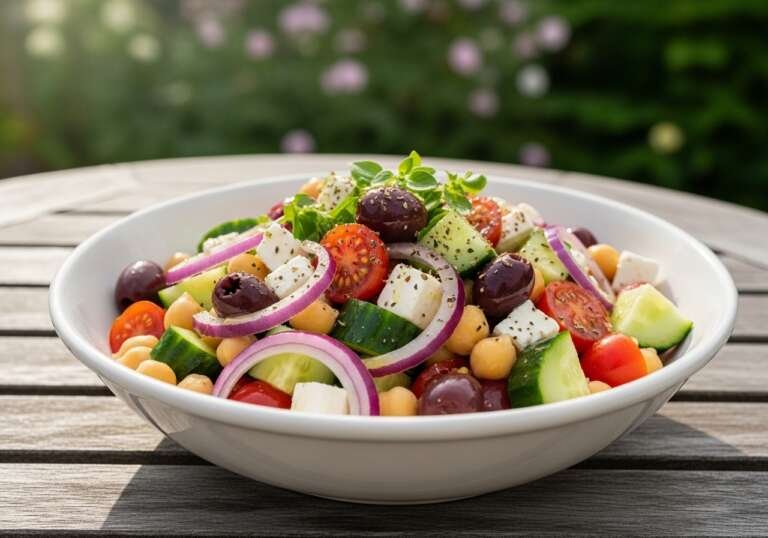
These mediterranean flavor combinations are exactly what make this dish feel so alive, so layered, and so craveable every single time.
↓ Jump straight to the recipe card
Jump to RecipeThe Time I Completely Ruined Burrata Toast (True Story) {#anecdote}
Okay so real talk. The first time I made burrata toast for guests, I thought I had it completely figured out. I pulled my tomatoes straight from the fridge, tossed them wet onto a roasting pan, and slid them into the oven. I used regular sandwich bread because I was out of sourdough. I sliced the burrata cold — straight from the container — and laid it on top like a polite little disc.
My guests were gracious. They said things like “oh this is lovely” and “so interesting.” What they did not say was “wow” or “can I have the recipe” or any of the things that actually matter at a dinner party.
I ate a piece myself and nearly cried. The toast was soggy within four minutes — properly limp and wet. The tomatoes were pale and watery, not jammy and sweet. The burrata was cold and rubbery, and the flavor was just… flat. Like a beige version of what this dish could be.
I was mortified. I spent the next three weekends obsessively re-testing it. Fifteen recipe iterations later, I understand exactly what went wrong and exactly how to fix every single element. The result is what you are reading right now. And trust me on this one — once you know these five secrets, you will never make mediocre burrata toast again.
What Makes Burrata Toast So Special {#special}
There is a reason this burrata toast recipe has taken over every food blog, every Pinterest board, and every upscale café menu from New York to Los Angeles. It is the textural contrast. The flavor architecture. The sheer elegance of simplicity done right.
Burrata is not just fancy mozzarella. According to Wikipedia’s entry on burrata, it originated in the Puglia region of southern Italy in the early 20th century. The outside shell is solid fresh mozzarella, but the inside — called stracciatella — is a mixture of soft curd and fresh cream. When you tear it open over warm toast, that cream spills out and mingles with the tomatoes, the olive oil, and the bread. It becomes a sauce. A beautiful, accidental, luxurious sauce.
Paired with roasted tomatoes, which are concentrated, sweet, and intensely savory, you get a flavor combination that feels both rustic and refined. This is Italian burrata toast at its most honest best.
The best part? This is actually a gourmet toast recipe that requires zero professional skills. You just need to know the rules.
Secret 1: The Dry Tomato Rule {#secret1}
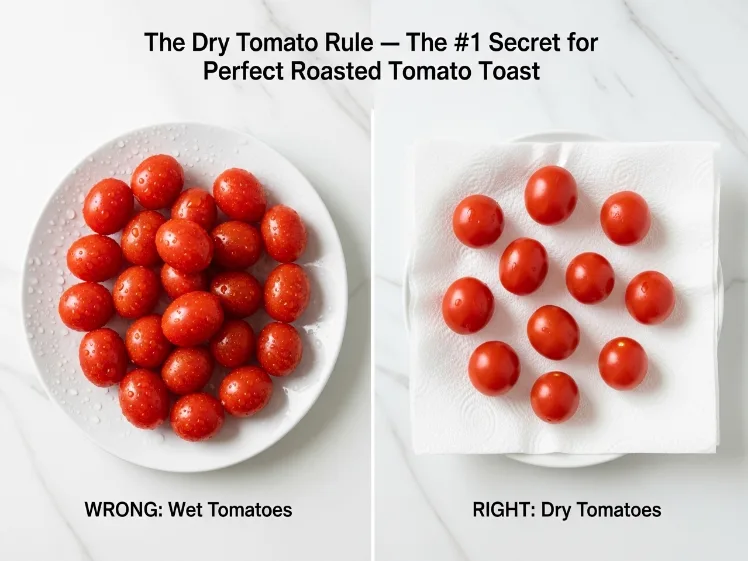
Here is the thing — moisture is the enemy of roasted tomato toast. I learned this the hard way, twice. Wet tomatoes do not roast. They steam. And steamed tomatoes on toast create a waterlogged disaster that no amount of good olive oil can save.
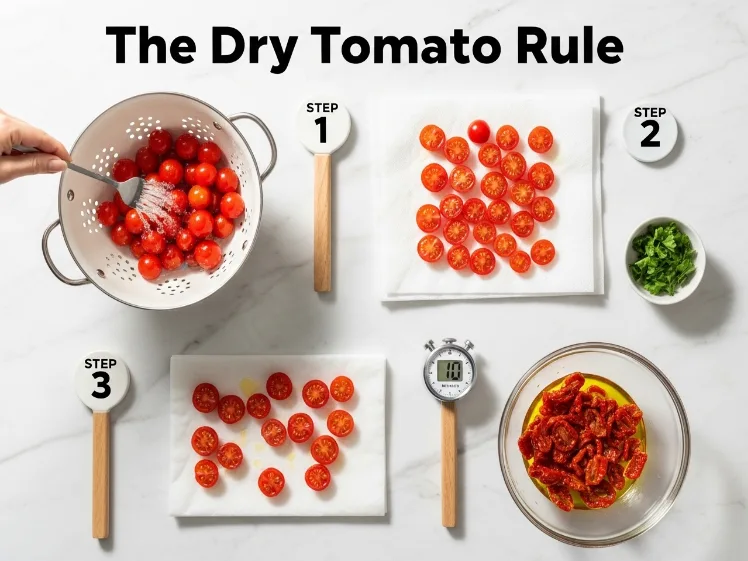
The fix is almost embarrassingly simple. After rinsing your cherry tomatoes, spread them on a clean kitchen towel or a layer of paper towels. Pat them completely dry on all sides. Then let them rest at room temperature for 10 full minutes. Do not rush this. That resting time allows surface moisture to evaporate, so when the tomatoes hit the hot oven, they immediately start roasting — not steaming.
Here is another critical detail: salt your tomatoes AFTER roasting, not before. Salt pulls moisture out of vegetables. If you salt raw tomatoes before roasting, you are essentially creating a mini brine that works against everything you are trying to achieve. Roast them bare. Season after.
The result? Tomatoes that are blistered, jammy, and concentrated in flavor — about 10 times more intensely flavored than their raw versions. This single step is what separates a café-quality roasted tomato toast from every average version you have ever had.
📌 Save this to your Brunch board on Pinterest so you never lose it!
Secret 2: The Bread Architecture Rule {#secret2}
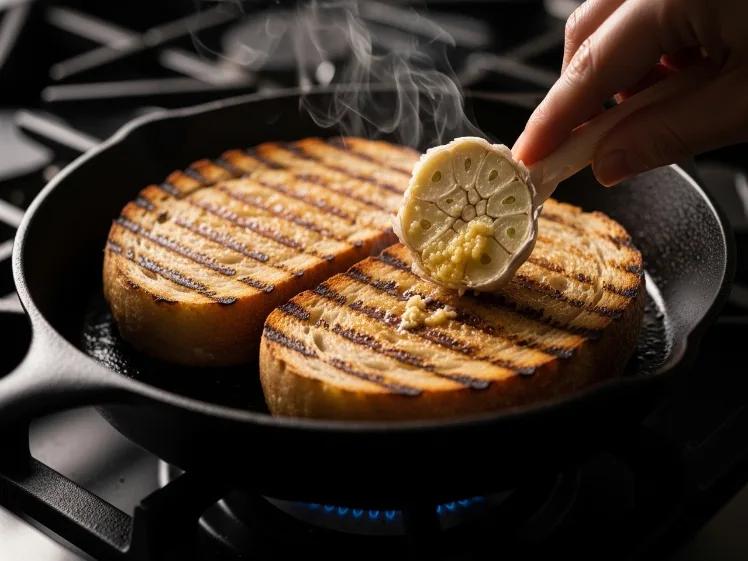
Not all toast is created equal. This is a universal truth and I will die on this hill.
For this recipe, your bread needs to be exactly ¾ inch thick. Thinner than that and it goes soggy the moment the tomatoes touch it. Thicker and you lose the balance between bread and topping. ¾ inch is the golden sweet spot — sturdy enough to hold the weight, thin enough to eat in a proper bite.
Use a cast iron pan, not a toaster. I know your toaster is right there on the counter. I know it is convenient. But here is what happens in a cast iron: you brush the bread with extra virgin olive oil on both sides, press it into a medium-high heat pan (around 375–400°F surface temperature), and let it sit undisturbed for 90 seconds per side. That 90-second window creates a deeply golden crust that stays crispy much longer than toaster bread.
Now comes the trick that every Italian nonna knows: rub the hot toast immediately with a raw garlic clove. Cut the clove in half and rub the cut side all over the surface. The heat from the bread gently cooks the garlic as it contacts the surface, creating an invisible, fragrant garlic layer that perfumes every single bite.
Finish with a brush of good olive oil after toasting. Yes, before AND after. This double-oil technique creates a subtle moisture barrier that protects the bread from the tomato juices — giving you a toast that stays crispy for longer.
Secret 3: The Burrata Temperature Secret {#secret3}
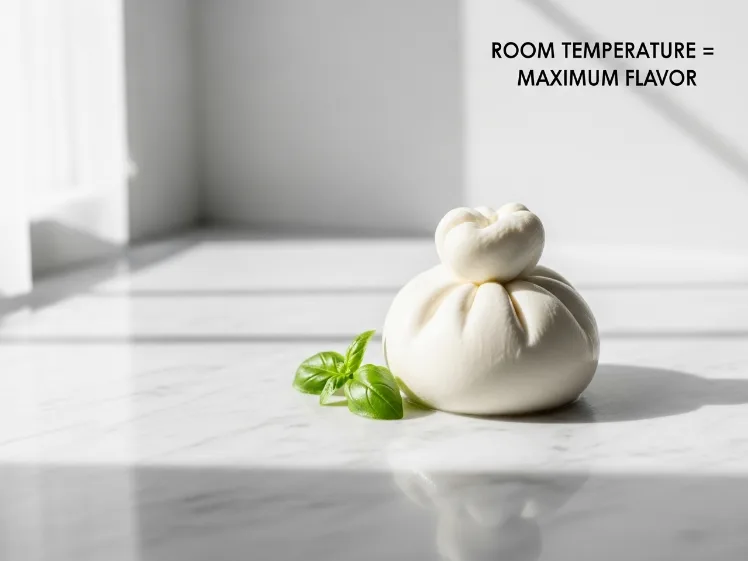
This is the one that most people skip, and it is the one that makes the biggest difference. Never use cold burrata straight from the refrigerator. Never.
Cold burrata has almost no flavor. The fat molecules inside — responsible for that rich, creamy taste — are constricted by cold temperature and simply do not express themselves. You end up with something that tastes vaguely milky but mostly just cold. It is like serving ice cream that has not quite thawed. Technically the right thing, but texturally and flavor-wise all wrong.
The rule is simple: pull your burrata out of the fridge 20 to 25 minutes before you plan to use it. Let it sit on the counter, still in its packaging, at room temperature. This allows the interior stracciatella to soften to its natural, flowing consistency and allows all the delicate dairy flavors to bloom.
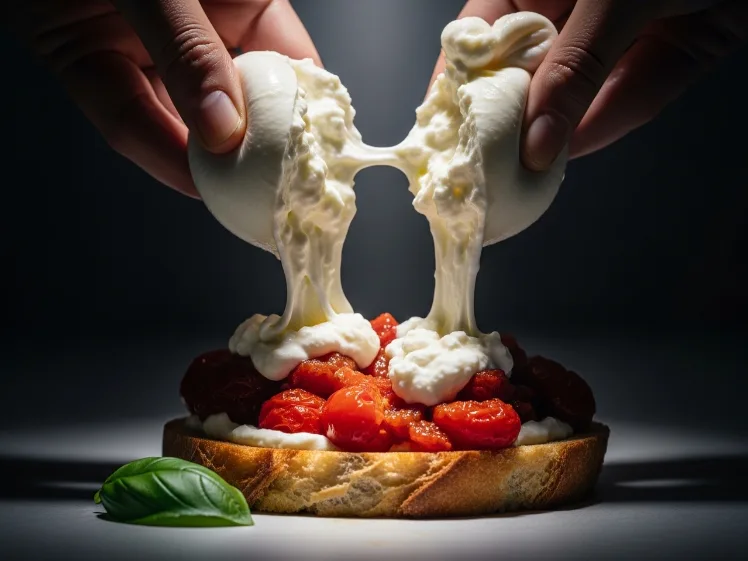
When you are ready to use it, tear it rather than slice it. Use clean hands and pull the burrata gently apart over the toast. Slicing with a knife gives you clean edges and compressed layers. Tearing gives you dramatic, irregular pieces with exposed cream — visually stunning and texturally perfect. It also means the cream spills down onto the tomatoes, which is exactly what you want.
And burrata goes on last. Always last. Every time.
Secret 4: The Flavor Layering Order {#secret4}
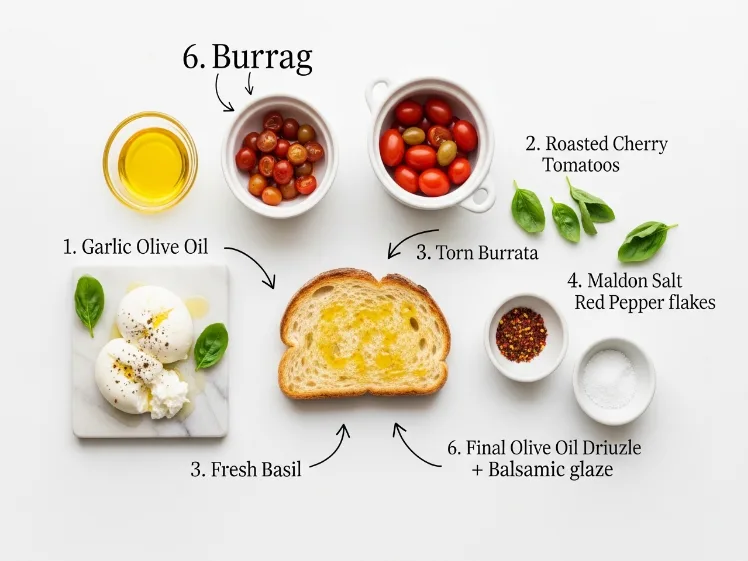
And this is where it gets good. The order in which you build this toast is not arbitrary. It is a deliberate sequence designed to protect the toast’s structural integrity while maximizing flavor in every single bite.
Here is the exact order, and yes, every step matters:
- Garlic olive oil base directly on hot toast — this is your moisture barrier and your flavor foundation
- Roasted tomatoes, placed strategically — do not pile them carelessly; distribute them so every bite gets a tomato
- Torn burrata placed gently on top — room temperature, torn not sliced, placed last before garnish
- Fresh basil leaves — never dried, not ever, more on this below
- Finishing salt and red pepper flakes — scattered from a height for even distribution
- Final drizzle of excellent olive oil — this is the finishing coat, not the cooking oil
- Balsamic glaze or hot honey — the crowning touch that ties it all together
The reason the olive oil goes on both first and last is flavor architecture. The first layer protects. The last layer brightens. The tomatoes go under the burrata because the weight of the cheese gently warms and holds them in place. The basil goes on top of the burrata so it stays fresh and does not wilt from the tomato heat.
Every element has a reason. Every reason has a result. This is how café-quality mediterranean meals are built — not through expensive ingredients, but through intentional order.
Secret 5: The Finishing Touch Matrix {#secret5}
The finishing touches on this fancy toast recipe are where your personal style gets to shine — but there are still some hard rules.
Balsamic glaze only — never plain balsamic vinegar. Plain balsamic vinegar is acidic and thin. It makes toast soggy in seconds and the sharpness overpowers the delicate burrata. Balsamic glaze is reduced, syrupy, and sweet. It clings to the surface rather than soaking in, and adds a complex sweetness that ties all the flavors together. You only need a teaspoon. It is not a condiment — it is a finishing element.
Fresh basil, not dried. Dried basil has almost none of the aromatic oils that make fresh basil the flavor bomb it is. Dried basil on burrata toast tastes like a pizza kit from 2003. Use fresh leaves — tear them if they are large, leave small ones whole. Place them right before serving.
Maldon flaky sea salt, not table salt. This is not food snobbery. It is texture. Maldon sea salt has large, irregular flat crystals that crunch slightly on the tongue before dissolving. That textural contrast against the creamy burrata is extraordinary. Table salt dissolves immediately and gives you saltiness without the experience.
The hot honey option. This is trending across the USA food scene for very good reason. A light drizzle of hot honey — Mike’s Hot Honey is widely available — over the finished toast adds a sweet-heat dimension that is genuinely addictive. If you are serving this to guests, put a small jar on the table and let people customize. It is a conversation starter and a flavor revelation.
The Tomato Transformation: Why Roasting Works {#maillard}
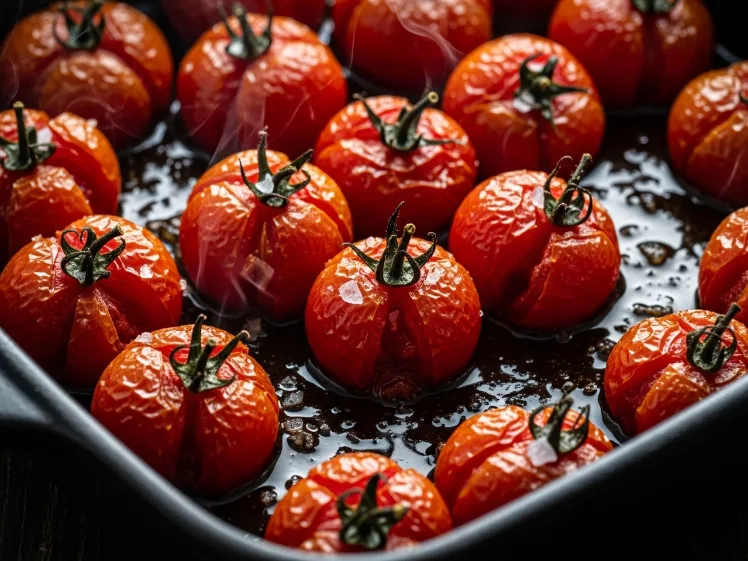
Let us talk about what actually happens to your tomatoes inside that oven, in plain human terms.
When you roast tomatoes at 400°F, something magical occurs that food people call the Maillard Reaction. Here is the simple version: the natural sugars inside the tomato meet the amino acids (tiny protein building blocks) under high heat, and they chemically transform into brand new flavor compounds called melanoidins. Those are the golden-brown, deeply savory, slightly caramelized bits you see on the skin of a perfectly roasted tomato.
Sugar + Amino AcidsΔ≥280∘FMelanoidins (Deep Flavor + Color)
Roasting at 400°F keeps your tomatoes squarely above the 280°F threshold where this reaction kicks in. The result is three transformations happening simultaneously:
Deep caramelized sweetness — the natural sugars concentrate as water evaporates
Concentrated umami flavor — glutamates in the tomato amplify into savory intensity
Perfect jammy texture — the tomato walls soften and collapse into something almost sauce-like
This is why roasted tomatoes taste nothing like raw tomatoes. It is not just “cooked” — it is chemically transformed. And it is exactly why this roasted tomato toast hits flavor notes that a fresh tomato version simply cannot reach.
Ingredient Deep Dive: What to Buy and Where to Find It {#ingredients}
Tomatoes: Choose Wisely
Not all tomatoes roast equally. For this burrata appetizer recipe, your best choice is cherry tomatoes — specifically the small, round or oval ones. They have a high sugar-to-water ratio, which means they caramelize beautifully and stay intact during roasting rather than turning to mush.
The best varieties for this recipe:
Cherry tomatoes — the undisputed winner for this dish. Sweet, small, and perfectly sized
Campari tomatoes — slightly larger, slightly more acidic, beautiful results when halved
Roma tomatoes — work well quartered, denser flesh, longer roasting time needed
Where to buy in the USA:
Trader Joe’s — their Teeny Tiny Avocado Toast tomatoes or regular cherry tomatoes are excellent and consistently sweet
Whole Foods — look for the locally sourced heirloom cherry tomatoes in season (summer is peak)
Farmers Markets — the absolute best option from June through September. Ask vendors for dry-farmed tomatoes if available; they have incredible concentrated flavor and less moisture
Burrata: Fresh Is Everything
Fresh burrata and packaged burrata are different products in practice, even if they are technically the same thing. Fresh burrata from a cheese counter (often sold in a small tub of whey) has a more delicate outer shell and creamier interior. Packaged burrata sitting in a grocery shelf in sealed plastic is still good — but the texture is slightly firmer and the flavor is milder.
Best options in the USA:
BelGioioso — the most widely available brand in American grocery stores. You will find it at Walmart, Kroger, Whole Foods, and most regional chains. Genuinely reliable quality
Di Stefano — another great widely-available brand, slightly creamier
Fresh from a cheese shop or Italian deli — worth seeking out for special occasions
If you truly cannot find burrata, ciliegine (small fresh mozzarella balls) can substitute in a pinch. They do not have the same creamy interior, but they deliver a similar fresh dairy flavor. This is a burrata cheese toast recipe, though — so do try to get the real thing.
Freshness check: Fresh burrata should smell clean and milky, never sour. The outer shell should be smooth and white. If it smells even slightly off, do not use it. According to FDA food safety guidelines, soft fresh cheeses like burrata should be stored at 40°F or below and consumed within 3–5 days of opening.
Bread: The Foundation That Holds It All
Your bread choice determines whether this is a gourmet toast recipe or a disappointing one. The rules are clear.
Best choice: Sourdough. The natural tang of sourdough complements the sweetness of roasted tomatoes perfectly. The open crumb structure toasts to a satisfying crunch. The crust is sturdy enough to hold everything without folding. Look for a round sourdough loaf and cut ¾-inch slices yourself.
Good alternative: Ciabatta. Slightly airier interior, still holds up well. The olive oil in traditional ciabatta dough adds a subtle richness that works beautifully here.
Do not use: Regular sandwich bread. Brioche. Any pre-sliced supermarket bread. These lack the structural density needed and go soggy immediately. Thick-cut artisan bread is always the right answer.
Find great sourdough at Whole Foods, local bakeries, or Trader Joe’s sourdough loaf (genuinely good for the price).
Olive Oil: Non-Negotiable Quality
This is a five-ingredient dish. The olive oil is a primary flavor — not background noise. Use extra virgin olive oil only, and use good extra virgin olive oil specifically.
Recommendation: California Olive Ranch — widely available at most US grocery stores, consistently excellent quality, fresh, and peppery. It has the grassy, slightly fruity notes that make this Italian burrata toast sing.
Why does cheap olive oil ruin this dish? Low-grade olive oil is often rancid, overly processed, or blended with other oils. It has a flat, sometimes musty flavor that dulls everything it touches. For a recipe this simple, there is nowhere to hide.
According to Healthline’s overview of burrata nutrition, burrata is a good source of calcium and protein, while the olive oil in this recipe contributes heart-healthy monounsaturated fats — a classic pairing that aligns perfectly with the Mediterranean diet benefits documented by Mayo Clinic.
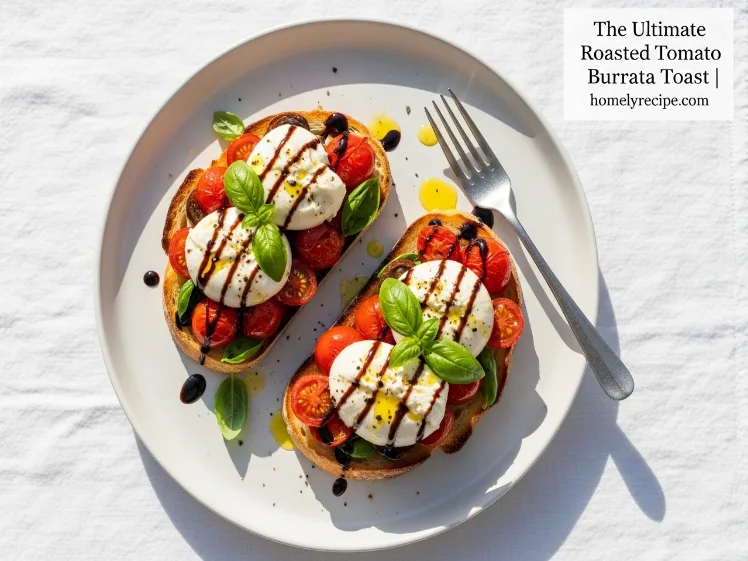

The Ultimate Roasted Tomato Burrata Toast
Ingredients
Method
- Remove burrata from refrigerator. Leave in its packaging at room temperature for 20–25 minutes before assembling. Do not skip this step
- Rinse cherry tomatoes under cold water. Spread on paper towels or a clean kitchen towel and pat completely dry on all sides. Let rest at room temperature for 10 minutes to allow surface moisture to evaporate.
- Preheat oven to 400°F. Toss dried tomatoes with 1½ tablespoons extra virgin olive oil and red pepper flakes. Do NOT salt yet. Spread in a single layer on a rimmed baking sheet — do not crowd them. Roast for 18–22 minutes until tomatoes are blistered and jammy, with caramelized edges and slightly collapsed skins. They should look wrinkled and intensely colored, not mushy. Remove from oven and immediately season with Maldon salt and cracked black pepper. Let cool slightly (about 5 minutes).
- While tomatoes roast, heat a cast iron skillet over medium-high heat until hot (about 2–3 minutes). Brush both sides of each sourdough slice with 1 tablespoon of the olive oil total. Place bread in hot cast iron and press gently. Toast for 90 seconds per side until deeply golden with clear grill marks. Do not move it during that 90-second window.
- Immediately as bread comes off the heat, rub the cut side of a garlic clove firmly over the top surface of each hot toast slice. The heat does the work — do not press so hard you tear the bread.
- Brush a small amount of the remaining olive oil over the garlic-rubbed surface. This is your finishing oil, not your cooking oil.
- Working quickly:
- Lay roasted tomatoes over each toast slice, distributing evenly
- Drain burrata gently from any liquid and tear into pieces over the tomatoes
- Scatter fresh basil leaves over the burrata
- Pinch and scatter red pepper flakes and Maldon salt from above
- Drizzle balsamic glaze in a thin line across the toast
- Add a final drizzle of extra virgin olive oil
- Optional: finish with hot honey drizzle immediately before serving
- This is a serve-immediately dish. Transfer to a plate or wooden board and bring directly to the table.
Notes
- No burrata? Use fresh ciliegine or fresh mozzarella (flavor will be milder)
- No sourdough? Ciabatta works well
- No balsamic glaze? Do not use plain balsamic vinegar — omit entirely or use a small drizzle of hot honey instead
- No fresh basil? Use fresh arugula leaves as a finishing green — never dried herbs
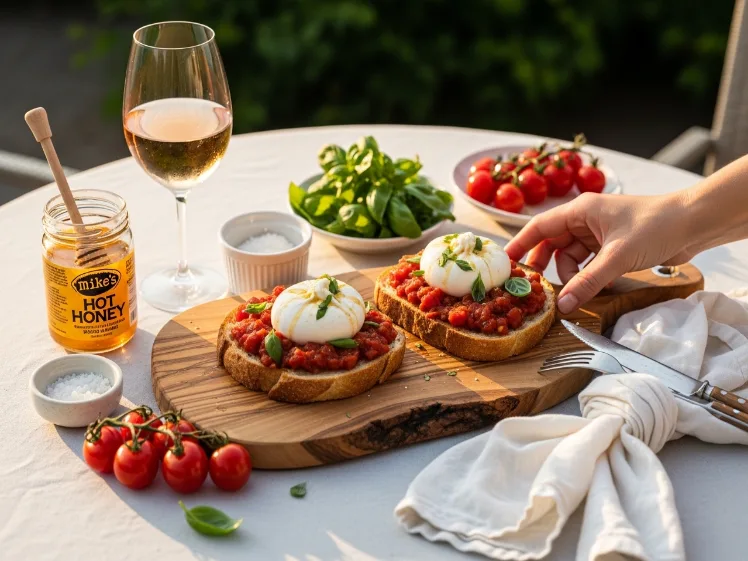
When to Serve This
This summer tomato toast is genuinely one of the most versatile dishes in my recipe rotation. Here is exactly when to pull it out:
Brunch party appetizer — Make multiple slices on a large wooden board, leave the hot honey and balsamic glaze on the table for guests to add themselves. Casual, beautiful, impressive.
Light weekday lunch — One slice with a simple side salad is a complete, satisfying meal that comes together in under 30 minutes.
Dinner party starter — Individual plated slices with a microgreen garnish look restaurant-quality. Serve before pasta or grilled fish.
Summer entertaining — This is peak tomato season food. From June through September, when cherry tomatoes are at their sweetest and most abundant, this toast is at its absolute best.
Drinks That Pair Perfectly
- Sparkling water with lemon and fresh mint — light and palate-cleansing
- Dry rosé wine — the classic Italian pairing with burrata; a Provence rosé or Italian Chiaretto works beautifully
- Aperol Spritz — the bubbles cut through the richness of the burrata; very summer, very Italian
- Lightly oaked Chardonnay — works surprisingly well with the creamy cheese
Side Dishes That Complete the Meal
- Simple arugula salad with lemon, olive oil, and shaved Parmesan — the peppery greens balance the richness of the burrata
- Prosciutto di Parma — a few thin slices alongside the toast add a salty, meaty note
- Marinated olives — Castelvetrano olives are buttery and mild, perfect alongside this
- Ancient grain side salad — pairs perfectly with burrata toast for a complete, nutritious lunch that feels genuinely restaurant-worthy
Presentation Tips
Serve on a large wooden cutting board or slate board for the most visual impact. The contrast of the dark board against the white burrata and red tomatoes is genuinely striking. Scatter a few extra cherry tomatoes and fresh basil leaves around the board for a styled, effortless look.
For individual plating: use a wide, shallow bowl or a simple white plate. Place the toast slightly off-center. Add a small bundle of microgreens to the side. Crack fresh black pepper visibly over the top just before serving — this photographs beautifully for Instagram or Pinterest.
For photography: shoot in natural light near a window. Use a slightly overhead angle to capture all the layers. The moment just after you tear the burrata open — cream spilling onto the tomatoes — is your hero shot. Capture it within 30 seconds.
FAQ: Your Burrata Toast Questions Answered {#faq}
1. Can I make roasted tomato burrata toast ahead of time?
The tomatoes, yes! Roast them up to 2 days ahead and refrigerate. Bring to room temperature before using. But fully assembled roasted tomato burrata toast needs to be served immediately — assembled toast goes soggy within minutes. Think of it like bruschetta: build it right before eating.
2. What bread is best for burrata toast?
Sourdough is the clear winner for this burrata toast recipe. Its tangy flavor complements the sweet roasted tomatoes, and its sturdy structure holds up under the weight of toppings. Ciabatta is a solid second choice. Avoid soft sandwich bread completely — it has zero structural integrity for this dish.
3. Where can I buy fresh burrata in the USA?
BelGioioso burrata is available in most major US grocery stores including Whole Foods, Kroger, Walmart, and Target. Trader Joe’s carries it seasonally. For the freshest option, check Italian delis, specialty cheese shops, or farmers markets. Look in the specialty cheese or deli refrigerator section, not the dairy aisle.
4. Is burrata healthier than mozzarella?
Burrata is slightly higher in calories and fat than regular mozzarella due to the cream-filled interior. However, it delivers a good source of calcium, protein, and phosphorus. When used as part of a balanced meal with olive oil and vegetables — like this easy burrata appetizer recipe — it fits comfortably within a Mediterranean-style eating pattern. Healthline has a great breakdown of burrata’s nutritional profile.
5. Can I use dried basil instead of fresh basil?
Please do not. Dried basil has lost most of its essential aromatic oils and delivers a flat, dusty flavor that genuinely does not work in this recipe. Fresh basil is non-negotiable here. If you cannot find fresh basil, substitute fresh baby arugula leaves — they are peppery and vibrant and actually work beautifully on burrata cheese toast as an alternative.
6. What can I substitute for burrata?
The closest substitute is fresh mozzarella — it will not have the creamy interior, but the flavor profile is similar. Ciliegine (small fresh mozzarella balls) work well halved over the toast. Ricotta is a more distant substitute but surprisingly good when drizzled with olive oil and seasoned generously. If you use ricotta, add a little more finishing salt to compensate for the milder flavor.
7. How do I stop my toast from getting soggy?
This is the most common burrata toast problem. The solution is threefold: dry your tomatoes completely before roasting (the number one cause of sogginess), brush olive oil on the toast before AND after toasting to create a moisture barrier, and always assemble and serve immediately. Letting assembled toast sit for more than 5 minutes is asking for trouble.
Final Thoughts {#conclusion}
This Roasted Tomato Burrata Toast is genuinely one of those recipes that delivers more than it promises. It looks like a complicated café dish. It tastes like a complicated café dish. But with the five secrets in this guide, it is actually one of the most approachable, stress-free things you can make — and it never fails to impress.
The dry tomato rule. The cast iron bread method. The room-temperature burrata secret. The layering order. The finishing touch matrix. Each one of these is something I discovered through failure, repetition, and the kind of kitchen obsession that probably concerns my friends. But the result is a recipe I am genuinely proud of — one that belongs on your regular rotation whether you are cooking for one on a Tuesday or hosting a summer brunch party for twelve.
Make it once. Make it your own. Try the hot honey. Send me a photo.
👇 Tell me in the comments: Are you a balsamic glaze person or a hot honey person? I need to know immediately.
📬 Join the Community
Want more café-quality recipes delivered straight to your inbox? Join 50,000+ home cooks who get our weekly recipe drops every Sunday. No spam. No fluff. Just recipes that actually work.
[Subscribe to the Homely Recipe Newsletter]
🍽️ Try These Next
If you loved this, you will absolutely need to try our Ancient Grain Salad next — it pairs perfectly with burrata toast for a complete, stunning lunch.
Also check out our full guide to mediterranean flavor combinations — it will transform the way you think about seasoning everything from salads to roasted vegetables.
And when you are ready to level up your weeknight dinners, our café-quality mediterranean meals guide shows you how to bring real restaurant technique into your home kitchen without any professional training.