Mediterranean Salmon Bowl: 5 Café-Quality Secrets That Changed Everything
By Chef Hamid | Homely Recipe
Why This Mediterranean Salmon Bowl Is Different {#why-different}
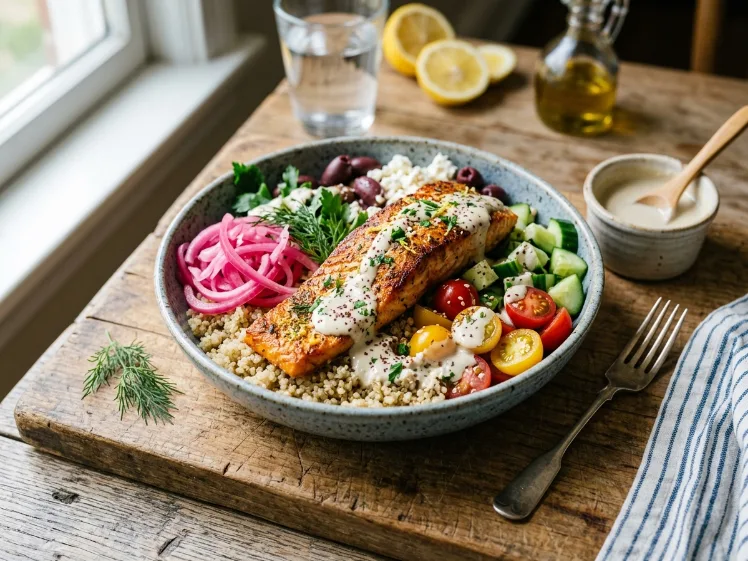
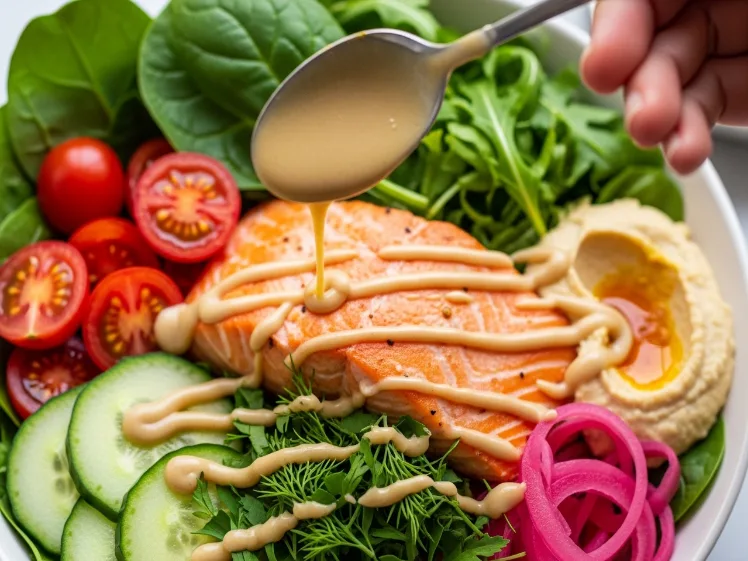
Here is the thing about a Mediterranean salmon bowl — it looks effortless in every café photo you have ever double-tapped on Instagram. Golden, flaky salmon. Quinoa that somehow does not look like wet cement. A tahini dressing that flows like liquid silk. You try to recreate it at home and end up with something resembling a sad lunch box from a 2009 diet plan.
I have been there. Multiple times. This guide exists because I spent years getting it wrong before I finally got it spectacularly right.
After testing this healthy salmon bowl recipe more than 12 times — yes, twelve, my family is very patient and also very full of omega-3s — I cracked five specific secrets that separate a café-quality Mediterranean salmon bowl from a home-kitchen disappointment. These are not fluffy tips you have seen recycled across a thousand food blogs. These are real, tested, technique-driven moves that will change how you cook salmon foreverr.
Ready to stop guessing?
Jump to RecipeThe Salmon Disaster That Started It All {#salmon-disaster}
Let me paint you a picture. It was a Tuesday. I had grand plans for a gorgeous Mediterranean diet lunch that would make my colleagues genuinely jealous at the office. I had the quinoa. I had the cherry tomatoes. I had the olives and the feta cheese crumbles and everything needed for a beautiful salmon bowl with quinoa that screamed “I have my life together.”
What I did not have was a clue about how to actually cook the salmon.
I pulled the fish straight from the fridge, dropped it skin-side down into a screaming hot pan, and watched in optimistic ignorance as it cooked for approximately nine years. Okay, it was seven minutes. But it felt like nine years because I kept poking it nervously, flipping it too early, flipping it back, and then covering it with a lid because I panicked.
The result? A piece of salmon so dry, so aggressively overcooked, that my husband — ever the diplomat — described it as “interesting.” It had the texture of fishy sawdust wrapped in leather. The albumin (that white gluey stuff) had basically staged a full revolt, oozing out in sticky white ropes all over the pan like some kind of protein protest. My beautiful easy Mediterranean lunch was a beige, flaky, joyless catastrophe.
I nearly gave up on salmon entirely. Instead, I got obsessive about understanding exactly why it went wrong.
What followed was months of testing, researching, burning my forearm on the cast iron, and eating a genuinely embarrassing amount of quinoa. And now I am handing you everything I learned, absolutely free, so you can skip the fishy-sawdust phase entirely.
Secret 1: The Bone-Dry Skin Rule (The Crisp Factor) {#secret-1}
This is the one that changes everything. Seriously. I learned this the hard way after seven batches of salmon with skin that steamed instead of seared, turning soft and rubbery like a wet sock.
Moisture is the enemy of crunch.
When moisture hits a hot pan, it creates steam. Steam is wonderful for dumplings and terrible for salmon skin. Instead of searing and crisping, the skin basically poaches itself in that steam cloud, giving you something soggy and sad that peels away from the fish in one defeated sheet.
Here is the fix: before that salmon fillet ever touches the pan, you are going to pat it very dry with paper towels. And I mean aggressively dry. Pat the flesh side, pat the skin side, pat the edges. Then — and this is the move most people skip — take the spine of your knife and scrape it firmly across the skin at a slight angle. You will actually see tiny droplets of moisture bead up and transfer to the blade. Wipe them away. Do this two or three times.
This technique physically removes the surface moisture that has wicked back up through the skin from the fridge environment. It sounds fussy. It takes about 30 seconds. And it is the single biggest difference between salmon skin that shatters like a chip and salmon skin that flops like a piece of wet newspaper.
The protein connection: When you skip this step, you also increase the chance of albumin — that white protein liquid inside the fish — pushing aggressively outward during cooking. More on the albumin story when we hit Secret 5, but the short version is: moisture disrupts even heat distribution, which disrupts how the proteins set, which ends up affecting the entire texture of your fillet.
Trust me on this one. Thirty seconds of knife-spine scraping will make you look like a restaurant chef.
⚡ Quick Action Tip: Keep a small stack of paper towels beside your cutting board as a reminder to pat dry before you do anything else. Make it the very first step every single time, without exception.
Secret 2: The Quinoa Fluffing Hack (The Texture Matrix) {#secret-2}
Most quinoa in homemade grain bowls is either crunchy (undercooked) or glued together in a single dense puck (overcooked and lidded too long). Neither of those is what you want under your beautiful crispy salmon.
The goal is individual, separate grains with a slight bite — grains that catch the tahini dressing in their tiny spirals and hold it like flavor reservoirs. That texture is everything in a salmon bowl with quinoa.
Here is the trick that took my quinoa from acceptable to genuinely exciting: the steam trap method.
Cook your quinoa with the standard 1:2 ratio (1 cup quinoa to 2 cups water or broth). Bring it to a boil, drop it to a low simmer, cover, and cook for exactly 13 minutes. When the timer goes off, turn off the heat completely. Do not open the lid. Lay a clean, dry kitchen towel over the pot, replace the lid on top of the towel, and let the whole thing sit for exactly 10 minutes.
The towel absorbs the condensation that would otherwise drip back down onto the quinoa and make it mushy. The trapped steam finishes the cooking gently and evenly without waterlogging the grains. When you finally take the lid off and fluff with a fork, you get this gorgeous, separate, cloud-like quinoa that holds its shape under all your toppings.
And this is where it gets good — because this same technique works beautifully for rice, farro, and millet. Once you understand why the towel method works (moisture absorption + residual heat control), you will use it on every grain you cook. I cover more of these grain hacks in detail over in our guide to Ancient Grain Salad Secrets if you want to go deeper into quinoa cooking techniques.
⚡ Quick Action Tip: Use low-sodium chicken or vegetable broth instead of water for your quinoa. It adds a quiet, savory depth that makes the whole bowl taste more complex without any extra effort.
Secret 3: Tahini Emulsification (The Dressing Symphony) {#secret-3}
Tahini is the heart of any great Mediterranean dressing. It is nutty, rich, slightly bitter, and absolutely transformative when it works properly. When it does not work properly, it looks like gray cement and tastes like sadness.
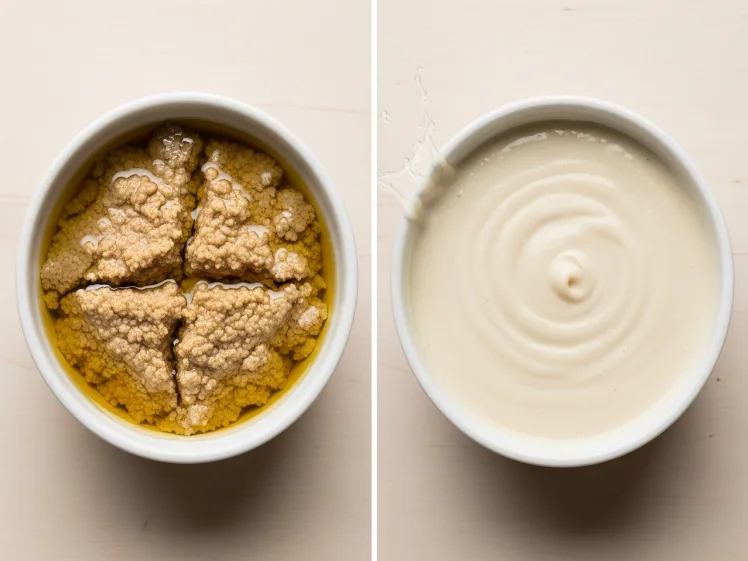
Here is what happens: tahini is a naturally separated product. The oil floats to the top of the jar, and the dense sesame paste sinks to the bottom. Even after you stir it, it is in a slightly unstable emulsion state. When you add acidic ingredients (like lemon juice) directly without a buffering agent, the proteins in the tahini seize up. The mixture breaks, turns grainy, and clumps into something you absolutely cannot drizzle over anything.
The fix is cold water. Specifically, adding ice-cold water gradually, one tablespoon at a time, while whisking.
Here is the exact ratio that works every single time for this tahini dressing recipe:
- ¼ cup well-stirred tahini
- 2 tablespoons fresh lemon juice
- 1 clove garlic, finely grated
- ¼ teaspoon fine sea salt
- 3-4 tablespoons ice-cold water, added one tablespoon at a time
Start by whisking the tahini, lemon juice, garlic, and salt together. It will look broken and lumpy immediately — do not panic. Add your cold water one tablespoon at a time while whisking continuously. Watch what happens. Around tablespoon two or three, something magical occurs: the dressing suddenly emulsifies, turns silky, pale, and creamy, and starts to flow smoothly off your whisk.
The cold water works because it slows down the protein interaction and gives the sesame fats time to distribute evenly through the liquid. It creates a stable emulsion where the oil, water, and protein exist in harmony rather than clumping in protest.
The final consistency should coat the back of a spoon but still drizzle freely. If it gets too thick, add a tiny splash more water. If it is too thin, whisk in a tiny extra bit of tahini.
This is genuinely the best tahini dressing recipe for any easy Mediterranean lunch, and once you nail the technique, you will find yourself making it for salads, roasted vegetables, and straight-up dipping with pita bread.
⚡ Quick Action Tip: Make a double batch of this dressing and store it in a sealed jar in the fridge for up to a week. Whisk again before serving because it will thicken in the cold.
💾 Loving these tips so far? Save this post to your Pinterest meal prep board so you can find it when you need it most!
Secret 4: Pickle & Fat Balancing (The Flavor Architecture) {#secret-4}
This secret is less about technique and more about understanding why certain combinations taste so deeply satisfying — and using that understanding intentionally.
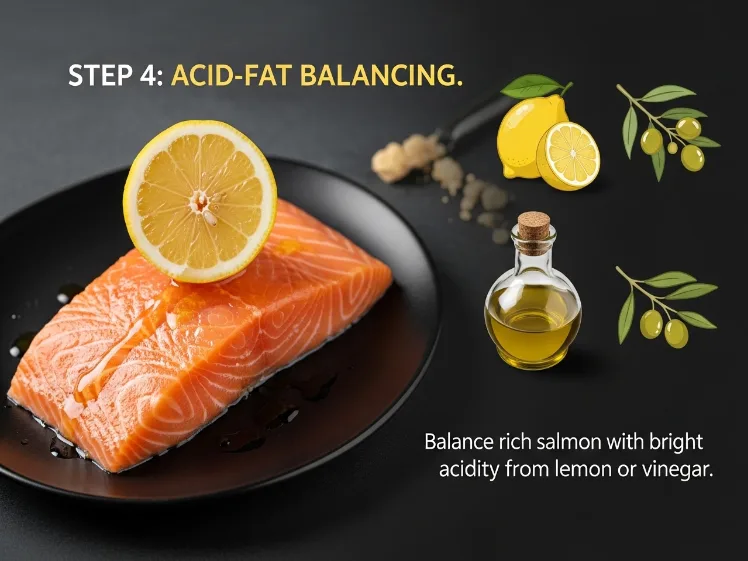
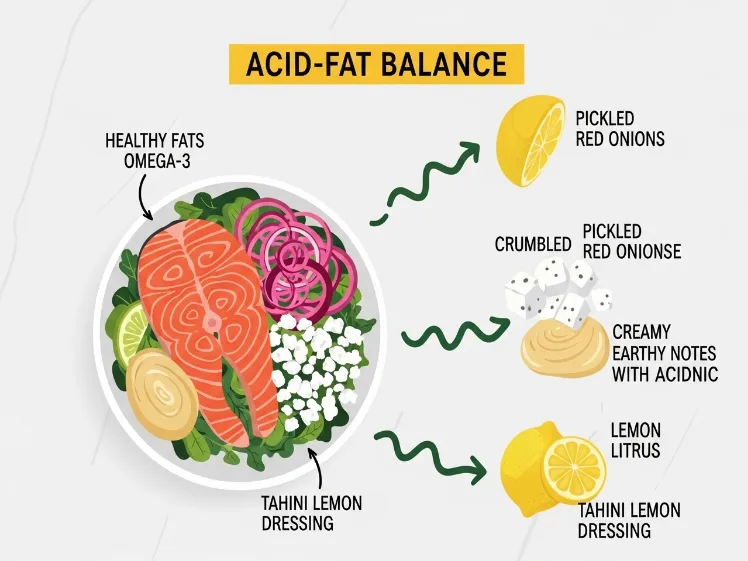
A Mediterranean salmon bowl has a lot of rich, fatty components working together: the salmon itself (full of gorgeous omega-3 fatty acids), the feta cheese (creamy, salty, rich), the tahini dressing (sesame oil and protein), and sometimes a drizzle of good olive oil over the top. Left unchecked, all that richness can make the bowl feel heavy and one-dimensional — filling, yes, but not bright.
This is where pickled red onions become the secret weapon you did not know you needed.
Pickled red onions bring sharp acidity that cuts through fat like a culinary laser beam. They refresh your palate between bites, making every forkful of rich salmon or creamy feta taste as vibrant as the first one. Without that acid counterpoint, your taste buds get fatigued by richness, and the meal starts to feel heavier as you eat it.
The balance principle is simple: for every rich, fatty element in the bowl, there should be a corresponding sharp or acidic element. Salmon fat gets cut by pickled onion. Feta richness gets brightened by fresh lemon juice. Tahini depth gets lifted by the acidity of lemon in the dressing itself.
Quick-pickled red onions are almost embarrassingly easy to make. Thinly slice half a red onion into rings. Combine ½ cup apple cider vinegar, ½ cup warm water, 1 teaspoon sugar, and ½ teaspoon salt in a jar. Stir to dissolve. Add the onion, push it down to submerge, and let it sit for at least 30 minutes at room temperature. The color turns a brilliant pink-magenta that also happens to look spectacular against the golden salmon in a bowl photo. You can learn more about building bold, balanced Mediterranean flavor profiles in our full marinade guide.
According to Mayo Clinic research on the Mediterranean diet, this style of eating — rich in healthy fats balanced with fresh vegetables and acidic elements — is consistently linked to improved cardiovascular health and reduced inflammation markers. So your pickled onions are not just delicious. They are genuinely part of what makes this a healthy salmon bowl recipe.
⚡ Quick Action Tip: Make your pickled onions the night before. Twenty-four hours in the pickling liquid makes them even more complex and deeply colored. They keep in the fridge for two weeks and go on absolutely everything.
Secret 5: The Carryover Cooking Window (The Timing Ritual) {#secret-5}
This is the secret that saves salmon from becoming fishy sawdust — which, as established, is a personal trauma of mine.
Here is the thing: salmon keeps cooking after you remove it from the heat. The residual thermal energy stored in the fillet — especially in a thicker center-cut piece — continues driving the internal temperature upward for two to three minutes after you pull it off the pan. This is called carryover cooking, and it is the reason that perfectly cooked salmon at the moment of plating often becomes overcooked salmon by the time it hits the table.
The USDA recommends that fish reach an internal temperature of 145°F (62.8°C) to be considered safe to eat. You can verify this directly via the USDA Food Safety Guidelines. But here is the professional move: pull your salmon off the heat when your instant-read thermometer reads 138°F to 140°F. Carryover will carry it up to that safe 145°F finish over the next two to three minutes while it rests on the plate.
This is where the protein story gets genuinely interesting. Albumin — that white protein liquid I mentioned in the disaster section — coagulates at around 140°F:
Albumin (Liquid)Δ≥140∘FCoagulated Protein (Solid)
When you cook salmon too aggressively or too hot, the albumin inside the fish heats too quickly, expands rapidly, and gets squeezed out through the muscle fibers, forming those thick white streaks on the surface of your fillet. Gentle, controlled heat — combined with a perfectly dry skin (back to Secret 1!) — keeps the albumin inside the fish where it belongs, contributing to a moist, silky interior rather than a dry, chalky one.
Pulling your salmon at 138°F and resting it means the albumin coagulates slowly and gently as the temperature rises those final degrees. The result is a fillet that looks cleaner, tastes juicier, and has that gorgeous barely-translucent center that great salmon always has.
According to Healthline’s deep dive on salmon nutrition, properly cooked salmon retains more of its omega-3 fatty acids, B vitamins, and selenium than salmon that is overcooked and dried out. So nailing your temperature is not just about taste — it genuinely affects the nutritional quality of your meal prep salmon bowls.
⚡ Quick Action Tip: Invest in a budget instant-read thermometer. You can find a reliable one for under $15. It is the single most useful tool for cooking proteins correctly, and it removes all the guesswork from your healthy salmon bowl recipe forever.

The Ultimate Mediterranean Salmon Bowl
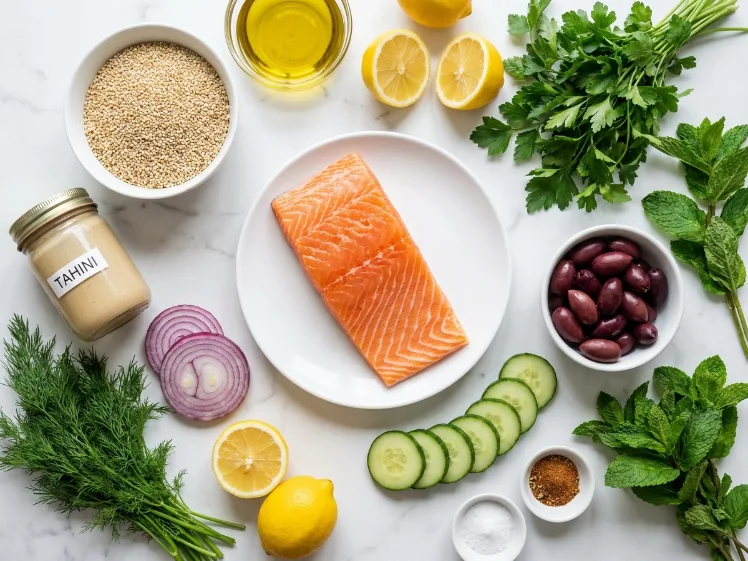
Ingredients
Method
- Combine apple cider vinegar, warm water, sugar, and salt in a small jar. Stir until dissolved. Add sliced red onion, pressing it down to submerge. Let sit at room temperature for at least 30 minutes. (Overnight is even better.)
- Combine rinsed quinoa, broth, and salt in a medium saucepan. Bring to a boil over high heat. Reduce heat to low, cover, and simmer for exactly 13 minutes. Remove from heat. Without lifting the lid, place a clean dry kitchen towel over the pot and set the lid back on top. Let steam for 10 minutes undisturbed. Fluff gently with a fork.
- In a small bowl, whisk together tahini, lemon juice, garlic, and salt. The mixture will look thick and broken — that is completely normal. Add ice-cold water one tablespoon at a time, whisking continuously. By tablespoon 3, the dressing will emulsify into a smooth, silky consistency. Taste and adjust salt or lemon. Set aside.
- Pat salmon fillets very dry with paper towels on all sides. Use the spine of your knife to scrape firmly across the skin at a slight angle, removing any remaining surface moisture. Wipe the knife and repeat 2-3 times. This is non-negotiable for crispy skin.
- Mix smoked paprika, garlic powder, cumin, salt, and pepper in a small bowl. Rub the spice blend over the flesh side of each fillet. Leave skin unseasoned to maximize crisping
- Heat olive oil in a cast iron or stainless steel skillet over medium-high heat until shimmering. Place salmon skin-side down in the hot pan. Press gently with a spatula for the first 10-15 seconds to ensure full skin contact. Cook without moving for 5-6 minutes until skin is deeply golden and crispy. Flip carefully and cook on the flesh side for 1-2 minutes. Insert an instant-read thermometer into the thickest part — pull the salmon off heat at 138°F. Let it rest on the plate for 2-3 minutes; carryover heat will bring it to the safe USDA-recommended 145°F.
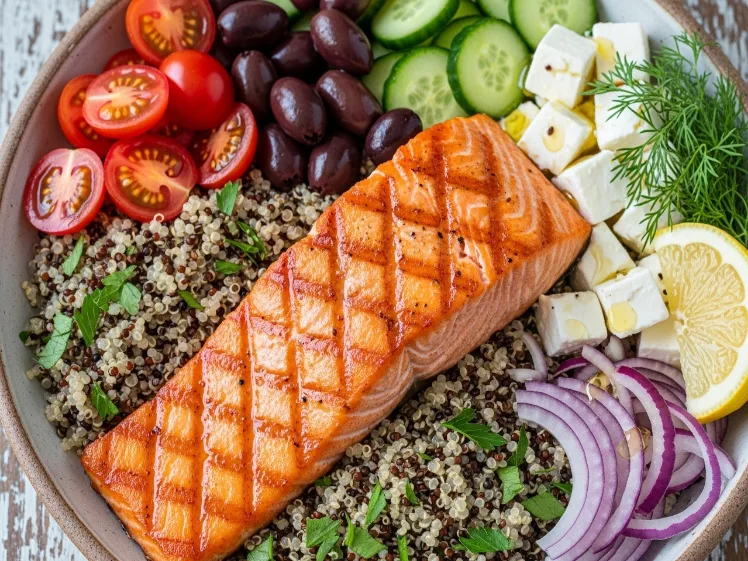
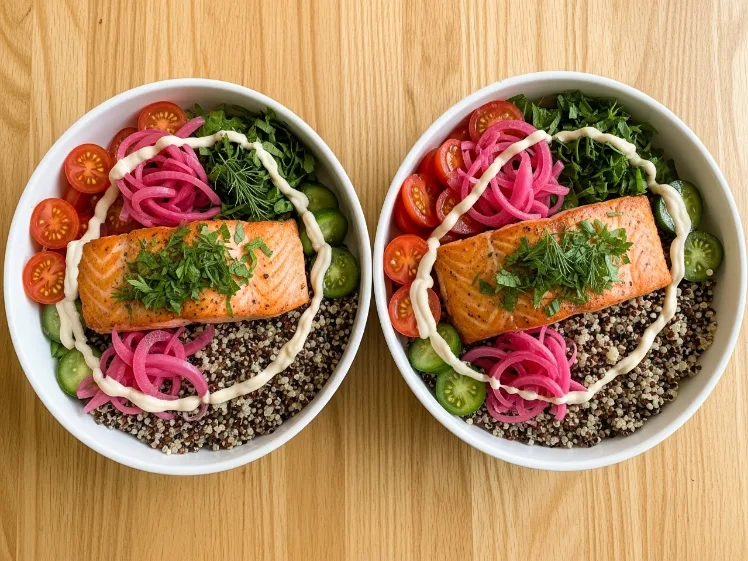
- Divide warm quinoa between two bowls. Arrange cucumber, cherry tomatoes, olives, and drained pickled red onions alongside the quinoa. Place a rested salmon fillet on top. Crumble feta generously over everything. Drizzle tahini dressing over the entire bowl. Finish with fresh parsley, dill, a drizzle of good olive oil, and a squeeze of fresh lemon. Season with flaky salt and cracked black pepper.
- This bowl is best enjoyed right away while the salmon skin is still crispy. If meal prepping, keep components separate and assemble just before eating.
Notes
Recipe Notes
Meal Prep Version: Cook quinoa and make tahini dressing and pickled onions up to 5 days ahead. Cook salmon fresh for best texture, or store cooked salmon separately for up to 3 days. Assemble bowls just before eating. Salmon Selection: Look for wild-caught salmon when possible. Sockeye and coho are firm-fleshed varieties that hold up beautifully in bowl format. Farmed Atlantic salmon works well and tends to be more widely available. Quinoa Alternatives: Brown rice, farro, cauliflower rice (for low-carb), or couscous all work beautifully as the base. Tahini Substitution: Sunflower seed butter creates a very similar creamy, nutty dressing. Greek yogurt thinned with lemon juice and garlic is another excellent option. Spice Note: Harissa paste, za’atar, or sumac make wonderful alternative seasonings for the salmon.Frequently Asked Questions {#faq}
Q1: How do you keep salmon moist in a bowl?
Pull salmon off the heat when your thermometer reads 138°F. Carryover cooking brings it up to the safe 145°F (per USDA guidelines) as it rests. This two-minute rest period is everything. Overcooked salmon — anything pushed past 150°F — loses moisture irreversibly. That is where fishy, dry texture comes from, and it is completely avoidable with an instant-read thermometer.
Q2: Can you meal prep Mediterranean salmon bowls?
Absolutely. Quinoa keeps refrigerated for 5 days. Tahini dressing lasts a week in a sealed jar. Pickled onions keep for two weeks. Cook salmon fresh where possible for best texture, or store cooked salmon separately for up to 3 days. Assemble components just before eating to keep everything at peak quality. This is one of the most satisfying meal prep salmon bowls for the whole week.
Q3: What temperature should salmon be cooked to?
The USDA recommends an internal temperature of 145°F for fish to be food-safe. For a Mediterranean salmon bowl with the best texture, pull your fillet at 138°F and allow carryover cooking during a 2-3 minute rest to reach 145°F naturally. This prevents the dry, overcooked texture that makes salmon disappointing.
Q4: Is a Mediterranean salmon bowl healthy?
Very much so. Salmon provides high-quality protein and abundant omega-3 fatty acids. Quinoa offers complete protein and complex carbohydrates. Olive oil, tahini, and feta contribute healthy fats. The Mayo Clinic highlights the Mediterranean dietary pattern as one of the most research-supported eating styles for heart and brain health. A well-made bowl delivers around 45g of protein per serving.
Q5: Can I substitute quinoa in this bowl?
Yes! Brown rice, farro, freekeh, couscous, or cauliflower rice (for a lower-carb option) all work beautifully as the base. If you use couscous, skip the steam-trap method — couscous just needs boiling water poured over it and five minutes covered. Each grain brings a slightly different texture to your salmon bowl with quinoa-style assembly.
Q6: How long do leftovers last?
Store each component separately in airtight containers in the refrigerator. Cooked salmon keeps for up to 3 days. Quinoa keeps for 5 days. Tahini dressing keeps for 7 days. Pickled onions keep for up to 2 weeks. Fresh vegetables (cucumber, tomatoes) are best prepared day-of. Never store assembled bowls with dressing already poured — the quinoa absorbs liquid and loses its texture quickly.
Q7: What can I use instead of tahini?
Sunflower seed butter is the closest match — nutty, rich, and it emulsifies almost identically using the same cold-water method. Greek yogurt whisked with lemon juice, garlic, and a touch of olive oil makes a bright, creamy alternative. Almond butter thinned with water and lemon also works well. Any of these swaps will give you a delicious, drizzleable dressing for your healthy salmon bowl recipe.
Final Thoughts: Your Next Mediterranean Salmon Bowl Starts Now {#conclusion}
We have covered a lot of ground together. Five specific, tested, genuinely transformative secrets that take a Mediterranean salmon bowl from a home-cook disappointment to something that tastes legitimately café-quality.
Let me do a quick recap for you:
Secret 1 — Dry that skin until it is aggressively moisture-free. Use your knife spine. Do it anyway even when you think the fish looks dry enough already.
Secret 2 — Steam-trap your quinoa with a kitchen towel under the lid. Ten minutes of patience gives you individual, fluffy grains that hold dressing beautifully.
Secret 3 — Add cold water gradually while whisking to emulsify your tahini dressing. Watch it transform from grainy cement to liquid silk.
Secret 4 — Balance every fatty element with an acidic counterpart. Pickled red onions are not optional garnish. They are a structural flavor component.
Secret 5 — Pull salmon at 138°F. Let carryover carry it home to 145°F. Rest it. Do not skip the rest.
These five moves work together as a system. Each one reinforces the others. And once they become second nature — which happens faster than you think — you will produce a healthy salmon bowl recipe worthy of a standing ovation every single time.
💬 Let’s Talk — I Want to Hear From You
What has been your biggest salmon struggle? Was it the skin never getting crispy? The tahini always breaking? Or were you, like me, just cooking it for approximately nine years until it turned into fishy sawdust?
Drop your story in the comments below. I read every single one, and sometimes the best recipe tips come directly from readers who found an even smarter solution than mine.
🍽️ Try This Next
If you loved this bowl, your next adventure should be our 7 Secret Mediterranean Marinades — a deep dive into building incredible mediterranean flavor profiles that work on chicken, fish, and vegetables alike. Pair those marinades with the quinoa techniques from our Ancient Grain Salad Secrets guide, and your weekly meal prep will never look the same again.
📧 Get More Recipes Like This
Want five more tested, technique-driven recipes like this one delivered straight to your inbox every week? Subscribe to the homelyrecipe.com newsletter and get our free “Mediterranean Meal Prep Starter Guide” as a welcome gift. Real recipes. Real failures. Real fixes. No filler, ever.
📌 Share the Love
If these secrets helped you, consider pinning this post, sharing it with a friend who burns salmon, or leaving a star rating on the recipe card. Every share genuinely helps this small food blog reach more home cooks who deserve great meals — and it means everything.
Now go make that bowl. You have got everything you need.
Published by homelyrecipe.com | Always original, always tested, always honest.
Sources: USDA Fish Safety Temperature Guidelines | Healthline: Health Benefits of Salmon | Mayo Clinic: Mediterranean Diet Research