10-Minute Air Fryer Chocolate Molten Lava Cake: The Secret to a Perfect Ooze
By Chef Hamid | Homely Recipe
The Science of Home Cooking
🍫 There Is a Precise Moment When Magic Happens
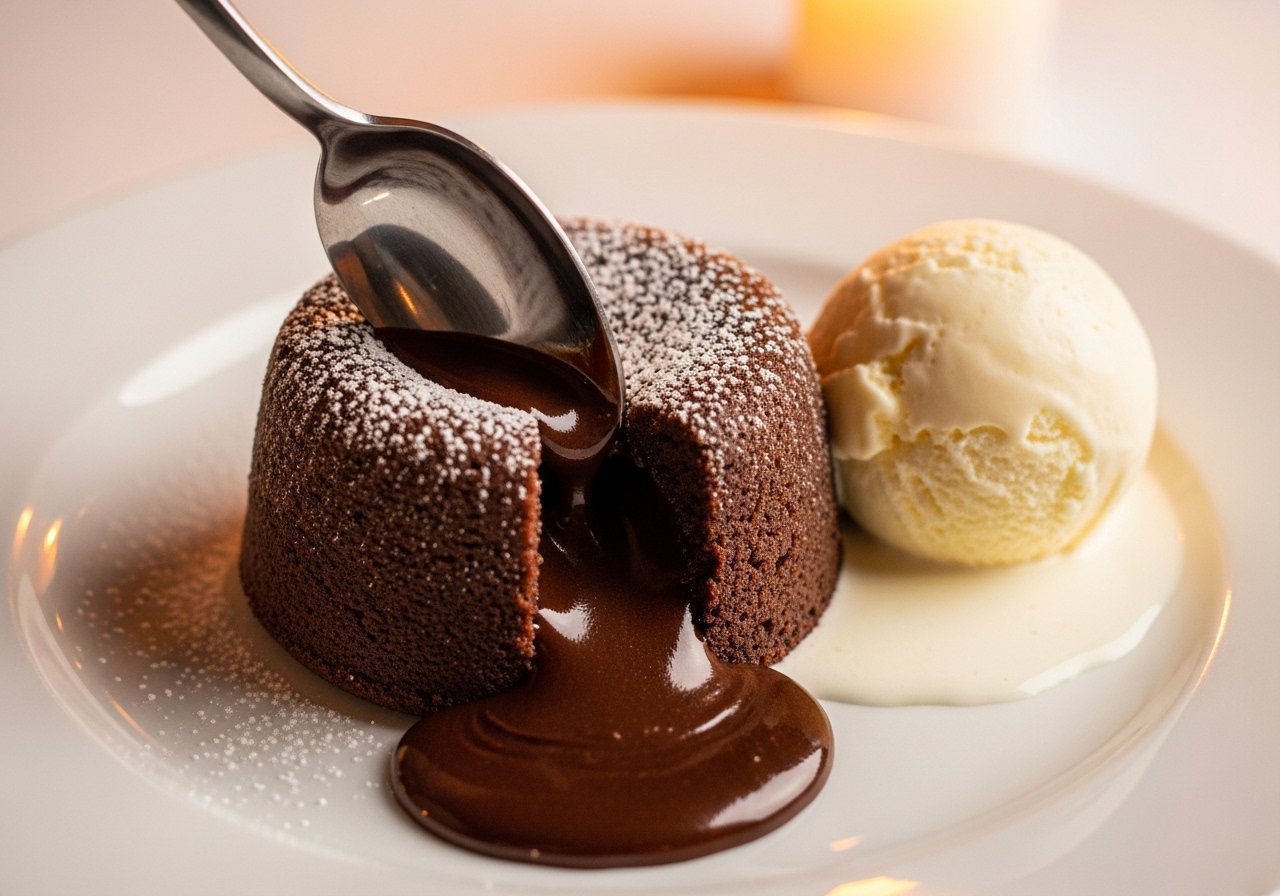
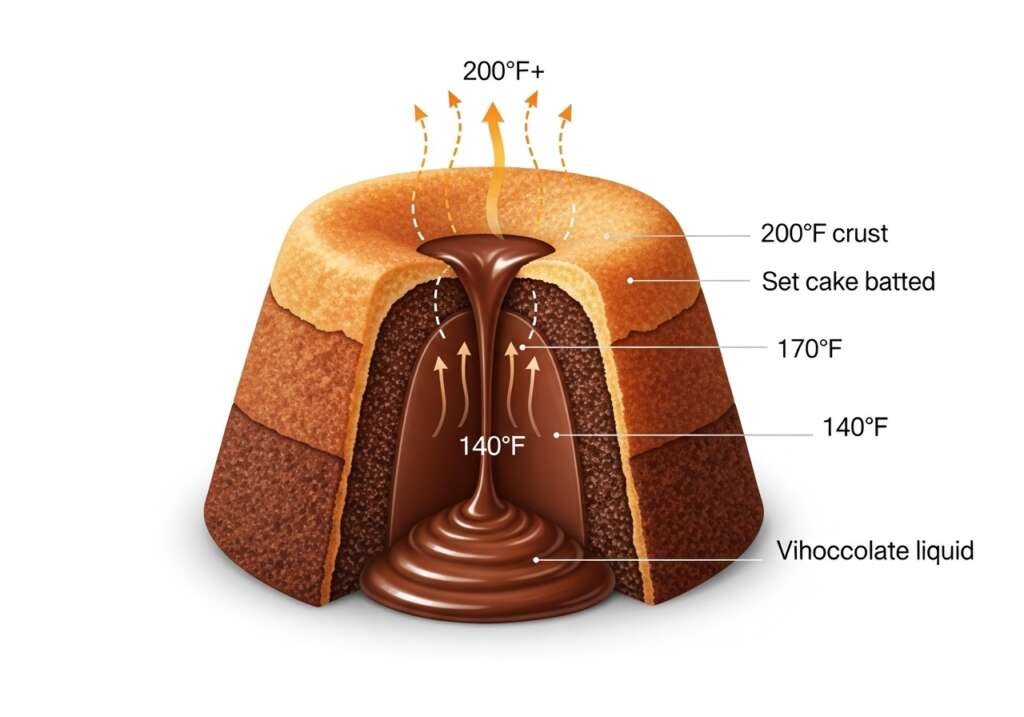
At exactly seven minutes and thirty seconds in a preheated air fryer set to 370°F, something extraordinary occurs inside a small porcelain ramekin filled with chocolate batter. The outer layer of cake — the part closest to the circulating heat — reaches approximately 200°F and sets into a firm, tender crumb structure. At the exact same moment, the center of that same cake remains at roughly 140°F, hovering in a state between liquid and solid, thick enough to hold its shape but fluid enough to pour and enjoy Air Fryer Chocolate Molten Lava Cake.
This is not luck. This is not approximation. This is the result of understanding thermal gradients, specific heat capacity, and the unique properties of high-velocity convection cooking.
I have made more than fifty batches of molten lava cakes testing this exact recipe. I have used 4-ounce ramekins, 6-ounce ramekins, and 8-ounce ramekins. I have tested baking times from six minutes to ten minutes in thirty-second increments. I have experimented with oven temperatures from 350°F to 400°F. I have tried starting with cold batter, room-temperature batter, and warm batter straight from the mixing bowl.
What I discovered is this: the air fryer produces the most consistent molten lava cakes I have ever made — more reliable than a conventional oven, faster than a convection oven, and dramatically more foolproof than stovetop methods. The reason comes down to the physics of how heat moves through batter in a confined, high-velocity air environment.
The traditional oven method for lava cakes relies on radiant heat from oven walls and gentle convection from ambient air movement. It works, but it is slow and the temperature gradient — the difference between the outside temperature and the inside temperature — develops gradually, which means you have a narrow window of doneness. Pull the cakes thirty seconds too early and they collapse into soup. Pull them thirty seconds too late and the center sets into regular cake.
The air fryer changes the equation. The high-velocity fan creates a rapid, aggressive temperature gradient by setting the exterior almost immediately while the interior — insulated by the outer layer that has already cooked — remains protected and molten. The result is a wider margin for error, faster cooking time, and a texture contrast that is more dramatic than any oven-baked version I have ever tasted.
This is the crown jewel of air fryer desserts. And once you understand the science, you can make it perfectly every single time.
🔬 The Science Behind Thermal Gradients and the Molten Core
Let me explain exactly what is happening inside that ramekin during those critical seven and a half minutes.
Thermal gradients describe the rate at which temperature changes across distance within a material. When you place a ramekin of chocolate batter into a 370°F air fryer, heat begins transferring from the hot air into the ceramic ramekin, then from the ceramic into the batter itself. This heat transfer follows the fundamental principle:
Q=m⋅cp⋅ΔT
Where Q is the heat energy transferred, m is the mass of the material, c_p is the specific heat capacity (the amount of energy required to raise the temperature of one gram by one degree Celsius), and ΔT is the temperature change.
In simple terms: different materials absorb and conduct heat at different rates. Ceramic ramekins have relatively low thermal conductivity, which means they heat slowly and evenly — this is why we use them for baking delicate desserts. The chocolate batter itself has high water content (from eggs and butter), which gives it a high specific heat capacity. Water requires significant energy to heat, so the batter resists rapid temperature changes.
Here is where the physics gets interesting. When high-velocity air at 370°F circulates around the outside of the ramekin, it rapidly heats the ceramic surface. Heat conducts inward from the walls toward the center of the batter. The outermost layer of batter — the part in direct contact with the hot ramekin walls — reaches coagulation temperature first. Eggs begin setting at around 160°F, and the starches in the flour (if using any) gelatinize around 180°F. By the time the outer layer hits 200°F, it has transformed into a firm cake structure.
But the center of the batter is thermally insulated by that outer layer. Heat has to conduct through the already-cooked cake to reach the liquid core, and this happens much more slowly than the initial surface heating. The result is a steep thermal gradient — a dramatic temperature difference between the edge (200°F+) and the center (140°F).
The air fryer accelerates this process because of forced convection. In a conventional oven, heat transfer relies primarily on natural convection (warm air rising, cool air sinking) and radiant heat from the oven walls. In an air fryer, a powerful fan forces hot air at high speed across every surface of the ramekin, dramatically increasing the rate of heat transfer to the exterior. This creates the firm outer crust faster, which in turn locks in the molten center before it has time to set.
The magic happens when you pull the cakes at precisely the right moment — when the exterior has fully set and can support its own weight, but the interior remains at that perfect 140°F molten state. Wait too long and residual heat (carryover cooking) pushes the center past the liquid threshold and into solid cake territory.
This is why timing is everything. And why testing across fifty batches allowed me to isolate the exact variables that produce consistent results.Health Benefits of Dark Chocolate (Healthline).
🛒 Pro Buying Guide — What to Get and Where
The Chocolate: This is the single most important ingredient decision you will make. I tested this recipe with five different chocolate brands and three different cacao percentages. Ghirardelli 60% Cacao Bittersweet Chocolate (available at Whole Foods, Target, and most major grocery stores) delivered the best balance of deep chocolate flavor without bitterness, smooth melting properties, and a glossy finish when the ganache flows out. Trader Joe’s Pound Plus Bar (also 60% cacao) is an excellent budget-friendly alternative that performs nearly identically at half the price. Avoid chocolate chips — they contain stabilizers that prevent smooth melting.
The Butter: Kerrygold Unsalted Butter or any European-style butter with higher fat content (82% vs. standard American 80%) produces a richer, silkier texture. Available at Costco, Whole Foods, Trader Joe’s, and most Kroger stores.
The Eggs: Use large eggs at room temperature. Cold eggs do not incorporate as smoothly into the batter and can cause the chocolate to seize. Any standard large eggs from Walmart, Costco, or Kroger work perfectly.
The Ramekins: Porcelain ramekins are essential — they conduct heat evenly and retain warmth, which helps with plating and presentation. I use 6-ounce ramekins from Williams Sonoma, but affordable options are available at Target (Threshold brand) and Amazon Basics. You need at least four for this recipe. Avoid silicone molds — they do not conduct heat the same way and produce inconsistent results.
The Cocoa Powder: Use Dutch-process cocoa powder for dusting the ramekins — it has a deeper color and more neutral flavor than natural cocoa. Droste or Valrhona are premium choices available at Whole Foods, but Hershey’s Special Dark from Walmart works beautifully and costs significantly less.
The Fine-Mesh Sifter: For the final powdered sugar dusting, a small fine-mesh sifter or sieve creates that professional, snow-dusted look. Available at Target, Walmart, or any kitchen supply store.
📋 Ingredients
Ganache Core (Optional — for extra molten effect)
| Ingredient | US Customary | Metric |
|---|---|---|
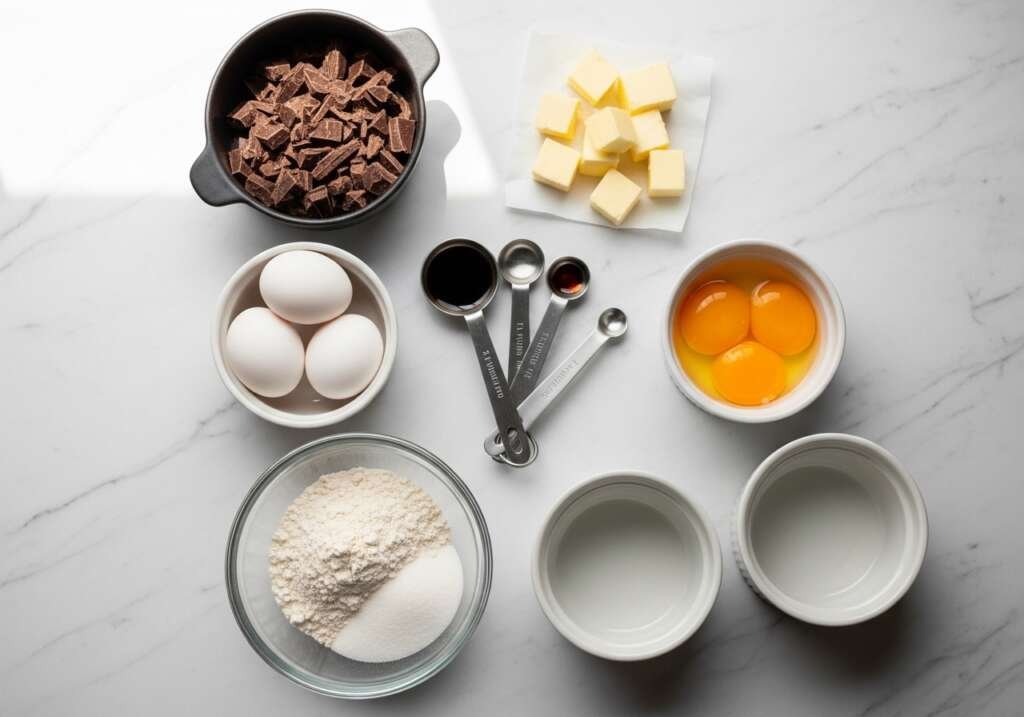
| Dark chocolate (60% cacao), chopped | 2 oz | 56g |
| Heavy cream | 2 tbsp | 30ml |
Main Batter
| Ingredient | US Customary | Metric |
|---|---|---|
| Dark chocolate (60% cacao), chopped | 4 oz | 113g |
| Unsalted butter, cubed | 6 tbsp | 85g |
| Large eggs, room temperature | 2 whole eggs | 2 whole eggs |
| Large egg yolks, room temperature | 2 yolks | 2 yolks |
| Granulated sugar | ¼ cup | 50g |
| Vanilla extract | 1 tsp | 5ml |
| All-purpose flour | 3 tbsp | 24g |
| Kosher salt | ⅛ tsp | 0.5g |
| Cocoa powder (for dusting ramekins) | 2 tbsp | 12g |
| Powdered sugar (for serving) | 2 tbsp | 15g |
📊 Ramekin Size vs. Timing Chart
| Ramekin Size | Batter Amount | Air Fryer Temp | Baking Time | Molten Center Result |
|---|---|---|---|---|
| 4 oz / 120ml | Fill ⅔ full | 370°F / 188°C | 6–7 minutes | Very molten; delicate structure |
| 6 oz / 180ml | Fill ⅔ full | 370°F / 188°C | 7.5–8 minutes | Ideal molten center; firm exterior |
| 8 oz / 240ml | Fill ⅔ full | 370°F / 188°C | 9–10 minutes | Molten but requires longer cooking |
Note: Times assume preheated air fryer and room-temperature batter. Always test one ramekin first before baking all four.
⚠️ Common Mistakes Table
| The Mistake | What Actually Happens | The Fix |
|---|---|---|
| Overbeating the eggs | Incorporates too much air; cakes rise then collapse; texture becomes spongy | Fold eggs gently into chocolate mixture until just combined |
| Using cold eggs | Chocolate seizes when cold eggs hit warm melted chocolate | Bring eggs to room temp for 30 min before mixing |
| Skipping the cocoa powder dusting | Ramekins greased with flour leave white spots on chocolate cake | Dust greased ramekins with cocoa powder, not flour |
| Overbaking by even 30 seconds | Center sets into regular cake; no molten flow | Use exact timing; test one ramekin first |
| Not preheating the air fryer | Uneven heat distribution; inconsistent results | Preheat air fryer to 370°F for full 5 minutes before baking |
| Letting batter sit too long before baking | Batter deflates; loses aeration; dense texture | Bake within 10 minutes of mixing, or refrigerate and bring to room temp before baking |
👨🍳 Step-by-Step Method
Step 1 — Prepare the Ganache Core (Optional)
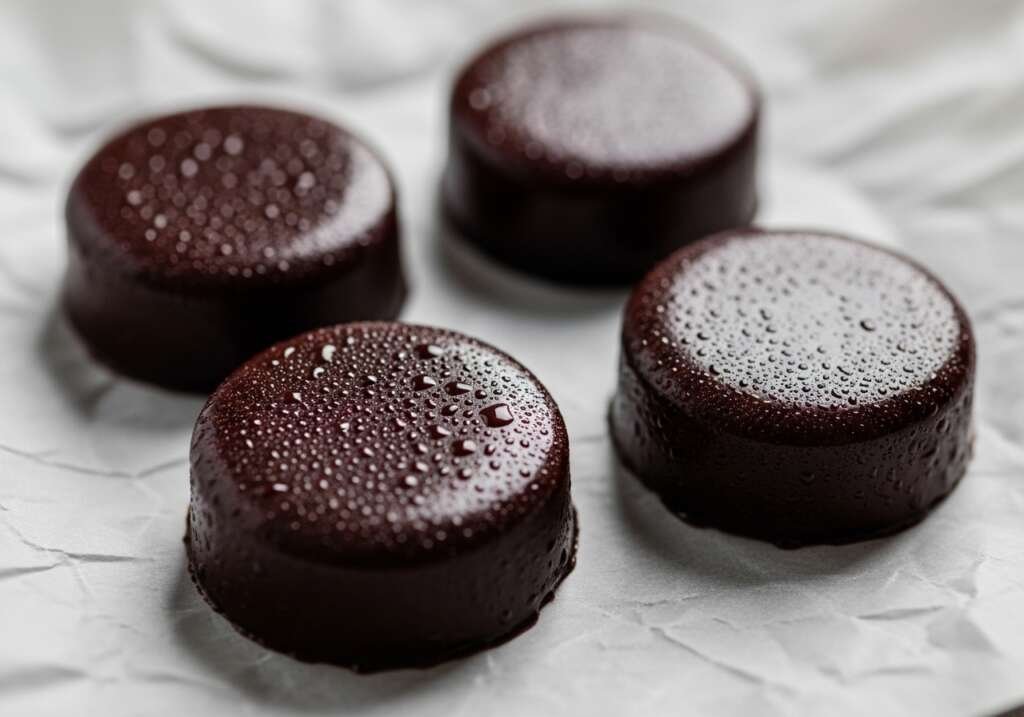
If you want an extra-molten center, make the ganache core first. Place two ounces of chopped dark chocolate in a small heatproof bowl. Heat the heavy cream in the microwave until just simmering (about 30 seconds), then pour it over the chocolate. Let it sit for one minute without stirring, then whisk gently until smooth and glossy.
Pour the ganache into a small silicone ice cube tray or onto a parchment-lined plate, creating four small mounds. Freeze for at least 30 minutes until solid. These frozen ganache cores will be pressed into the center of each ramekin before baking, creating an extra pocket of molten chocolate that flows when you cut into the cake.
Step 2 — Prepare the Ramekins
Generously butter the inside of four 6-ounce porcelain ramekins, making sure to coat the bottom and sides completely. Dust the buttered surfaces with cocoa powder — not flour. Tap out any excess cocoa. This step is critical: cocoa powder disappears into the dark chocolate cake, while flour would leave visible white spots that ruin the presentation.
Place the prepared ramekins on a small baking sheet or tray that fits into your air fryer basket. This makes it easier to transfer them in and out without burning yourself.
Step 3 — Melt the Chocolate and Butter
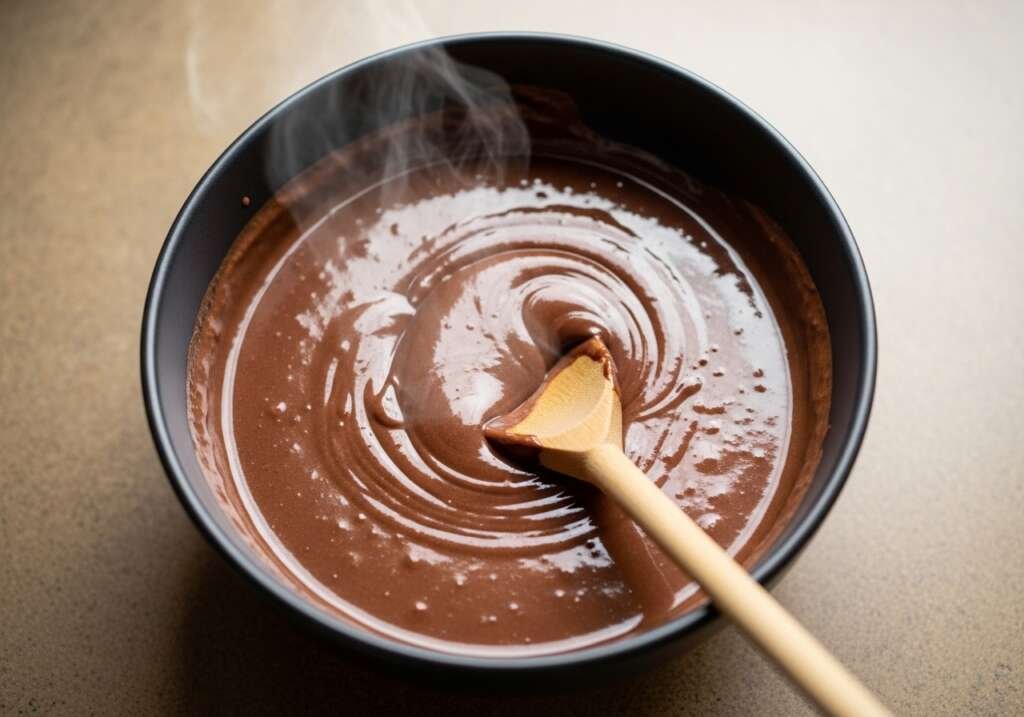
Combine four ounces of chopped dark chocolate and six tablespoons of cubed butter in a medium heatproof bowl. Microwave in 20-second intervals, stirring after each interval, until the mixture is about 80% melted. Remove from heat and stir continuously until the residual heat melts the remaining chocolate and the mixture is completely smooth.
Let the chocolate-butter mixture cool for five minutes at room temperature. You want it warm but not hot — if it is too hot, it will scramble the eggs when you add them.
Step 4 — Combine Eggs and Sugar
In a separate large mixing bowl, combine two whole eggs, two egg yolks, and one-quarter cup of granulated sugar. Whisk vigorously for about two minutes until the mixture lightens in color slightly and becomes thick and ribbony. When you lift the whisk, the mixture should fall back into the bowl in a slow ribbon that sits on the surface for a moment before dissolving.
Add the vanilla extract and whisk to combine.
Step 5 — Fold the Chocolate into the Eggs
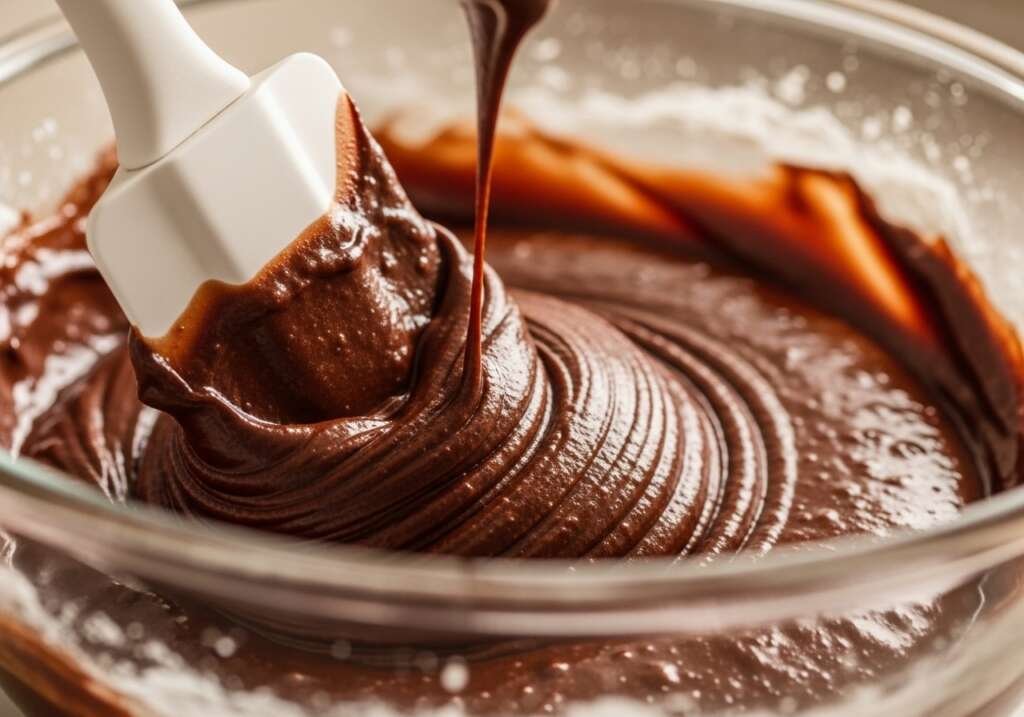
Here is where technique matters. Pour the warm chocolate-butter mixture into the egg mixture. Using a silicone spatula, fold gently — do not stir or whisk. Cut down through the center of the mixture, sweep along the bottom of the bowl, and bring the spatula up along the side, turning the bowl slightly with each fold.
This folding motion preserves the air you incorporated into the eggs during whisking. If you stir aggressively, you will deflate the batter and end up with a dense, tough cake instead of the delicate, tender texture you are aiming for.
Step 6 — Add Flour and Salt
Sift the three tablespoons of flour and one-eighth teaspoon of salt over the chocolate mixture. Fold gently again, just until no white streaks of flour remain. The batter should be smooth, glossy, and thick but pourable.
Do not overmix. Gluten development from overmixing creates a chewy texture that is wrong for lava cakes.
Step 7 — Fill the Ramekins
Divide the batter evenly among the four prepared ramekins, filling each about two-thirds full. If you made the frozen ganache cores, press one gently into the center of each ramekin, pushing it down until it is just below the surface of the batter. The batter will rise slightly around the ganache.
Smooth the tops gently with the back of a spoon.
Step 8 — Preheat and Bake
Preheat your air fryer to 370°F / 188°C for a full five minutes. This step is non-negotiable — starting with a fully preheated air fryer ensures consistent heat from the first second of baking.
Carefully place the tray of ramekins into the air fryer basket. Set your timer for exactly seven minutes and thirty seconds for 6-ounce ramekins. Do not open the air fryer during baking.
Step 9 — The Critical Moment — Doneness Check
At seven and a half minutes, open the air fryer and gently touch the top of one cake with your fingertip. It should feel set and spring back slightly, but the center should look like it is barely holding together — you may see a slight jiggle when you tap the ramekin.
If the edges are pulling away from the sides of the ramekin and the top is completely firm, the cakes are done. If the surface still looks wet and glossy, give them another 30 seconds and check again.
Step 10 — Rest and Invert
Remove the ramekins from the air fryer and let them rest for exactly one minute on the counter. This brief resting period allows the outer structure to firm up just enough to hold its shape when inverted, while the center remains molten.
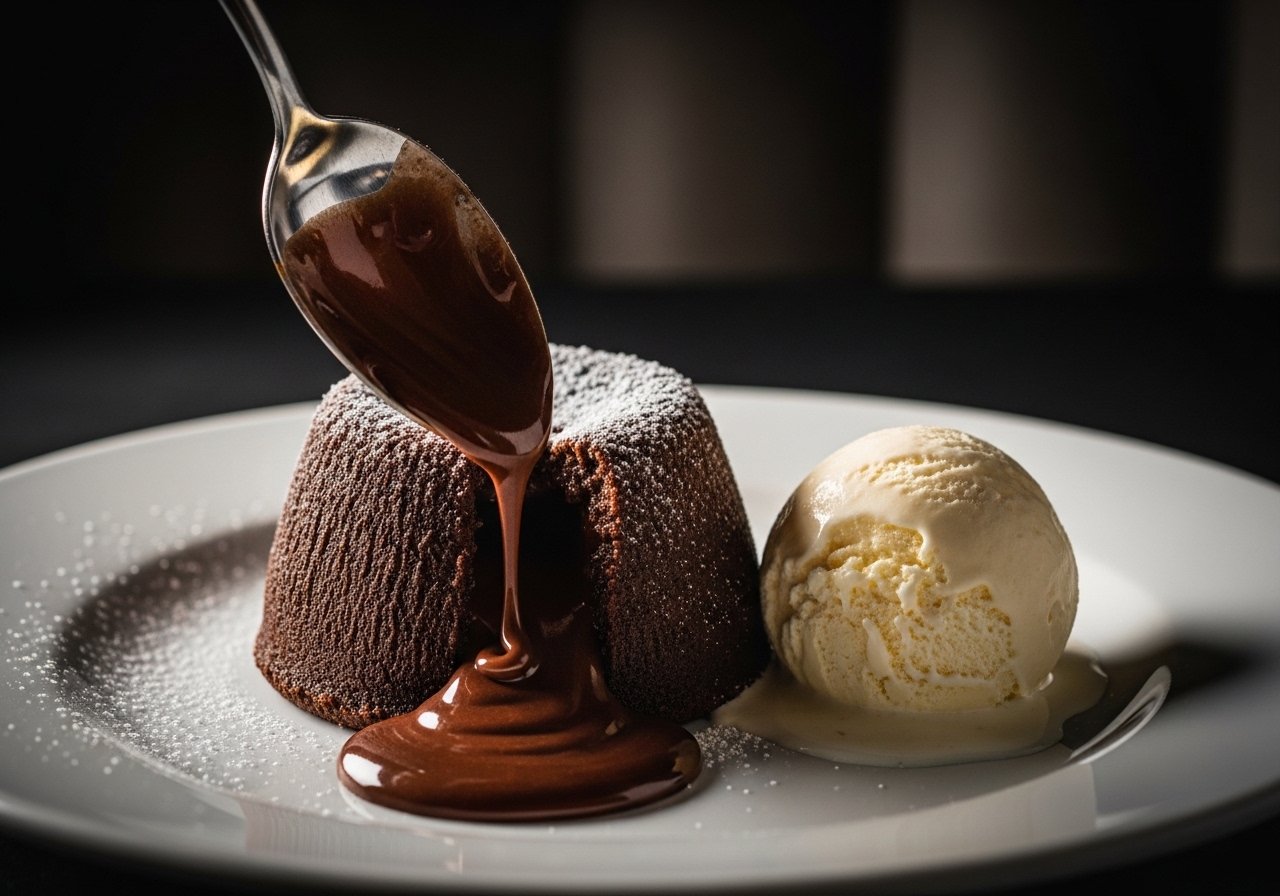
Run a thin knife or offset spatula around the edge of each ramekin to loosen the cake. Place a dessert plate upside-down over the ramekin, then quickly and confidently flip both together. Lift the ramekin off slowly — the cake should release cleanly onto the plate.
Dust immediately with powdered sugar using a fine-mesh sifter. Serve within two minutes while the molten center is still hot.

Air Fryer Chocolate Molten Lava Cake (The Science of the Molten Center)
Ingredients
Equipment
Method
- Place 2 oz chopped dark chocolate in small heatproof bowl. Heat 2 tbsp heavy cream in microwave until simmering (about 30 seconds). Pour over chocolate and let sit 1 minute without stirring.
- Whisk gently until smooth and glossy. Pour into small silicone ice cube tray or onto parchment-lined plate, creating four small mounds. Freeze for 30 minutes until solid.
- Generously butter the inside of four 6-ounce porcelain ramekins. Dust with cocoa powder (not flour) and tap out excess. Place ramekins on small baking sheet that fits in air fryer basket.
- In medium heatproof bowl, combine 4 oz chopped chocolate and 6 tbsp cubed butter. Microwave in 20-second intervals, stirring after each, until 80% melted. Stir until completely smooth. Let cool 5 minutes.
- In separate large bowl, whisk together 2 whole eggs, 2 egg yolks, and ¼ cup sugar vigorously for 2 minutes until thick and ribbony. Add vanilla extract and whisk to combine.
- Pour warm chocolate-butter mixture into egg mixture. Using silicone spatula, fold gently (do not stir) until combined. Cut down through center, sweep along bottom, and bring spatula up along side, turning bowl with each fold.
- Sift 3 tbsp flour and ⅛ tsp salt over chocolate mixture. Fold gently just until no white streaks remain. Do not overmix.
- Divide batter evenly among four prepared ramekins, filling each about ⅔ full. If using frozen ganache cores, press one gently into center of each ramekin just below surface. Smooth tops with back of spoon.
- Preheat air fryer to 370°F (188°C) for 5 full minutes.
- Carefully place tray of ramekins into air fryer basket. Bake for exactly 7 minutes 30 seconds. Do not open air fryer during baking.
- Check doneness: Top should feel set and spring back slightly when touched; center should jiggle slightly when ramekin is tapped.
- Remove from air fryer and let rest on counter for exactly 1 minute.
- Run thin knife around edge of each ramekin. Place dessert plate upside-down over ramekin, then flip both together quickly and confidently. Lift ramekin off slowly.
- Dust immediately with powdered sugar using fine-mesh sifter. Serve within 2 minutes while molten center is still hot. Add scoop of vanilla ice cream if desired.
Notes
💬 Chef Hamid’s Insight
Of all the recipes I have developed for the air fryer, this one carries the most emotion. The moment you cut into that cake and watch the liquid chocolate flow across the plate — that moment never gets old. I have made these cakes for birthdays, anniversaries, quiet Tuesday evenings, and impromptu celebrations. The reaction is always the same: silence, then wonder, then pure joy.
The molten lava cake is the crown jewel of air fryer desserts because it represents everything the appliance does well. Speed without sacrifice. Precision without complexity. Results that rival — and often surpass — traditional methods.
This is not a dessert you make carelessly. It demands attention, technique, and respect for timing. But when you get it right, you create a moment that people remember long after the plate is empty.
Chocolate that flows is not just dessert. It is theater.
— Chef Hamid | Homely Recipe
🥗 Nutrition Information
Per serving — based on 4 servings (1 lava cake per serving). Values are estimates and do not include ice cream.
| Nutrient | Amount Per Serving |
|---|---|
| Calories | 385 kcal |
| Protein | 7g |
| Total Fat | 27g |
| Saturated Fat | 16g |
| Carbohydrates | 32g |
| Dietary Fiber | 3g |
| Sugars | 24g |
| Sodium | 95mg |
| Cholesterol | 215mg |
| Iron | 2.8mg (16% DV) |
🌡️ Food Safety & Baking Guide
| Stage | Temperature / Time | Notes |
|---|---|---|
| Air Fryer Baking Temp | 370°F / 188°C | Optimal for rapid exterior setting while preserving molten center |
| Outer Cake Temp (fully set) | 200°F+ / 93°C+ | Cake structure fully formed; holds shape when inverted |
| Molten Center Temp (ideal) | 140°F / 60°C | Thick liquid consistency; pours slowly when cake is cut |
| Egg Safety Minimum (USDA) | 160°F / 71°C | Outer layers exceed this; center does not — use pasteurized eggs if concerned |
| Baking Time (6 oz ramekins) | 7.5–8 minutes | Exact timing critical; test one ramekin first |
| Resting Time After Baking | 1 minute | Allows structure to stabilize before inverting |
| Serve Within | 2–3 minutes of plating | Center begins to set as it cools; serve immediately |
❄️ Storage & Reheating Guide
| State | Refrigerator | Freezer | Best Reheat Method |
|---|---|---|---|
| Unbaked batter in ramekins | Up to 24 hours (cover with plastic wrap) | Up to 1 month | Bake from room temp; add 1 min to baking time |
| Baked lava cakes (whole) | Not recommended — center solidifies | Not recommended | Does not reheat well; make fresh |
| Baked lava cakes (reheated) | Can store 1 day | Not recommended | Microwave 15–20 seconds; center will not be molten |
Note: Lava cakes are best enjoyed fresh. If you must make ahead, prepare the batter and refrigerate in ramekins, then bake fresh when ready to serve.
❓ FAQ
Can I make the batter ahead of time?
Yes. Fill the prepared ramekins with batter, cover tightly with plastic wrap, and refrigerate for up to 24 hours. Bring to room temperature (about 30 minutes) before baking, or add one extra minute to the baking time if baking cold.
My center was not molten — what went wrong?
You overbaked by 30–60 seconds, or your air fryer runs hotter than the displayed temperature. Reduce baking time by 30 seconds on your next attempt and check doneness carefully. Every air fryer is slightly different.
Can I use milk chocolate instead of dark chocolate?
You can, but the result will be much sweeter and the chocolate flavor will be less intense. Dark chocolate with 60–70% cacao provides the best balance of sweetness and deep chocolate flavor.
Do I really need the frozen ganache core?
No — the cakes are molten without it. The ganache core creates an extra-dramatic chocolate flow for special occasions, but the traditional method (just the batter) produces excellent results.
Can I bake these in a regular oven if I do not have an air fryer?
Yes. Preheat your oven to 425°F / 218°C and bake for 12–14 minutes. The timing is slightly longer because conventional ovens do not have the high-velocity air circulation that sets the exterior as quickly.
🔗 More From Homely Recipe
These articles pair perfectly with what you just learned:
🍗 [Air Fryer Whole Roast Chicken] — Make this molten lava cake the show-stopping dessert after a perfectly roasted Sunday dinner chicken.
🥔 [Air Fryer Crispy Smashed Potatoes] — Round out your air fryer mastery with the perfect savory side dish.
[Air Fryer Hard Boiled Eggs] (The No-Water Convection Method)